

You sit down to work. A message comes in, then another. Forty minutes later the real task has not started.
Everyone has the same advice for this: do deep work. Almost nobody says how. How long is a block? Where does the phone go? What do you do on the day it falls apart?
This guide answers those the way a prescription would: what, how much, and when.
“In deep work I’m ten times more productive than in shallow work.”Przemyslaw Siwek, Solve Labs
That is one person’s experience. The measured numbers point the same way.
Executives at their peak, against their own average day.
McKinsey, 2013, self-reported [1]
To get back to a task after one interruption.
Gloria Mark, UC Irvine [2]
On one screen before we switch. In 2004 it was 2.5 minutes.
Gloria Mark, Attention Span, 2023 [2]
Cal Newport, who gave deep work its name, says a beginner can manage about an hour of it a day. [3] So the protocol does not start with heroic four-hour sessions. It starts with one block you can finish.
Decide tomorrow’s one task
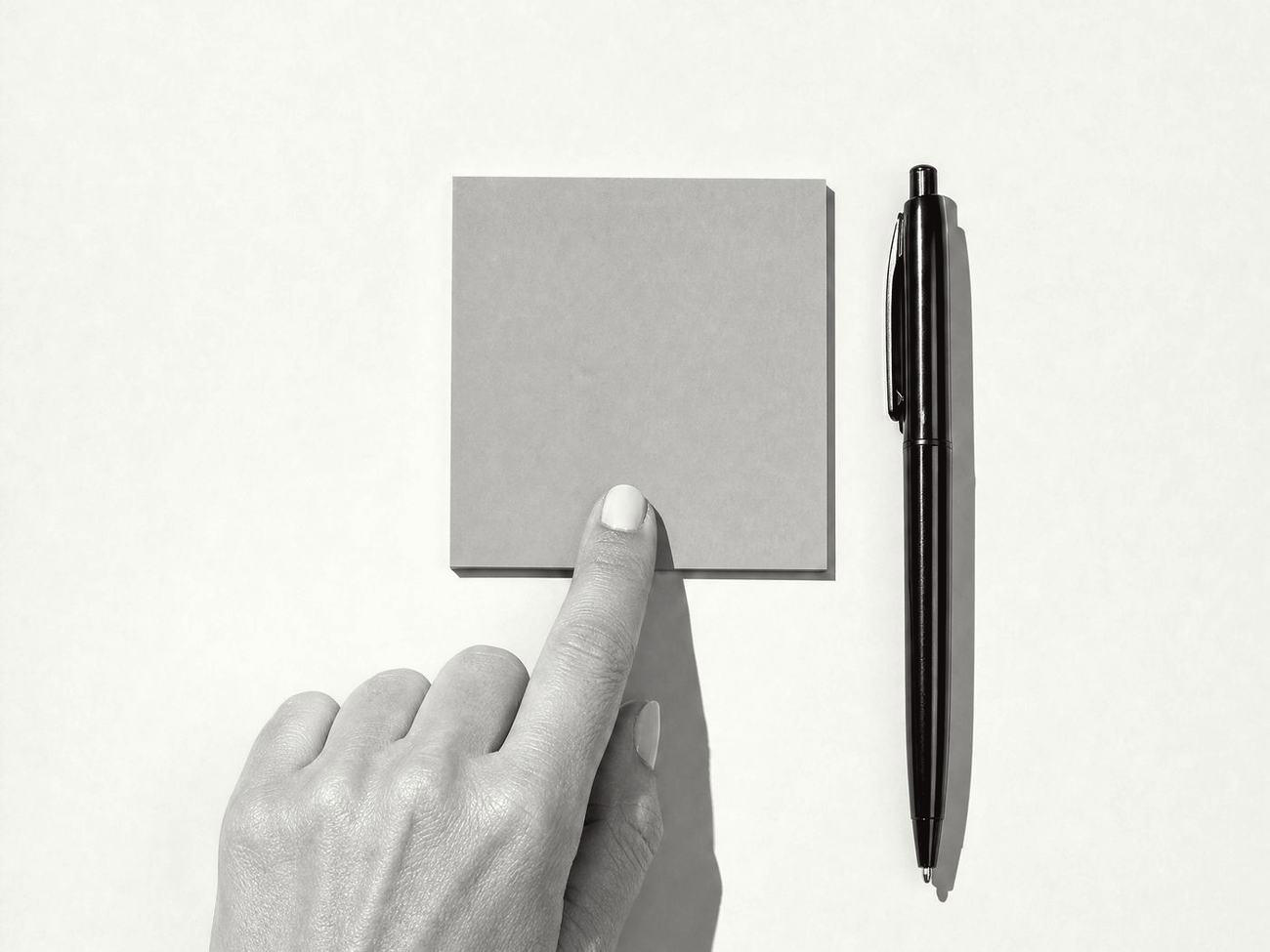
Before you close the laptop, write down the one thing tomorrow’s block is for. When you sit down, the decision is already made.
Put the phone in another room
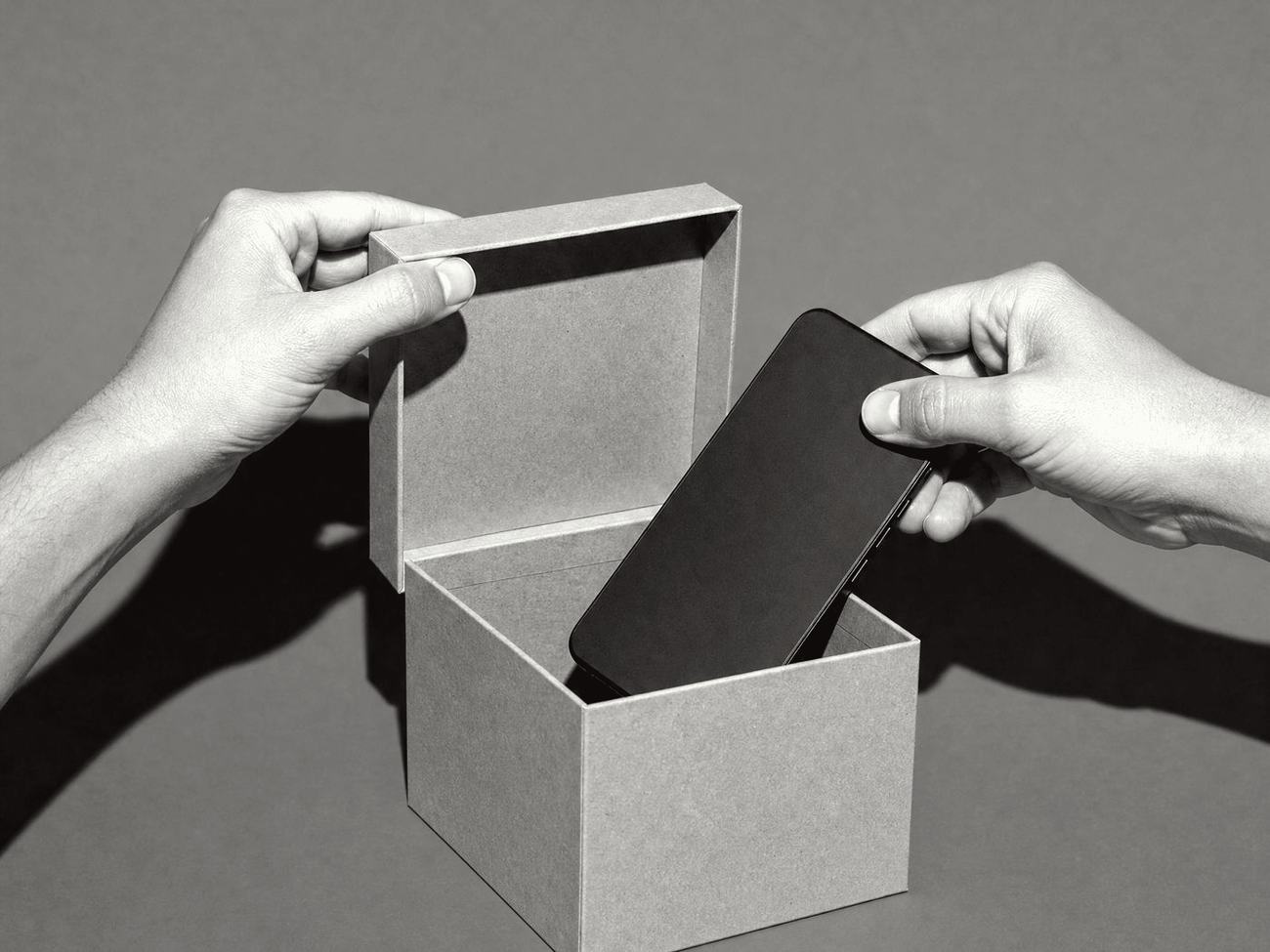
In a University of Texas study of almost 800 people, those who left their phone in another room did better on tests of thinking capacity than those who kept it on the desk, silent and face down. [4]
Then close every tab the task does not need.
Run one 45-minute block
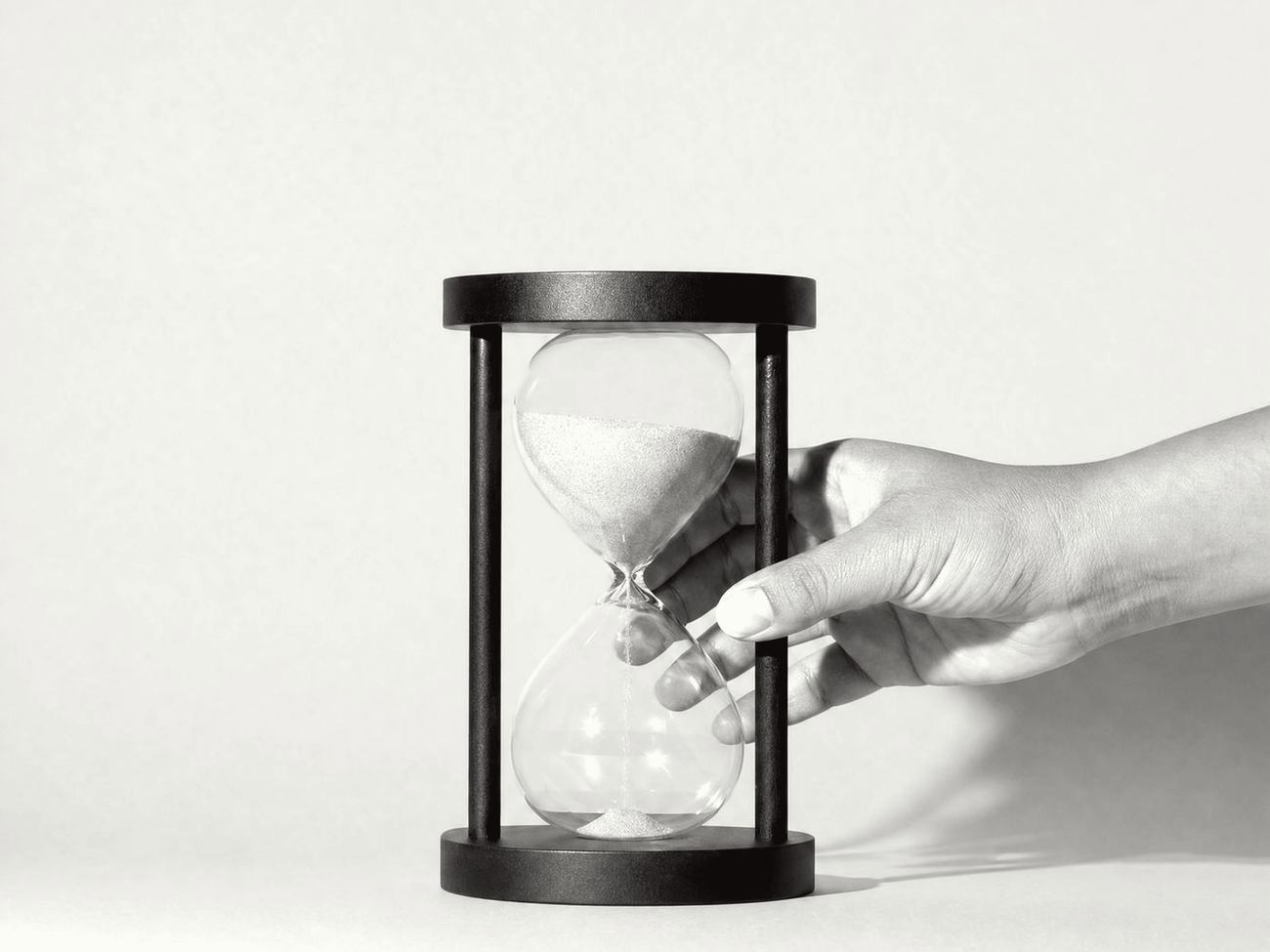
Put it in your calendar like a meeting. One task, a timer running, nothing else open. If you finish early, stay in the chair until the timer ends.
Use the same sound every time
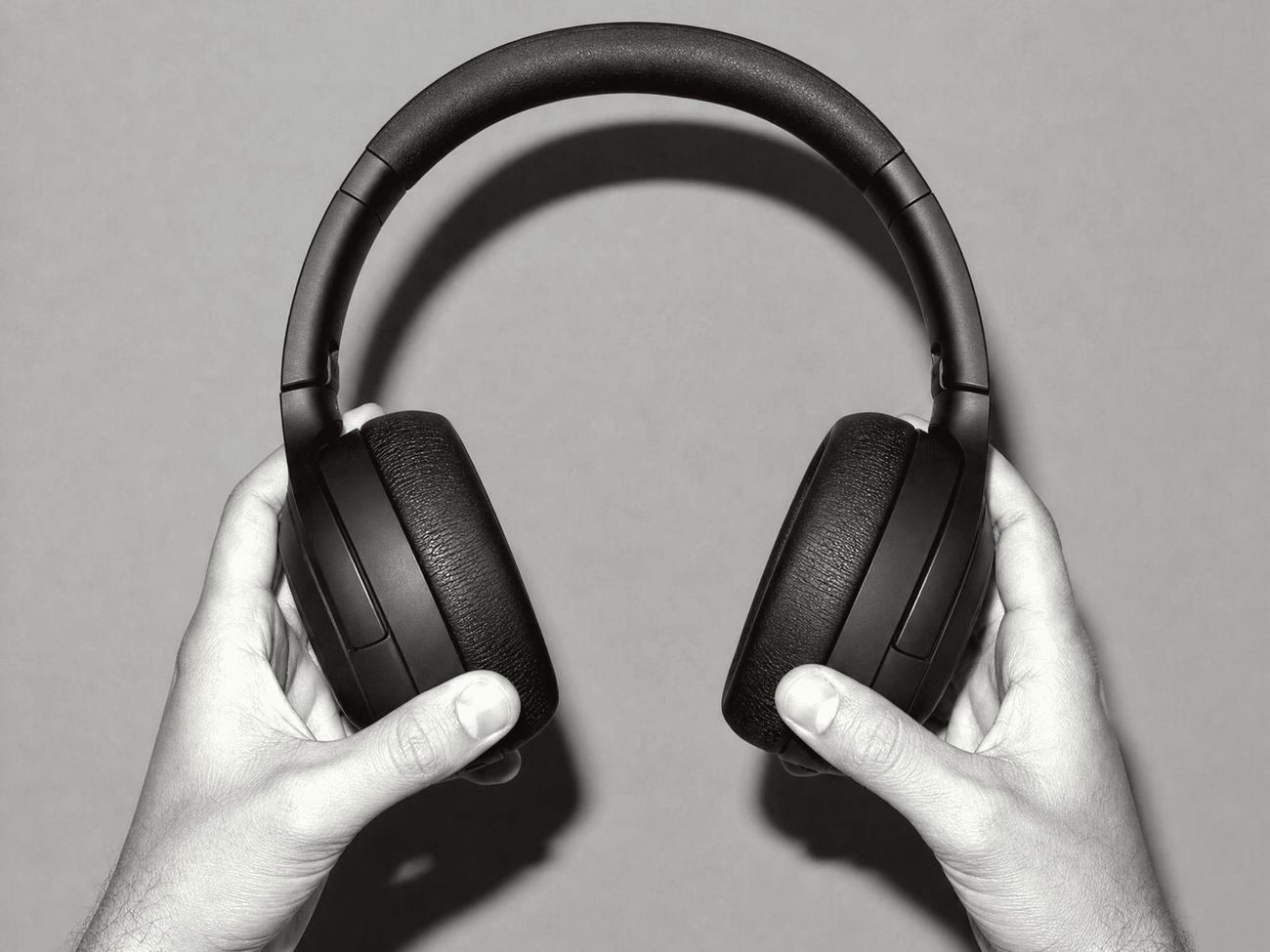
Headphones on, one playlist or one noise, nothing with lyrics. After a week the sound itself tells you work has started.
Lion’s Mane for focus
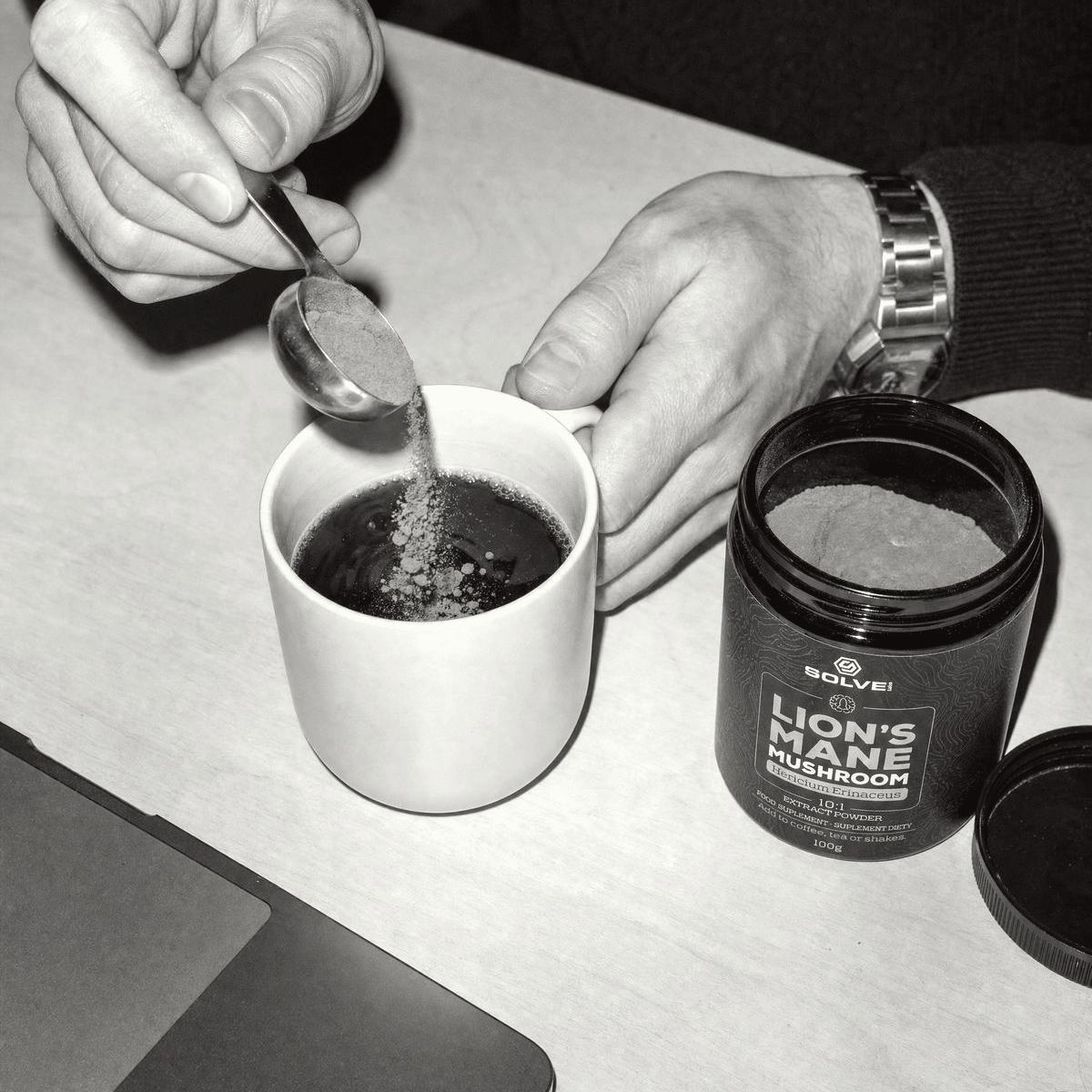
A 10:1 extract with nothing added and no caffeine. In a 2023 double-blind pilot of 41 adults, the Lion’s Mane group were quicker on an attention test an hour after one dose. It is a small study and its authors call the result tentative. [5]
Shut down at a fixed time
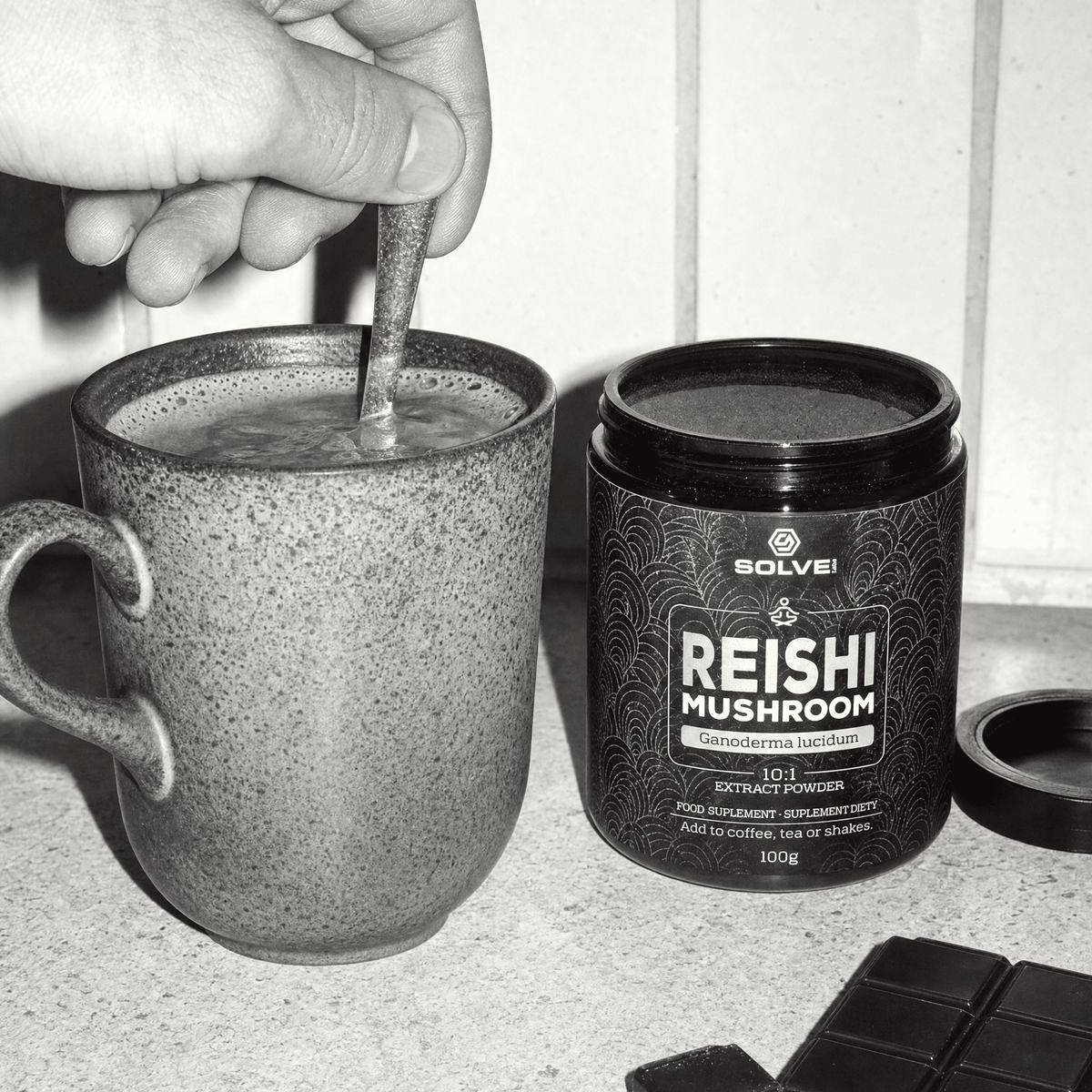
Deep work needs an ending. Pick a time, close the laptop and write tomorrow’s one task. If you want an evening ritual to mark it: Reishi for a calm evening, two scoops in cacao.
It gets easier with practice
Nobody holds an hour of full attention on day one. Focus is trained like anything else: a load you can finish, raised a little at a time.
In the first two weeks you will want your phone around minute fifteen. Sit through it. By week three the set-up runs by itself.
- Move up only after four of five sessions in a week.
- Missed the week? Repeat it. Do not skip ahead.
Download the full protocol.
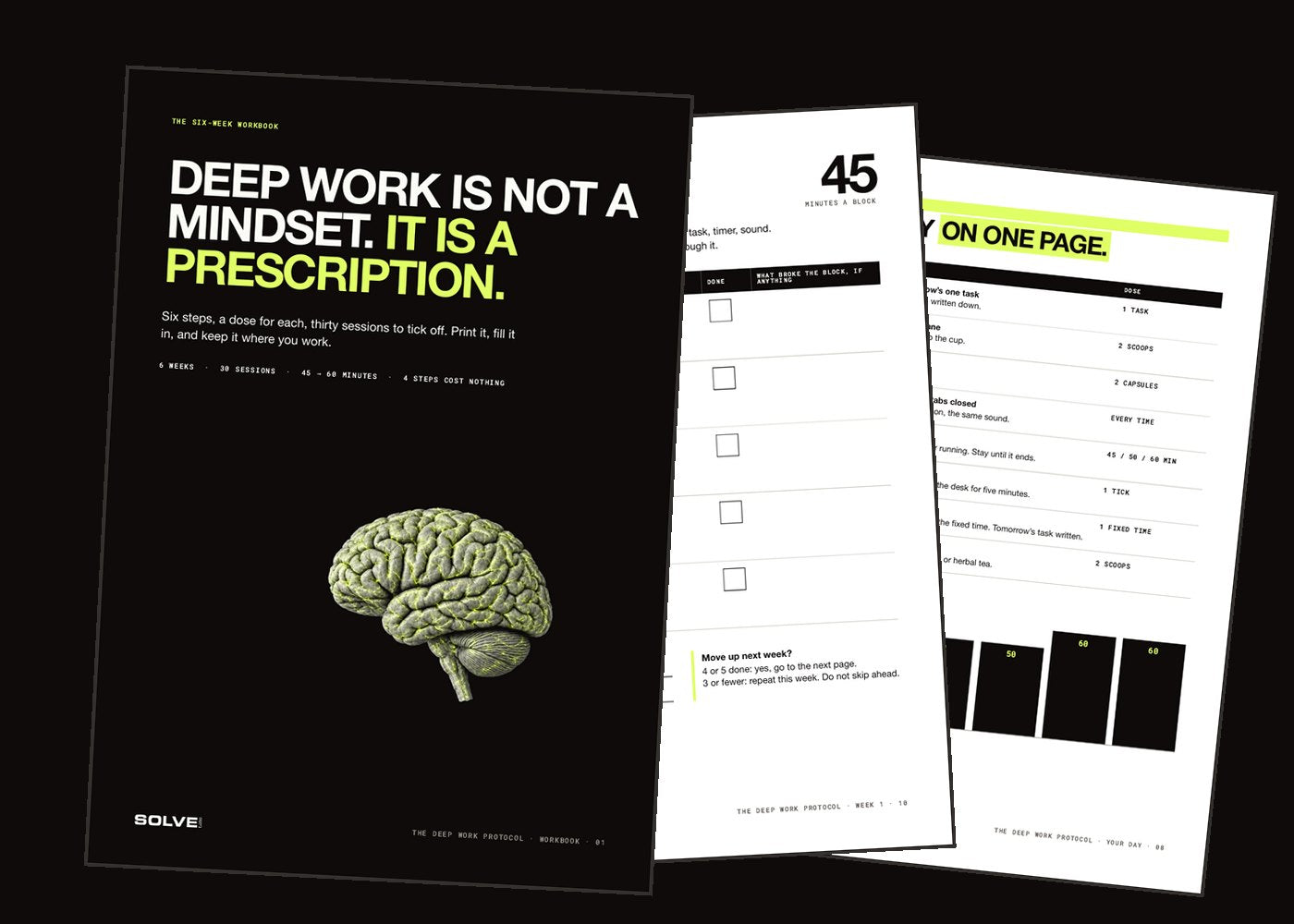
- A 17-page workbook to print and fill in
- Thirty session boxes, one page a week
- Your day on one page, to pin up
- A before-and-after test of your own focus
- The Solve Labs app: your timer and your sound
That email does not look right. Check it and try again.
We email the workbook and a few short lessons on the protocol. Unsubscribe in one click.
It is on its way.
Check your inbox for the workbook. You can also open it now.
Start the system from £5.
Your first 30 g pouch of Lion’s Mane is £5, not £25. It covers the first four weeks.
Start the system from £5 →One per customer · plus £4.95 UK delivery · 60 days to decide on your first order, even opened. Food supplement. Not a substitute for a varied diet and a healthy lifestyle.

- Cranston S., Keller S. Increasing the “meaning quotient” of work. McKinsey Quarterly, 2013.
- Mark G. Attention Span. Hanover Square Press, 2023.
- Newport C. Deep Work. Grand Central, 2016.
- Ward A. et al. Brain drain. Journal of the Association for Consumer Research, 2017. Later replications found a smaller effect.
- Docherty S., Doughty F., Smith E. Nutrients, 2023; 15(22): 4842.