Coffee is a crop. It is picked, dried, shipped and stored, and moulds can grow on any stored crop. Some moulds leave substances behind called mycotoxins.
The EU sets a limit for the best-known one in coffee, ochratoxin A: 3.0 micrograms per kilo of roasted coffee. We publish our number.
What the lab measured
The laboratory is GBA Polska, accredited under number AB 1095. It finished the tests on 6 October 2025. It also looked for four aflatoxins, B1, B2, G1 and G2. All four were below the level the method can measure.

What is in the bag
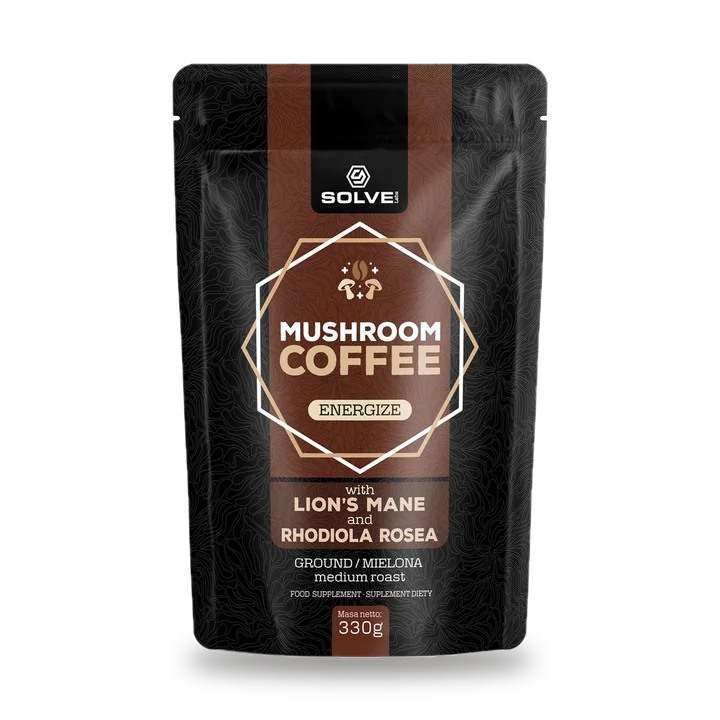
Speciality-grade Arabica from Brazil, medium roast, roasted in Poland and ground. Each 11 g cup also carries 500 mg of 10:1 Lion’s Mane fruiting-body extract and 130 mg of rhodiola extract.
That is the whole list. There is no sugar, sweetener, flavouring or creamer, and the 100 mg of caffeine in a cup is the coffee’s own.
How it drinks
Like coffee. You brew it in a cafetière, a moka pot, a filter or a pour-over: 11 g to 200 ml of water. A bag makes 30 cups at 83p each, and two bags bring that to 58p.