
Attention: anyone whose best work keeps sliding to 4 pm
How to get your hardest work done before 12, every single morning
(Without getting up at 5, deleting your apps or “just trying harder”)
Your willpower is fine. Your mornings are being taken. Here’s the six-week system that takes them back, or your money back.
Two mornings, 9:00 to 12:00 · an illustration, not data
Sound familiar?
You’ve tried everything. It still slides to 4 pm.
- ✕
Getting up at 5 - ✕
A stronger coffee - ✕
Another to-do app - ✕
Phone on silent - ✕
“Just more discipline”
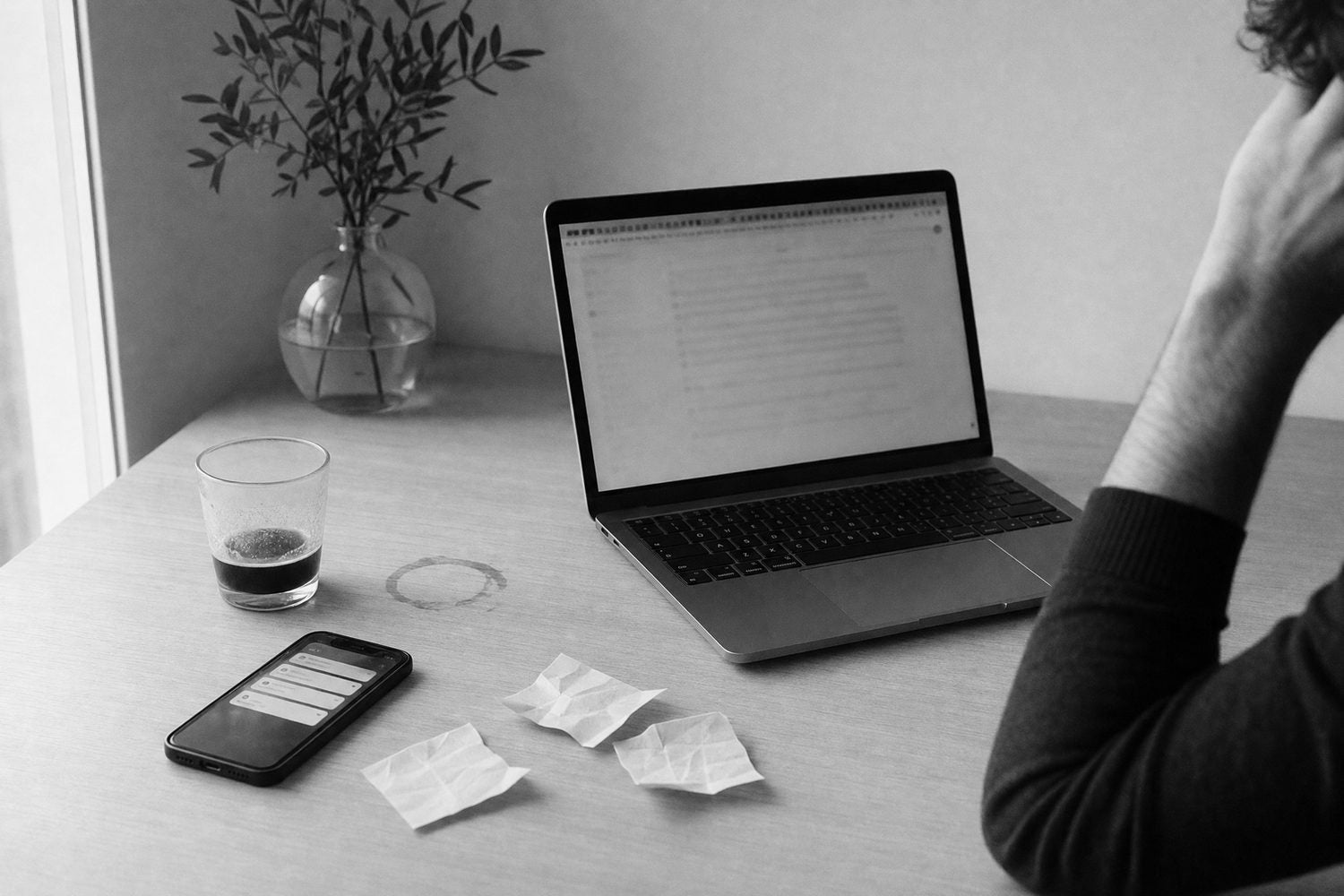
Here’s what nobody tells you: none of it was wrong. It just never touched the real problem.
The real reason (it’s not what you think)
It’s not laziness. It’s switching.

Every time you leave a task half-done, part of your attention stays behind with it. Researchers have a name for it: attention residue.1 So every next task gets a smaller, slower version of you.
Now do that thirty times before 10 a.m. That’s how a whole morning disappears, while you were working the entire time.
The numbers are brutal
of 31,000 workers say they don’t get enough uninterrupted focus time.
Microsoft Work Trend Index, 2023 · survey in 31 countrieson one screen before switching, on average, in recent years.
Gloria Mark, Attention Span, 2023on average before interrupted work was picked up again.
Mark, González & Harris, 2005 · 24 office workersAnd here’s the kicker: interrupted people don’t slow down. They speed up, and pay for it in stress and time pressure.5 That’s the 4 pm feeling.
Let’s be clear: it’s not your fault. Your phone, your inbox and every feed were built by some of the best-paid engineers on earth to win your next 47 seconds. You’ve been out-trained, not out-willed.
Why the usual advice keeps failing you
It fixes your hours. Not the switching.
Do this tomorrow (it’s free, and it’s an eye-opener)
Count your switches before 10 a.m.
Stick a note on your desk. Every time you leave the task you meant to do (a tab, a ping, the phone, the kettle), make a mark.
At 10, count them. Brace yourself. That number is exactly what the next four steps train down.
What the research says about mornings that get finished
Three things every finished morning has. Most people fix one.

The first three hours are protected
Deep work goes first, before mail opens. Attention and control tend to peak earlier in the day for many people, and people who checked email three times a day reported less daily stress.Schmidt et al. 2007 · Kushlev & Dunn 2015

The start is decided the night before
A written “when X, I will Y” plan had a medium-to-large effect on actually doing it, across 94 studies.Gollwitzer & Sheeran 2006
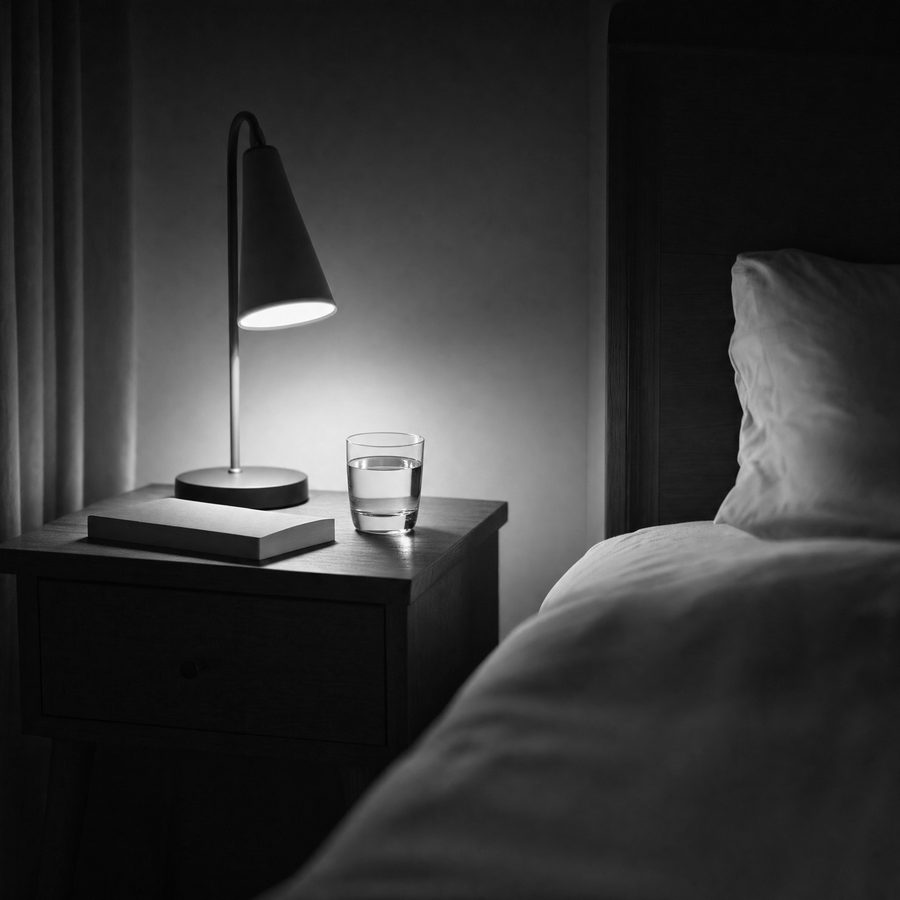
The brain recovers overnight
The block runs on attention, and attention runs on sleep. A finished morning starts the evening before: screens down, the same wind-down, the same bedtime.
The Deep Work System · steps 1 to 4
Four steps. Free. Steal them tonight.
 Tonight
1 · Write tomorrow’s task tonight
One line on a note: a verb, an object, a finish line. “Draft the pricing page, up to the FAQ.” Leave it on the keyboard.
 Day 3
Day 32 · Block your first three hours
One calendar entry, 9 to 12, marked busy. Mail opens after it, not before.
 Day 5
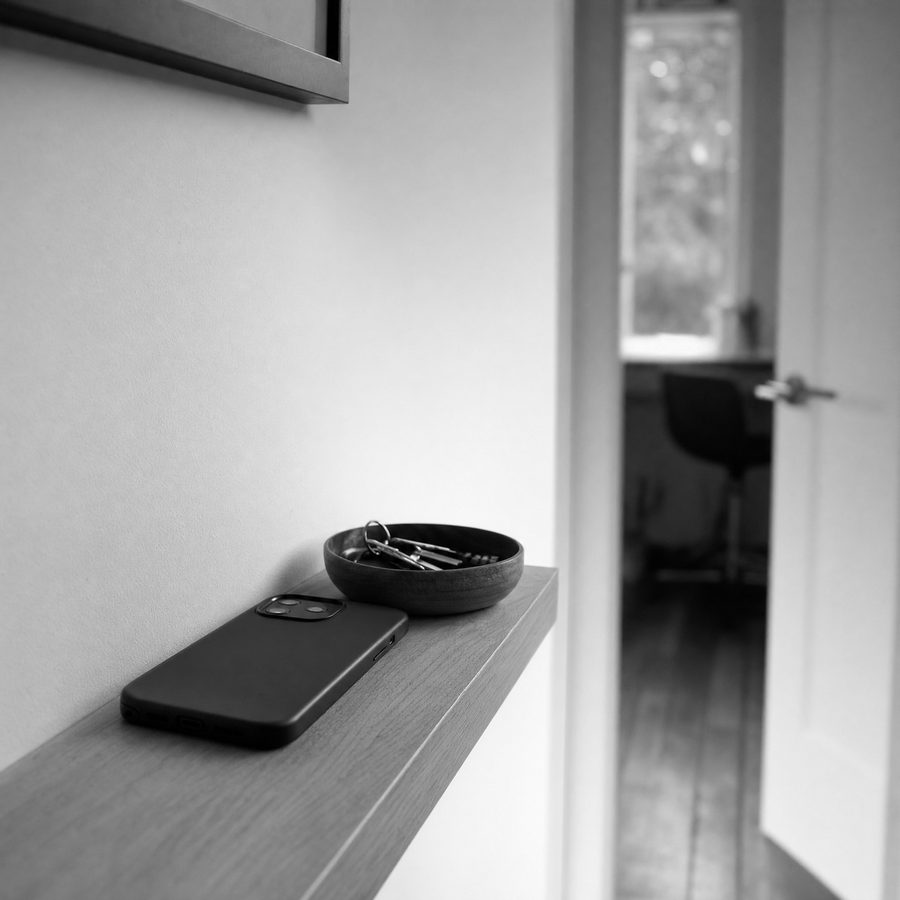
Day 53 · Put the phone in another room
Not face down: another room. Distance turns “don’t check” into a fact.
 Day 7
Day 74 · One sound, every block
Silence, or music without words, the same every time. After a week it becomes the cue to start.
One step at a time, easiest first. Each one is small. Stack all four and your morning is protected.
But here’s the catch
Protecting the time is half the battle. Now fuel it.
A protected block still runs on your attention, and by the third hour it runs low. That’s where steps 5 and 6 come in: fuel for the block, recovery for the night. And yes, they’re the first things on this page that cost money.
 From £5
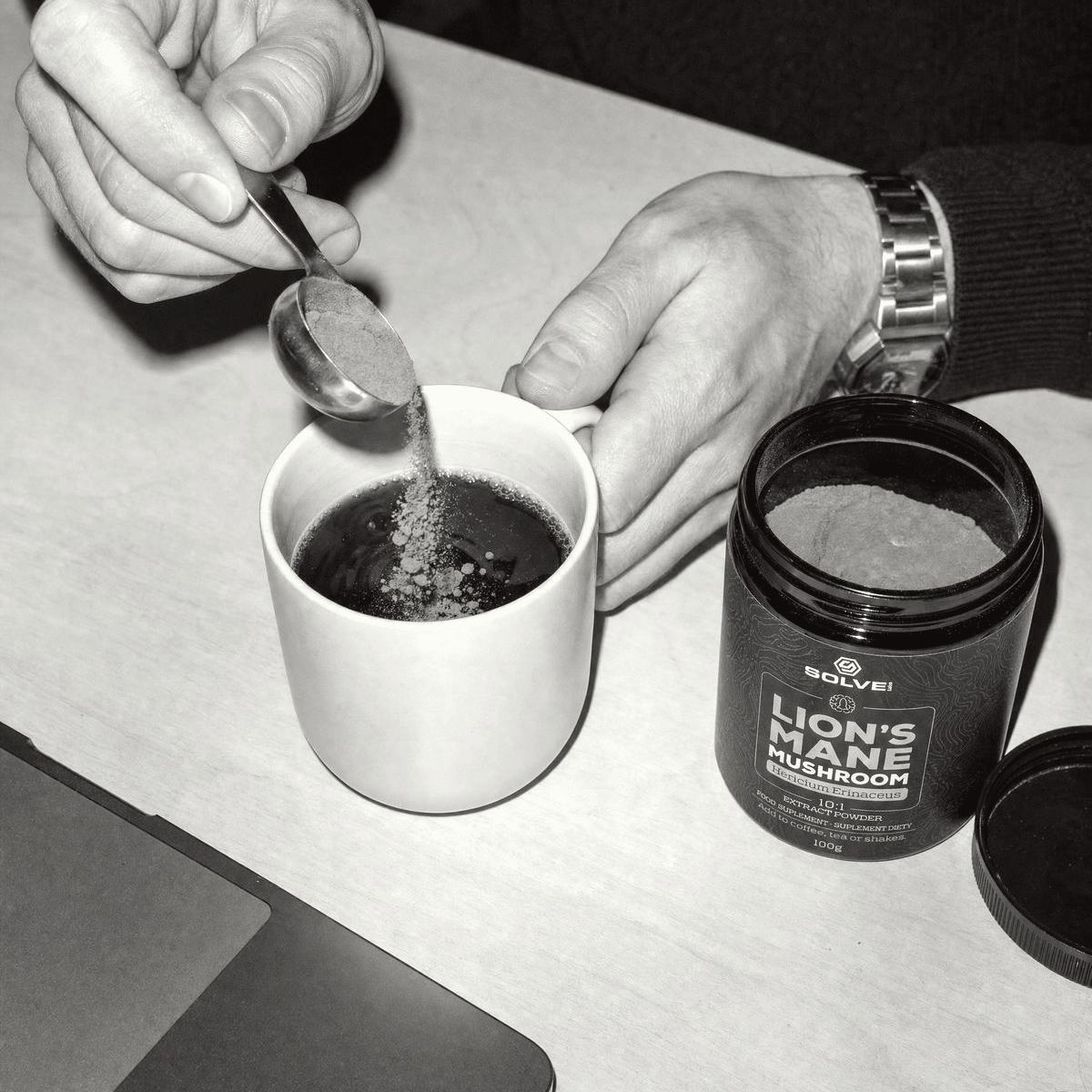
5 · Fuel the block
Lion’s Mane in your first coffee: a 10:1 fruiting-body extract. No caffeine.
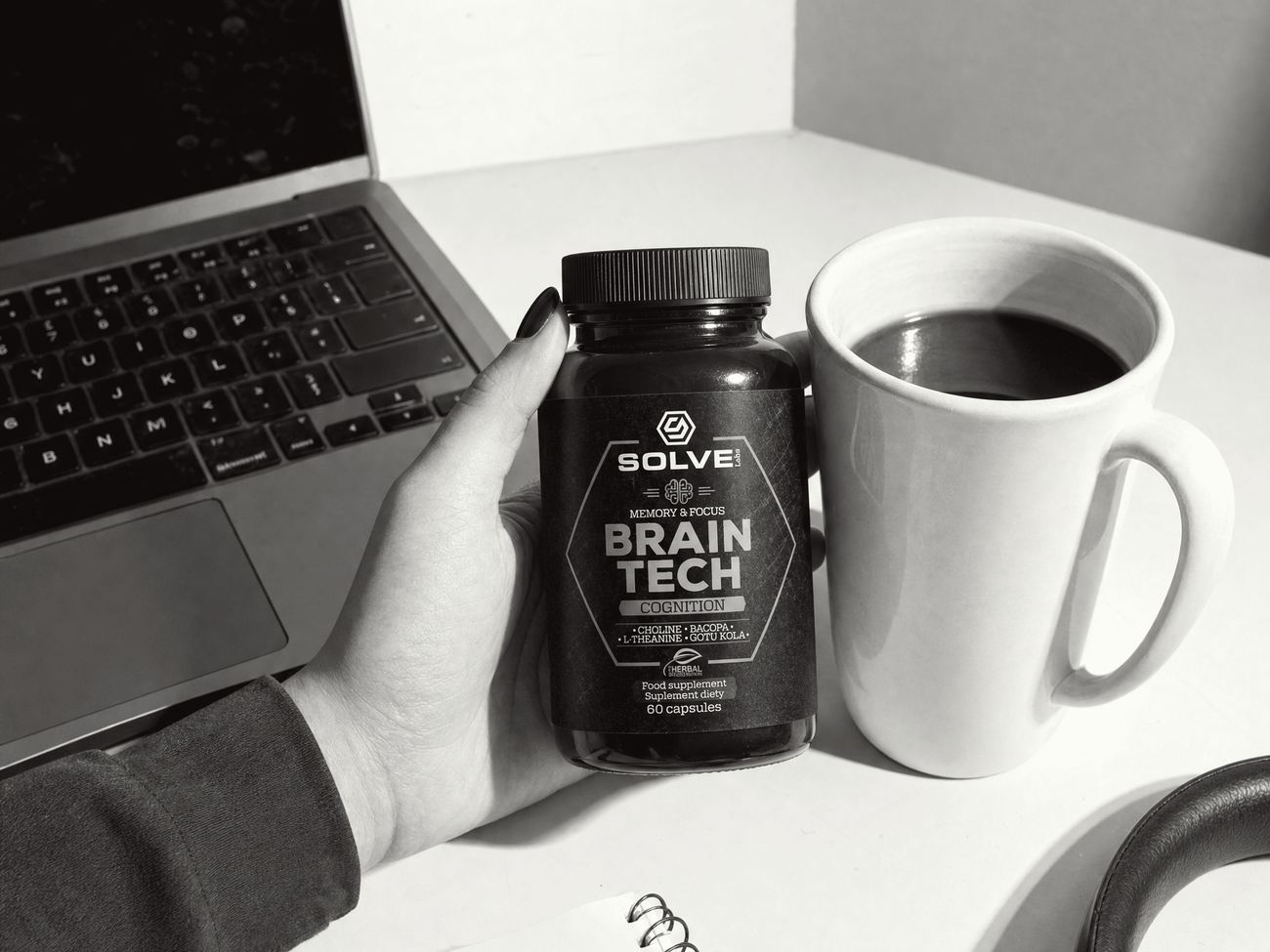 Full system
6 · Keep the day, protect the night
Brain Tech at 2 pm: zinc for normal cognitive function, B6 for less tiredness and fatigue. Reishi in the evening cup, for the wind-down.
Both come with the free six-week training plan: from 2 focused blocks a day to up to 5.
Warning: not all Lion’s Mane is the same
Two words most labels conveniently leave off.
The mushroom itself, not grain grown through with mycelium.
Ten kilos of mushroom for every kilo of powder.
Go and check any pouch in your cupboard for those two words. We’ll wait.
Don’t take our word for it
Here’s what buyers are saying.
I felt compelled to write this review after buying another brand to compare against. Solve Labs is far superior, in taste and effect. I take a scoop in my coffee twice a day before I sit down to do some focused work.Verified Amazon.co.uk buyer · Lion’s Mane powder · 2023
After four months of daily use, I’m honestly thrilled. As a software developer constantly juggling complex problems, I started feeling a real difference around the third week.Verified Amazon.co.uk buyer · Lion’s Mane powder · 2024
I ordered again because they sharpen my focus nicely and I remember things more easily.Verified Allegro buyer · Brain Tech · January 2026 · translated from Polish
Rated 4.8 from 253 reviews on Trustpilot, written by customers of our EU store, solvelabs.eu, about the same products. Reviews are individual opinions.
Here’s the deal
Try it for a month. From just £5.
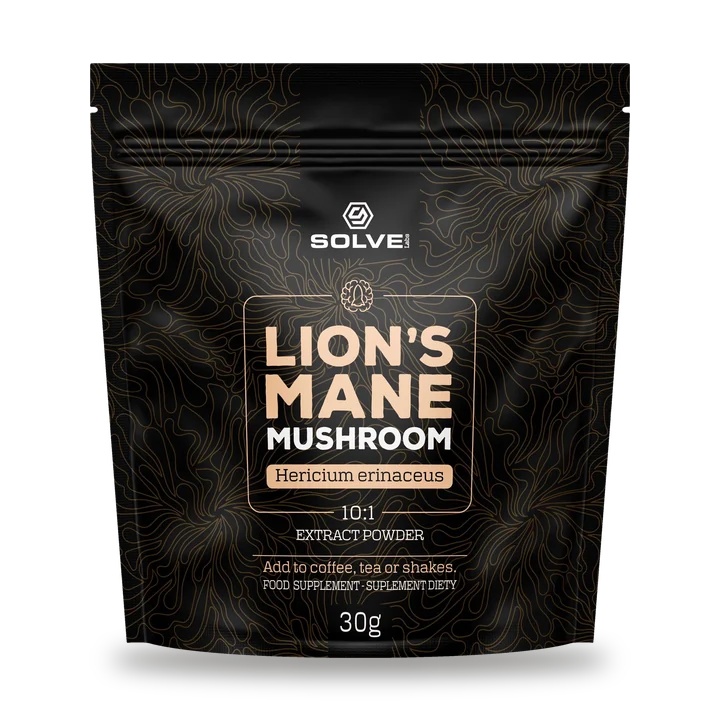
Lion’s Mane powder, month one
+ £4.95 UK delivery · about 17p a day
- 10:1 fruiting-body extract
- The free six-week plan
- One per customer. Nothing renews.

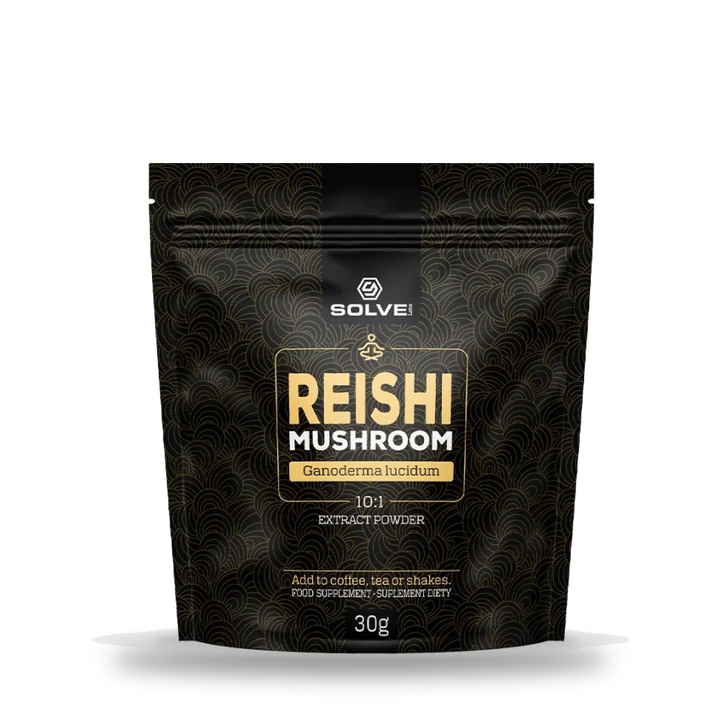
Lion’s Mane + Brain Tech + Reishi, month one
+ £4.95 UK delivery · about £1.08 a day
- Morning, 2 pm and evening, all three
- The free six-week plan
- One per customer. Nothing renews.
by 12
The “Done by 12” guarantee: your mornings, or your money.
Here’s how sure we are. If your hardest task isn’t getting done before 12 on most mornings, tell us within 60 days and we’ll refund you in full, even if the pouch is empty. The risk is all ours.
Delivery shown at checkout before you pay · secure checkout · no subscription

Here’s the bottom line. At 12:00 tomorrow you’ll be doing one of two things: opening the task you meant to start at 9, or closing it.
Keep doing what you’ve always done. Or become the person who’s done by 12.
From £5 · your mornings, or your money · 60 days
P.S. Remember: it’s £5 to start, and if your mornings haven’t changed within 60 days, you get your money back. The only way to lose is to keep losing your mornings.
Questions
Is it a stimulant?
No. There is no caffeine in any of the three. Nothing kicks in an hour later: what changes is the shape of your morning.
When will I notice it?
The routine works from the first morning. For the products, buyers who notice them tend to say so after a few weeks of daily use, not hours.
Is it a magic mushroom?
No. Lion’s Mane and Reishi are food mushrooms, sold as food supplements. Nothing in them is psychoactive.
What does delivery cost?
£4.95 in the UK, shown at checkout before you pay.
How does the guarantee work?
If your hardest task isn’t getting done before 12 on most mornings, email us within 60 days of delivery and we refund you in full, even if the pouch is empty. One refund per customer.
Where do the numbers on this page come from?
- Leroy, S. (2009). Organizational Behavior and Human Decision Processes, 109(2): attention residue.
- Microsoft Work Trend Index 2023: 31,000 workers, 31 countries; 68% lack uninterrupted focus time (self-report).
- Mark, G. (2023). Attention Span: about 47 seconds on one screen in recent years.
- Mark, González & Harris (2005), CHI: 24 office workers; 25 min 26 s before interrupted work was picked up again.
- Mark, Gudith & Klocke (2008), CHI: interrupted work was done faster, with more stress, frustration and time pressure.
- Schmidt et al. (2007), Cognitive Neuropsychology: attention and executive control vary across the day, by chronotype.
- Kushlev & Dunn (2015), Computers in Human Behavior: 124 adults; email three times a day, lower daily stress.
- Gollwitzer & Sheeran (2006), Advances in Experimental Social Psychology: 94 tests, d = 0.65.
- Docherty et al. (2023), Nutrients 15(22):4842: 41 adults, 1.8 g; the authors call the results tentative.