
Lion's Mane Capsules: Dosage and How to Use
Lion's Mane Capsules: Dosage and How to Use
- Lion's mane at a glance
- What is lion's mane and what's in it?
- How does lion's mane work?
- What does the evidence actually say?
- How much lion's mane should I take?
- When is the best time to take it?
- How long until it works?
- What are the side effects and risks?
- Fruiting body vs. mycelia, which is better?
- Health benefits: what's backed and how strongly
- Who should take lion's mane, and who shouldn't?
- How to use lion's mane capsules: the simple protocol
- Related guides
Most healthy adults take 500-3,000 mg of lion's mane extract daily, ideally in the morning and taken consistently for at least 4-6 weeks before judging results. Start low, 500 mg for the first two weeks, then build up. The evidence for cognitive benefits is promising but genuinely mixed, so calibrate your expectations to "subtle and cumulative," not "overnight breakthrough."
This guide covers the exact dose ranges used in research, how to time your capsules, what to realistically expect, and where the science is strong versus shaky. No hype, just what the studies actually show.
Lion's mane at a glance
| Detail | What to know |
|---|---|
| Common forms | Capsules (extract or powder), powders, tinctures, coffee blends |
| Key active compounds | Hericenones (fruiting body), erinacines (mycelia), β-glucans |
| Typical daily dose | 500-3,000 mg extract; beginners start at 500 mg |
| Cognitive-support range | 500-1,500 mg; 2,000-3,000 mg studied for mild cognitive impairment |
| Best timing | Morning, with or without food |
| Time to notice effects | 4-6 weeks of consistent daily use |
| Who it's for | Adults seeking focus, memory, and mood support |
| Evidence strength | Strong preclinical (NGF mechanisms); limited and mixed human data |
What is lion's mane and what's in it?
Lion's mane (Hericium erinaceus) is an edible medicinal mushroom named for its cascading white spines. Its interest as a nootropic comes down to two families of compounds: hericenones, concentrated in the fruiting body (the visible mushroom), and erinacines, found in the mycelia (the root-like network). Both are linked to nerve growth factor (NGF) synthesis.
The mushroom also contains β-glucan polysaccharides, which act as immunomodulators and support gut health, plus terpenoids and polyphenols that provide antioxidant and anti-inflammatory activity. When you're comparing capsules, the fruiting-body-versus-mycelia distinction matters, more on that below.
How does lion's mane work?
The headline mechanism is NGF stimulation. Hericenones from the fruiting body appear to stimulate NGF synthesis, which supports neuronal repair and maintenance. Erinacines from the mycelia are small enough to cross the blood-brain barrier and upregulate NGF directly, a property linked in preclinical work to improved alertness and learning.
NGF is a protein your brain uses to grow, maintain, and repair neurons. The theory: by nudging NGF upward, lion's mane may support the neural machinery behind memory and focus. Beyond the brain, its β-glucans behave as immunomodulators with potential anti-tumor properties, and its terpenoids and polyphenols add antioxidant, anti-inflammatory neuroprotection.
The honest caveat: most of this mechanistic evidence comes from cell and animal studies. The pathway is well-characterised in the lab. Whether it translates into meaningful, measurable cognitive change in humans is a separate, and less settled, question.
What does the evidence actually say?
This is where you deserve straight talk. The preclinical science is compelling; the human science is thin and inconsistent.
The most-cited human trial ran 16 weeks in older adults with mild cognitive impairment. Participants took 1 g three times daily (3,000 mg total) and showed improved scores on the Instrumental Activities of Daily Living (IADL) test versus placebo. That's a genuine, encouraging result. But in the same study, other standard dementia measures, MMSE, CASI, and NPI, showed no significant differences. So the benefit was real but narrow.
On mood, two separate studies, one in menopausal women, one in overweight/obese individuals, reported reduced anxiety and depression symptoms after supplementation. Promising, but small, and the mechanisms remain under investigation. These need larger, controlled trials before anyone can call them proven.
Bottom line: strong biological rationale, limited human confirmation. If a product promises dramatic overnight cognition, be skeptical. The realistic pitch is subtle support that builds over weeks.
How much lion's mane should I take?
Clinical studies and supplement guidelines converge on 500 mg to 3,000 mg of extract per day, a range most healthy adults tolerate safely. Human trials have used 1,050-3,000 mg/day, often split into 3-4 doses, though the optimal dose is still uncertain and likely varies by what you're targeting.
| Goal | Suggested daily dose | Notes |
|---|---|---|
| Beginner / tolerance check | 500 mg | Hold for 7-14 days |
| General focus, memory, mood | 500-1,500 mg | Most common nootropic range |
| Mild cognitive impairment (older adults) | 2,000-3,000 mg | Dose used in the 16-week IADL study; often split into 3 doses |
| Practical ceiling | 3,000 mg | No added benefit clearly established above this |
How to titrate: Start at 500 mg daily for 7-14 days to gauge how you feel. If you tolerate it well and want more, increase by 250-500 mg every 1-2 weeks until you reach a dose that works for you, up to a practical ceiling of 3,000 mg/day. There's no reason to jump straight to the top.
What about Solve Labs' capsules?
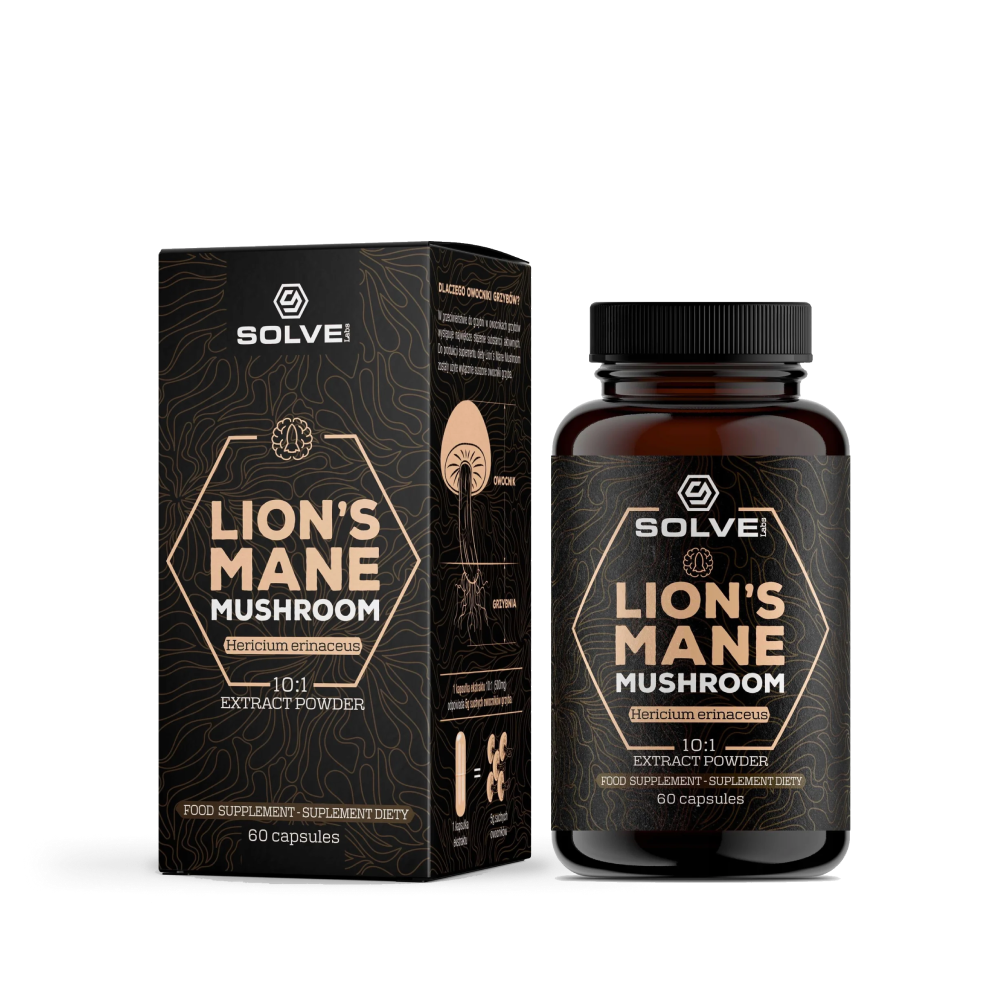
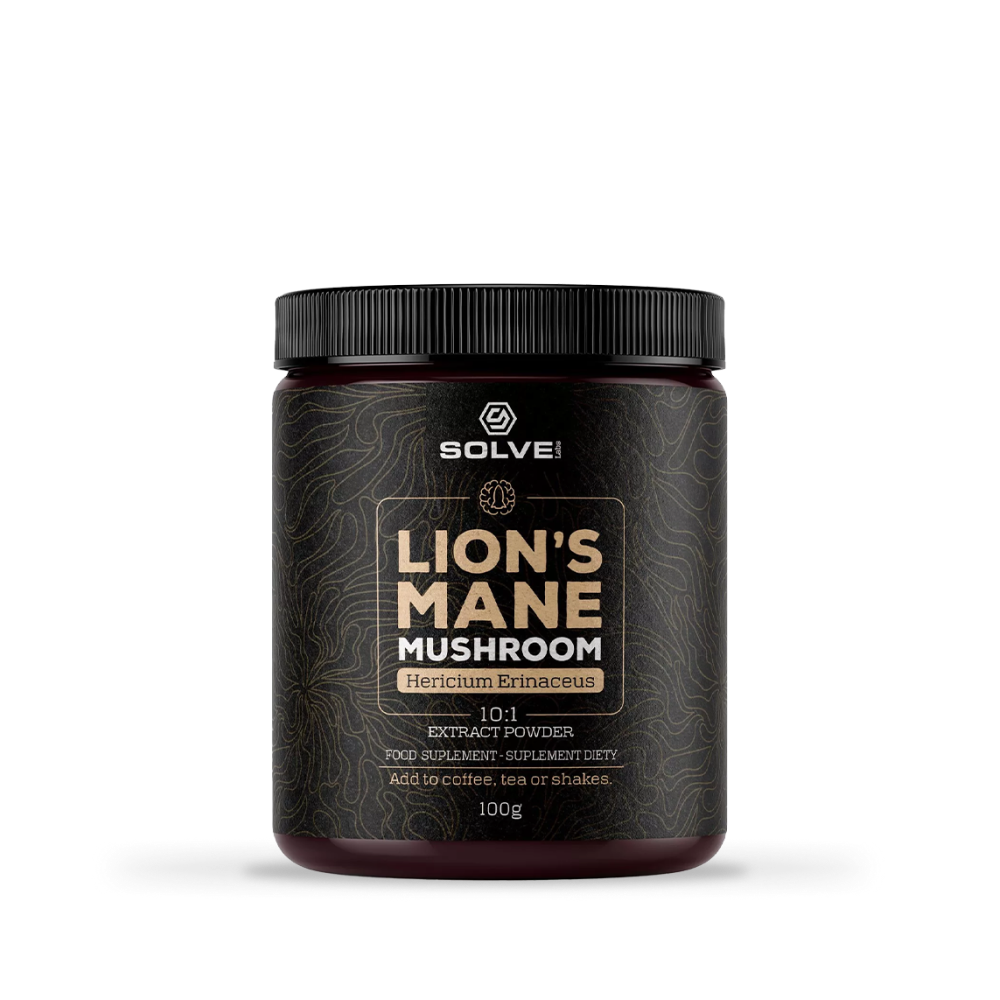
Solve Labs' Lion's Mane Capsules use a highly concentrated extract, which means potency per capsule tends to be higher than raw powder products, always check the label for the exact mg per capsule and follow the stated serving. As a general rule with any concentrated extract, you'll reach an effective dose in fewer capsules than with a myceliated-grain powder.
When is the best time to take it?
Most users take lion's mane in the morning, aligning it with the natural cortisol peak that supports daytime focus. This is a preference, not a strict rule, lion's mane is not a stimulant like caffeine, so it won't jolt you awake.
Because it doesn't cause a stimulant crash, some people worry about sleep. The good news: there's no strong evidence lion's mane disrupts sleep, and it isn't sedating either. If you split a higher dose (say 2,000-3,000 mg) across the day for cognitive support, a morning-plus-midday schedule works well. If you take a single daily dose, morning is the sensible default.
Take it with or without food, absorption isn't dramatically affected either way. If you experience mild stomach discomfort, taking capsules with a meal usually resolves it.
How long until it works?
Set expectations here, because this is where most people quit too early. Lion's mane is not acute. You won't feel a sharp "kick" 30 minutes after your first capsule.
Effects build over time. Experts and user reports point to consistent daily use for 4-6 weeks as the window where subtle changes in focus, mental clarity, or mood may become noticeable. The 16-week IADL study ran for four months before measuring outcomes. Consistency beats intensity, a steady daily dose is far more likely to help than sporadic large doses.
If you're evaluating whether it works for you, commit to at least six weeks at a consistent dose, take it at the same time daily, and keep other variables (sleep, caffeine) reasonably stable so you can actually attribute any change.
What are the side effects and risks?
Lion's mane has a strong safety profile. Adverse effects are rare at recommended doses. When they occur, they're usually mild and digestive:
- Nausea
- Abdominal discomfort
- Diarrhea
- Skin rash (rare; may indicate allergy)
One study noted hypomenorrhea (reduced menstrual flow) in participants taking 2 g/day for 4 weeks, though no other adverse reactions were reported in that trial. If you notice any allergic-type reaction, especially given it's a mushroom, stop and consult a clinician.
Long-term use: Current research indicates lion's mane is safe for long-term use in healthy adults within recommended dosages, with no significant toxicological effects observed even at higher doses. That said, "long-term" human safety data is still limited compared to established medications, so periodic breaks and check-ins with your doctor are sensible.
Interactions: Lion's mane may affect blood sugar and blood clotting in theory. If you take diabetes medication, blood thinners, or are pregnant or breastfeeding, talk to your doctor before starting. It stacks commonly with other nootropics (like caffeine + L-theanine), but always research combinations and start conservatively.
Fruiting body vs. mycelia, which is better?
This is the single most important quality question, and product labels often blur it.
| Part | Key compound | What it's associated with |
|---|---|---|
| Fruiting body | Hericenones | NGF stimulation, antioxidant and anti-inflammatory effects |
| Mycelia | Erinacines | Crosses blood-brain barrier, upregulates NGF, alertness and learning |
Both contain valuable actives, so "better" depends on what you value. The catch: mycelia products are frequently grown on grain and sold with that grain still attached, meaning a chunk of the powder is starch, not mushroom. That dilutes the active content. A quality product will state whether it uses fruiting body, mycelia, or both, and disclose the extract ratio (e.g. 8:1) or the standardised β-glucan percentage.
What to look for on a label:
- Fruiting body, mycelia, or both, clearly stated with ratio
- Extract concentration or standardisation (% β-glucans is a common, meaningful marker)
- No hidden myceliated grain or added starch as filler
- Third-party testing for purity and potency
- Vegan/vegetarian capsule if that matters to you (many mushroom capsules are)
β-glucan content is a more honest potency indicator than "polysaccharides," because the polysaccharide figure can include starch from grain.
Health benefits: what's backed and how strongly
Here's each claimed benefit, its mechanism, and an honest read on the evidence.
- Cognitive support (memory, daily function), moderate but mixed. Mechanism: hericenones and erinacines stimulate NGF, supporting neuronal maintenance. Evidence: the 16-week study showed IADL improvement at 3,000 mg/day, but no benefit on MMSE, CASI, or NPI. Real signal, narrow scope.
- Mood support (anxiety, depression), preliminary. Mechanism: still under investigation, possibly via neuroplasticity and NGF pathways. Evidence: two small studies (menopausal women; overweight/obese adults) reported symptom reduction. Encouraging, not confirmed.
- Neuroprotection and nerve regeneration, strong preclinical, unproven in humans. Mechanism: NGF upregulation plus antioxidant terpenoids and polyphenols. Evidence: robust in animal and cell studies; human confirmation lacking.
- Immune and gut support, plausible. Mechanism: β-glucans act as immunomodulators and support gut health. Evidence: consistent immunomodulatory activity in lab work; human trials limited.
The pattern is consistent: the biology is strong, the human proof is early. Treat lion's mane as a promising, low-risk addition, not a guaranteed cognitive upgrade.
Who should take lion's mane, and who shouldn't?
Lion's mane suits healthy adults who want gentle, cumulative support for focus, memory, and mood, and who are patient enough to give it 4-6 weeks. It's a reasonable choice for anyone building a nootropic routine who prefers a mushroom-based, non-stimulant option.
Be cautious or consult a doctor first if you: are pregnant or breastfeeding, take blood thinners or diabetes medication, have a mushroom allergy, or are scheduled for surgery. There's no strong reason to expect harm, but the human safety data isn't deep enough to skip the conversation.
How to use lion's mane capsules: the simple protocol
- Week 1-2: 500 mg once daily in the morning. Check tolerance.
- Week 3+: If tolerated, increase toward 1,000-1,500 mg for general focus, or split higher doses (up to 3,000 mg) across morning and midday for cognitive support.
- Timing: Morning is the default. With or without food.
- Duration: Commit to at least 4-6 weeks before judging. Consistency matters more than dose size.
- Quality: Choose a concentrated extract, clearly labelled for source and β-glucan content, third-party tested, and free of filler grain.
Do that, and you've given lion's mane a fair, evidence-aligned trial, which is more than most people ever bother to do.
- Lion's mane benefits and dosage overview
- Mori et al., 16-week trial in mild cognitive impairment (IADL improvement)
- Review of Hericium erinaceus neuroactive compounds and NGF stimulation
- Studies on anxiety/depression and lion's mane supplementation
- Reviews on hericenones, erinacines, and β-glucan activity
Frequently asked questions
How much lion's mane should I take per day?
Most healthy adults take 500-3,000 mg of extract daily. Start at 500 mg for the first 1-2 weeks, then increase by 250-500 mg every week or two if desired. For general focus and mood, 500-1,500 mg is common; studies on mild cognitive impairment in older adults used 2,000-3,000 mg/day, often split into three doses.
How long before lion's mane starts working?
Lion's mane is not acute, you won't feel it within an hour. Effects build gradually, so plan on consistent daily use for 4-6 weeks before judging results. The main human cognitive study ran 16 weeks. Consistency matters far more than occasional high doses.
When is the best time to take lion's mane, and will it affect sleep?
Morning is the usual choice, aligning with your natural cortisol peak for daytime focus. It isn't a stimulant and there's no strong evidence it disrupts sleep, so it won't keep you up, but taking it earlier suits its focus-supporting role. Take it with or without food.
Disclaimer: These statements have not been evaluated by the Food and Drug Administration. This product is not intended to diagnose, treat, cure, or prevent any disease. Consult a healthcare professional before use.
