
Fruiting Body vs. Mycelium: Which Lion's Mane Capsule Actually Works?
Fruiting Body vs. Mycelium: Which Lion's Mane Capsule Actually Works?
Most supplement brands sell you either fruiting body or mycelium and call it a day. Neither camp will tell you the inconvenient truth: these two parts of the same mushroom have fundamentally different chemistry, different mechanisms, and different use cases. Buying the wrong one doesn't just waste money, it means the benefit you're after may never arrive.
Two parts, two chemistry profiles that don't overlap
Hericium erinaceus produces two classes of bioactives that researchers actually care about. Where they concentrate is determined entirely by which part of the mushroom you're using.
Fruiting body, the white, shaggy structure you'd recognize as a mushroom, is the richer source of hericenones and beta-glucans. Beta-glucans are polysaccharides with solid mechanistic evidence for immune modulation, cholesterol reduction, and cardiovascular support. Hericenones stimulate nerve growth factor (NGF) synthesis in peripheral tissue, which matters for neuroprotection, but their ability to cross the blood-brain barrier is limited.
Mycelium, the root-like network that precedes the mushroom, is where erinacines concentrate. This distinction matters more than most people realize. Erinacines are small diterpene compounds confirmed in preclinical studies to cross the blood-brain barrier and directly boost NGF production inside brain tissue. That's a categorically different mechanism than peripheral stimulation. If cognitive performance, nerve repair, or long-term neurological health is your primary target, erinacines are the molecules doing the heaviest lifting, and fruiting body alone won't get you there.
Match the compound to the goal
Before buying anything, run this two-column test:
- Immune support, cardiovascular health, anti-inflammatory baseline → fruiting body for beta-glucan density
- Cognitive clarity, focus, nerve repair, long-term brain health → mycelium for erinacine content and blood-brain barrier access
- Both → a verified dual-extract blend where neither fraction dilutes the other
One counterintuitive caveat on inflammation: in vitro assays found that fruiting body extract increased IL-1β, a pro-inflammatory cytokine, while mycelium extract downregulated it and upregulated anti-inflammatory markers. So if inflammation is a specific concern, mycelium may actually offer the calmer immune response, despite the beta-glucan story pointing the other direction. That's worth factoring in before defaulting to fruiting body for all immune goals.
What human evidence exists, and where it runs out
A 2020 clinical study found that 1 gram per day of lion's mane over 49 weeks significantly improved cognitive test scores in mild Alzheimer's patients versus placebo, one of the more compelling human trials on record. Animal studies support the mechanism: lion's mane extract reduced amyloid-beta plaque accumulation and reversed memory loss symptoms in mouse models. There's also rodent evidence for lowered blood glucose and reduced diabetic neuropathic pain.
But be honest about the ceiling. No lion's mane product is FDA-approved for any condition. Large-scale randomized controlled trials in diverse human populations are still sparse. The mechanistic story is genuinely solid; the clinical confirmation hasn't caught up. Anyone selling certainty beyond what the data supports is selling you something else.
The grain-starch problem most brands stay quiet about
Here's the detail that separates a useful mycelium product from a waste of money: most commercial mycelium is grown on grain substrate, oats, rice, brown rice flour. The dried extract retains significant starch from that grain, which inflates the polysaccharide reading on a certificate of analysis. The product looks high in beta-glucans. It's mostly oat powder.
High-quality mycelium production uses liquid fermentation, mycelium grown in a liquid medium, then alcohol-extracted with no grain substrate involved. This preserves erinacine content and eliminates the starch problem. When evaluating any mycelium product, ask one question: liquid-grown or grain-grown? If the brand doesn't know or won't say, that's your answer.
How to evaluate any lion's mane product before buying
The supplement market has no shortage of underdosed, mislabeled, and contaminated products, particularly those sourced from regions with inconsistent agricultural oversight. Three non-negotiable checks:
- Third-party Certificate of Analysis (CoA), not just for potency, but for heavy metals, pesticides, and microbial contamination. If it's not posted publicly, request it. If they won't send it, walk.
- Beta-glucan content listed separately from total polysaccharides, if the label only shows total polysaccharides, grain starch may be inflating that number. Demand the breakdown.
- Extraction method disclosed, alcohol extraction for erinacines, hot water for beta-glucans. Dual extraction preserves both. Single-extraction products are likely missing one fraction entirely.
On Solve Labs' blend
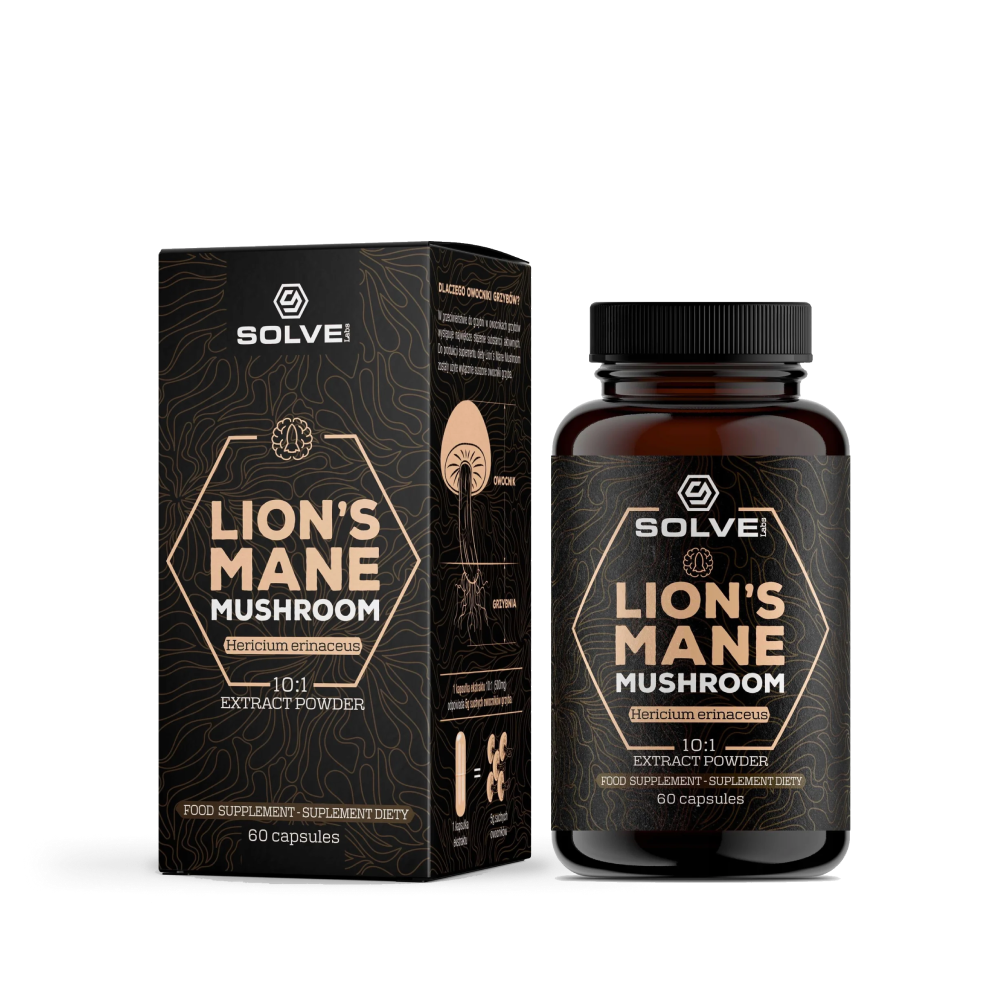
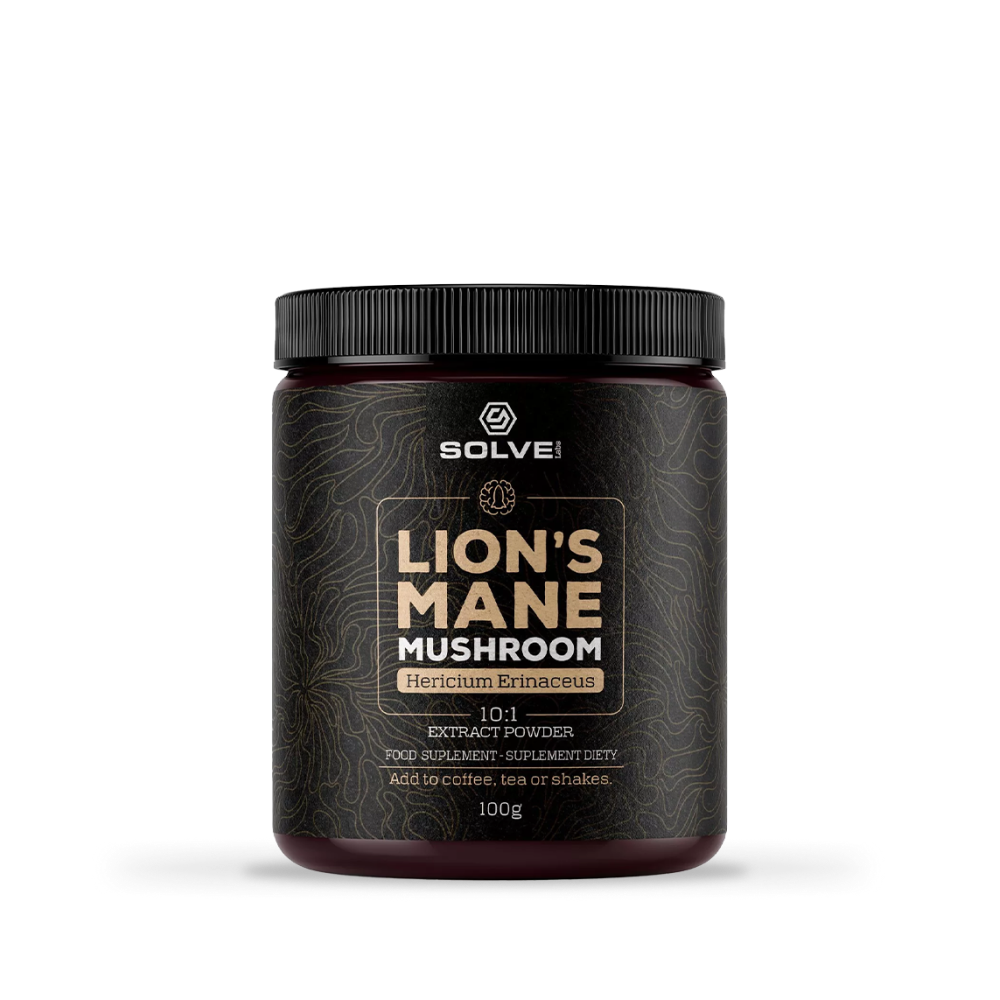
Solve Labs' Lion's Mane Capsules combine fruiting body and mycelium in a single extract, the logic being to capture beta-glucan density alongside erinacine-driven NGF stimulation. The specific fruiting body-to-mycelium ratio isn't publicly disclosed on the product page at time of writing. That's worth noting plainly: any brand serious about potency claims should be willing to state the ratio and back it with third-party testing. Ask before you buy, of this product or any other.
Lion's mane is one of the better-studied functional mushrooms, and the biological rationale for its cognitive and immune effects is genuinely interesting. But the gap between a well-made product and a poorly made one is wider here than in almost any other supplement category. Get the chemistry right. The benefits follow from that, not the other way around.
- Mori et al. (2020), Lion's mane supplementation and cognitive improvement in mild Alzheimer's, International Journal of Molecular Sciences
- Wong et al. (2016), Gastroprotective effects of Hericium erinaceus, Evidence-Based Complementary and Alternative Medicine
- Friedman (2015), Chemistry, Nutrition, and Health-Promoting Properties of Hericium erinaceus, Journal of Agricultural and Food Chemistry
- Li et al. (2022), Immunomodulatory effects of fruiting body vs. mycelium extracts, Frontiers in Immunology
- Roda et al. (2021), Bioactive compounds comparison between fruiting body and mycelium of Hericium erinaceus, IJMS
- Chen et al. (2021), Anti-inflammatory activity of mycelium polysaccharides from Hericium erinaceus, Food & Function
- Oriveda (2023), Lion's Mane research review and mycelium quality analysis
- Stamets & Zwickey (2014), Medicinal mushrooms: Ancient remedies meet modern science, Integrative Medicine
Frequently asked questions
Is fruiting body or mycelium better for brain health and focus?
Mycelium has the stronger case for cognitive goals. It contains erinacines, small diterpene compounds confirmed to cross the blood-brain barrier and directly stimulate NGF production in brain tissue. Fruiting body hericenones also support NGF synthesis but act peripherally, with less direct access to the brain. For immune support, fruiting body's higher beta-glucan content gives it the edge. If you want both, a verified dual-extract blend with disclosed ratios is the most rational choice.
Why do some lion's mane supplements list 'mycelium' but seem ineffective?
Most commercial mycelium is grown on grain substrate, rice or oats, and the dried extract retains significant starch from that grain. This dilutes actual erinacine content while inflating polysaccharide readings on the label. The product looks potent; it's mostly delivering grain starch. Look for liquid-fermented mycelium and a CoA that specifies beta-glucan content separately from total polysaccharides. If the brand can't tell you whether their mycelium is liquid-grown or grain-grown, assume the latter.
How long does lion's mane take to work, and what dose is supported by evidence?
The most rigorous human trial used 1 gram per day over 49 weeks and found significant cognitive improvement in mild Alzheimer's patients. Most commercial products dose between 500mg and 1,500mg daily. Users commonly report clearer focus within 2-4 weeks, but neurological benefits, nerve repair, long-term neuroprotection, likely require consistent use over months. Evidence for specific timelines in healthy adults without cognitive impairment remains limited.
Mentioned in this article: Lion's Mane Capsules from our range.
Disclaimer: These statements have not been evaluated by the Food and Drug Administration. This product is not intended to diagnose, treat, cure, or prevent any disease. Consult a healthcare professional before use.
