
Fruiting Body vs Mycelium on Grain: What's Actually in Your Capsule
Fruiting Body vs Mycelium on Grain: What's Actually in Your Capsule
Most mushroom supplements are, by weight, mostly grain. Fruiting body extracts average 30-40% beta-glucans, the primary immune-modulating compounds in medicinal mushrooms. Mycelium grown on grain averages 5-7%, and some products test as low as 1-5%. That's up to a 15-fold difference in the compound that actually does the work. Everything else in this debate flows from that single number.
What these terms actually mean
A fruiting body is the visible mushroom, cap, stem, spores. It's the structure the fungus produces to reproduce, and it's where millennia of traditional use and virtually all modern clinical research are focused. When you picture a Lion's Mane or a Reishi, you're picturing the fruiting body.
Mycelium is the underground thread-like network that feeds the fungus before it fruits. In a pure, isolated form it contains genuine bioactive compounds. But that's not what most supplements deliver.
What they deliver is mycelium grown on grain, typically rice or oats. The mycelium colonises the substrate, and the entire mixture, mycelium plus undigested grain, gets dried and powdered into capsules. The grain is never removed. That distinction changes everything about what you're actually swallowing.
The starch problem
Mycelium doesn't consume all of its grain substrate. Finished mycelium-on-grain products typically retain 35-40% starch, inert filler with no functional mushroom activity. The deeper problem: starch registers as "polysaccharides" on basic lab panels, which manufacturers use to inflate potency claims on labels. You see "40% polysaccharides" and assume you're getting something medicinal. You're getting grain.
Jeff Chilton of Nammex, one of the most cited analytical voices in the industry, has demonstrated that the nutritional profile of many mycelium-on-grain products "exactly tracks the nutritional content of grain." The supplement is safe. It's essentially food. But that safety comes entirely from its low active compound load.
Why fruiting bodies carry the functional load
Beta-glucans are only part of the story. Fruiting bodies are where secondary metabolites concentrate, the compounds that give each species its specific functional character.
- Reishi, Ganoderic acids (triterpenoids) drive its adaptogenic and liver-supportive activity. These accumulate almost exclusively in the fruiting body; mycelium-on-grain contains negligible amounts.
- Lion's Mane, Hericenones originate in the fruiting body; erinacines come from the mycelium. Both cross the blood-brain barrier and stimulate Nerve Growth Factor (NGF) synthesis. A grain-diluted product delivers neither at a dose that matches the clinical literature.
- Turkey Tail, Polysaccharide-K (PSK) and PSP are the studied immunomodulatory compounds. PSK is fruiting-body-derived; its presence in mycelium-on-grain products is rarely verified by independent COA.
- Cordyceps, Wild C. sinensis is prohibitively expensive; the cultivated whole mushroom (C. militaris) is the evidence-backed alternative. A grain-colonised mycelium mat is a third, distinct category with its own, weaker compound profile.
Mycelium-on-grain strips out the secondary metabolites and replaces them with starch. What remains is functionally unproven for the cognitive, immune, and adaptogenic effects people are buying it for.
Pure mycelium, a different story
Pure mycelium, properly extracted without grain contamination, is not the same product. It contains unique compounds, including polysaccharide-peptide (PSP) and, notably, higher vitamin D levels than fruiting bodies. Some researchers argue a whole-life-cycle extract combining fruiting body and clean mycelium is the most complete approach. The evidence base for fruiting body extracts is stronger and better standardised. Pure mycelium research is earlier-stage but the compound profile is real. Mycelium-on-grain is a third category, and the weakest of the three. Conflating them is how the industry obscures quality differences.
One potency caveat worth knowing
Higher active-compound load cuts both ways. Fruiting body extracts, particularly high-dose Reishi formulas rich in triterpenes, have been associated with liver toxicity in long-term, high-dose use. Follow label dosing on any well-standardised extract, and flag it with a clinician if you're taking hepatically-processed medications. This isn't a reason to choose a grain-diluted product; it's a reason to dose a good one correctly.
Lion's Mane, where the stakes are highest
Lion's Mane is where this debate becomes most consequential. The cognitive research is genuinely compelling, and the gap between a well-sourced product and a grain-heavy one is the difference between a clinical dose and a placebo.
The Mori et al. (2009) trial in Phytotherapy Research, one of the most-cited Lion's Mane studies, used 3g per day of fruiting body powder in adults with mild cognitive impairment. Participants showed significantly higher cognitive function scores versus placebo across 16 weeks; scores declined after supplementation stopped. That dose, that compound profile, is what the evidence points to. A mycelium-on-grain product at the same capsule count delivers a fraction of the active compounds that trial was built on.
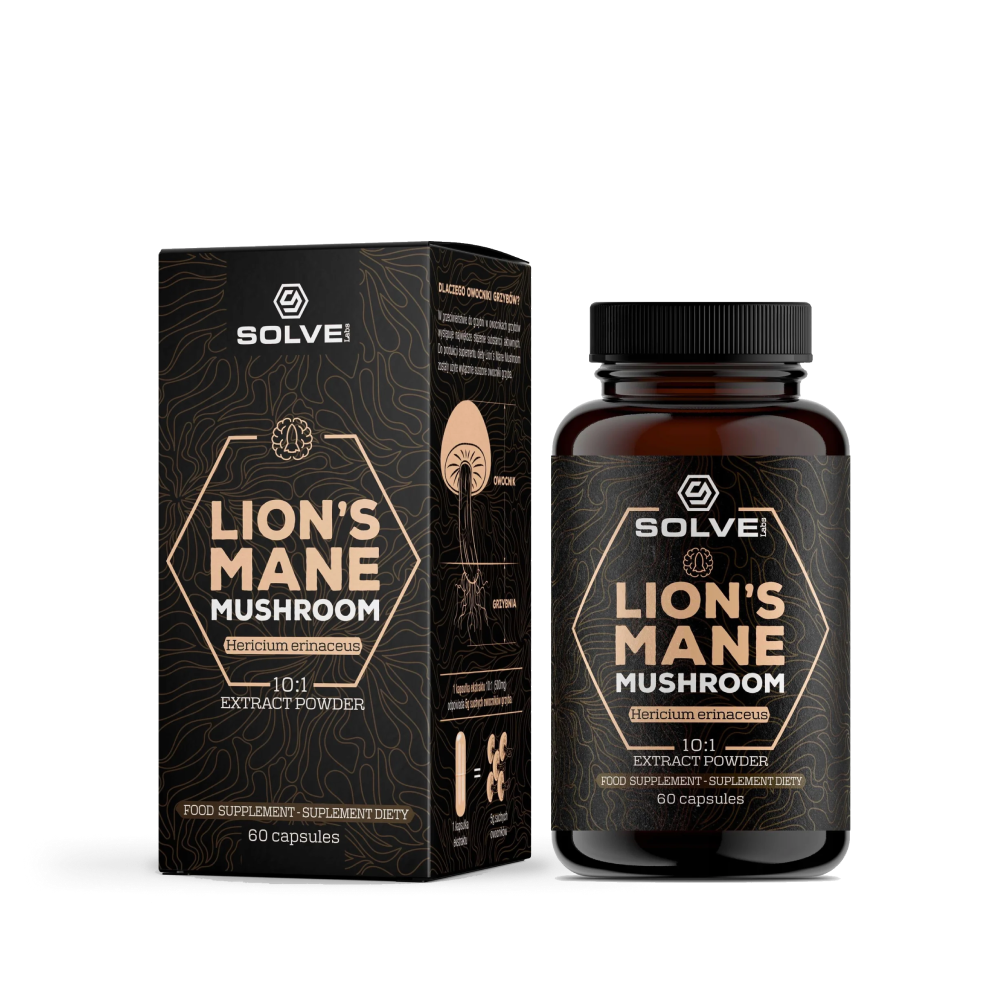
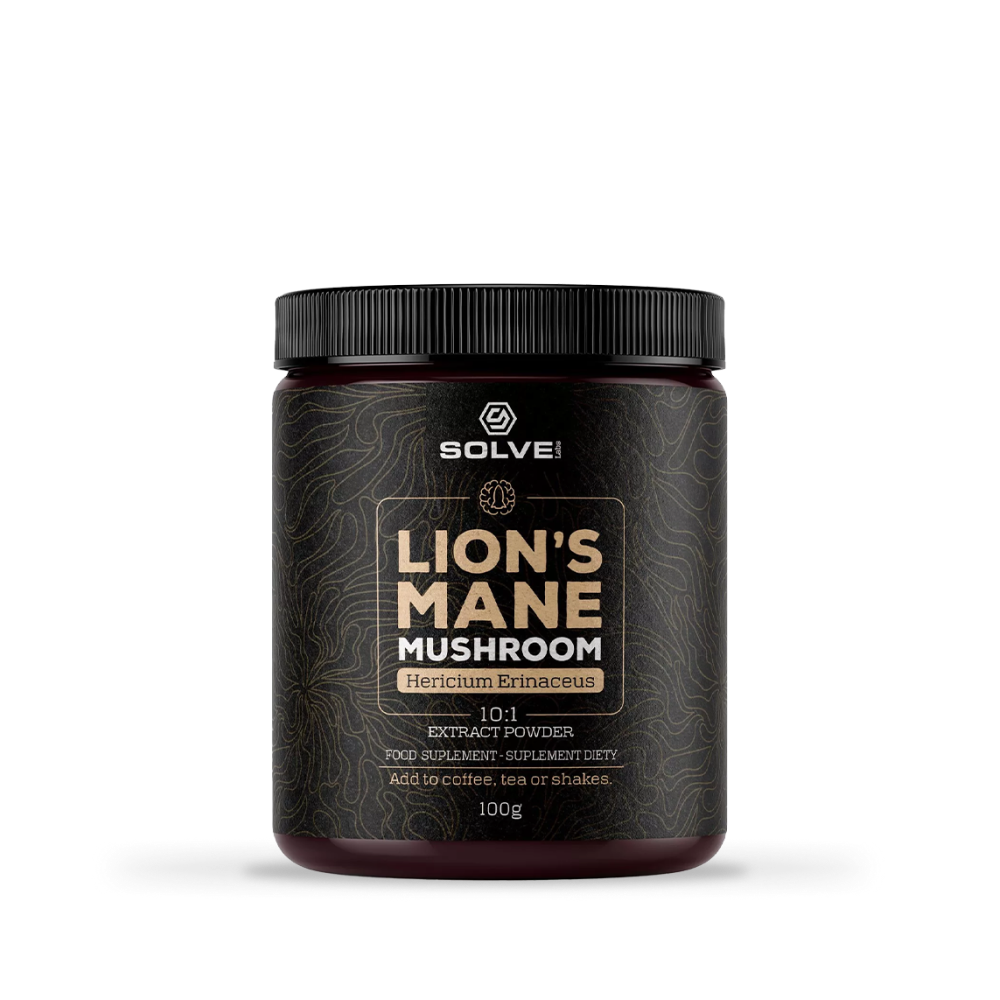
If you're benchmarking Lion's Mane products, Solve Labs' Lion's Mane Capsules use 1000mg of DNA-verified fruiting body extract at a 10:1 concentration, no grain substrate, no mycelium fillers, with beta-glucan content independently verified. That's the specification to hold other products against.
How to read a mushroom supplement label
"Mushroom supplement" is not a protected term. It can legally describe a capsule that's 40% rice starch with trace fungal activity. Three data points cut through the noise on any label:
- Source, "Fruiting body" is the signal. "Mycelium biomass," "full-spectrum," or unqualified "mushroom powder" should be treated as grain-substrate products until proven otherwise by a COA.
- Beta-glucan percentage, not polysaccharides, "Polysaccharides" is a deliberately vague term that includes grain starch. A specific beta-glucan figure of ≥30% is the standard a quality fruiting body extract should meet. Anything stated only as "polysaccharides" is obscuring the real number.
- Third-party COA with starch testing, An independent Certificate of Analysis that tests beta-glucans specifically (not total polysaccharides) and discloses starch content is the gold standard. Its absence isn't automatically disqualifying, but it's worth querying before you buy.
The framework is simple: source, beta-glucan number, independent COA. Apply it to every species on the shelf, Reishi, Turkey Tail, Cordyceps, all of them. The industry's labelling ambiguity is a solved problem once you know which three questions to ask.
- Nammex: Beta-Glucan Testing in Mushroom Products
- Gaia Herbs: What to Look for in Mushroom Supplements
- Herb Pharm: Mushroom Quality Standards
- Mori et al. (2008), International Journal of Medicinal Mushrooms: Lion's Mane nerve growth factor study
- Mori et al. (2009), Phytotherapy Research: Lion's Mane cognitive function RCT
Frequently asked questions
Can a supplement labelled 'full spectrum' contain mycelium on grain?
Yes, and frequently does. 'Full spectrum' is an unregulated marketing term that often means the entire mycelium-plus-grain biomass was dried and powdered. It can sound more comprehensive than 'fruiting body only,' but without a COA showing beta-glucan content (not just polysaccharides), it may deliver mostly grain starch. Always request the third-party lab data.
Is there any reason to choose mycelium over fruiting body?
Pure mycelium, grown and extracted without grain substrate, contains unique compounds like polysaccharide-peptide (PSP) and may complement fruiting body extracts. Some researchers favour whole-life-cycle products that include both. The problem is specifically mycelium grown on grain, where the grain never gets removed and dilutes the active compounds significantly. If a product specifies 'grain-free mycelium extract' and shows beta-glucan testing, it's a different conversation.
How do I read a Certificate of Analysis to check for grain starch?
Look for two numbers: beta-glucan percentage (you want ≥30% for a quality fruiting body extract) and starch or alpha-glucan percentage. Alpha-glucans include the grain starch that inflates polysaccharide counts. A high alpha-glucan reading alongside a low beta-glucan reading is the clearest signal you're looking at a grain-heavy product. Reputable suppliers will share this data; if a brand refuses or can only provide polysaccharide totals, treat that as a red flag.
Mentioned in this article: Lion's Mane Capsules from our range.
Disclaimer: These statements have not been evaluated by the Food and Drug Administration. This product is not intended to diagnose, treat, cure, or prevent any disease. Consult a healthcare professional before use.
