
Lion's Mane Dose Per Capsule: What the Research Actually Says
Lion's Mane Dose Per Capsule: What the Research Actually Says
Most Lion's Mane capsules contain 250-500 mg of Hericium erinaceus per capsule. The clinical trials that actually showed cognitive benefits used 3 grams per day. That gap, between what's on your label and what was tested, is the only thing that matters when you're trying to buy something that works.
Why capsule doses vary so wildly
The short answer: raw powder and concentrated extract are completely different products that look identical on a label.
A 500 mg capsule of raw fruiting body powder is 500 mg of dried mushroom. A 500 mg capsule of 30:1 concentrated extract is derived from 15,000 mg of raw material, 30 times the potency at the same listed weight. Both say "500 mg Lion's Mane" on the front. Neither label is technically lying. Only one is useful.
This is the core labeling problem in the supplement industry: omission rather than fraud. If a label doesn't specify extract ratio or active compound percentages, you cannot compare it to another product, and you cannot compare it to a clinical trial. The mg number alone is decorative.
What the clinical trials actually used
The most-cited human trial on Lion's Mane and cognition is Mori et al. (2009), a randomized controlled study published in Phytotherapy Research. Thirty Japanese adults with mild cognitive impairment took 1 gram of powdered H. erinaceus fruiting body three times daily, 3 g/day total, for 16 weeks. Scores on the Hasegawa Dementia Scale-Revised improved significantly versus placebo. No adverse lab findings.
The detail that gets quietly dropped in most summaries: those 1-gram doses were delivered as four 250 mg tablets each. Twelve tablets per day. The "take two capsules with water" instructions on most commercial products aren't dosing you anywhere near what that trial tested.
Nagano et al. (2010) used a lower dose, 2 g/day of powdered fruiting body delivered in food over four weeks, in perimenopausal women, and found significant reductions in anxiety and depressive symptoms. Different population, shorter duration, different outcome measure. Still well above what most one-a-day supplements deliver.
A more recent 28-day trial found that a single 1.8 g dose improved performance on the Stroop task (a measure of cognitive interference) with a p-value of 0.005, suggesting acute cognitive effects are achievable with 3-4 standard capsules taken together. Long-term effects over 28 days were less clear: stress trended downward (p = 0.051) but didn't reach significance, which is a useful reminder that chronic benefit likely requires sustained use well beyond a month.
Three numbers that actually matter on a label
When you're evaluating a product, ignore the marketing copy and find these three things:
- Milligrams per capsule. The baseline. 250-500 mg per capsule is standard. Below 250 mg, you're stacking a lot of capsules to reach any meaningful dose.
- Extract ratio or standardization. A 30:1 extract at 500 mg is not the same as raw powder at 500 mg. If this isn't listed, assume raw powder and dose accordingly.
- Active compound percentages. Polysaccharide content (commonly listed at 30%) and beta-glucan content (look for 5% or higher) are the most frequently disclosed markers. Erinacine and hericenone concentrations, the compounds with the strongest mechanistic evidence, are almost never standardized, which makes honest cross-brand comparison genuinely difficult.
Without the second and third data points, the mg number tells you almost nothing functional.
Why the NGF mechanism shapes how you should dose
Lion's Mane contains two biologically active compound families: hericenones (fruiting body) and erinacines (mycelium). Both stimulate nerve growth factor (NGF) synthesis. Erinacines cross the blood-brain barrier and directly boost NGF production in the hippocampus, supporting neurogenesis and nerve repair. Hericenones drive neurite outgrowth via ERK1/2 signaling.
This matters for dosing in one specific way: NGF stimulation is dose-dependent and cumulative. You're not triggering an acute receptor response the way caffeine does. You're nudging a slow biological process. That's why the Mori trial ran 16 weeks. That's why a week at a low dose won't tell you anything. And that's why extract standardization matters, if a product can't tell you how much erinacine or hericenone is in each capsule, you have no way to know whether you're delivering enough active compound to move the NGF needle regardless of what the total mg says.
What the evidence doesn't yet support
The Mori 2009 trial showed real cognitive gains, but it enrolled 30 people and hasn't been replicated at scale. Acute cognitive effects (faster processing, reduced interference on the Stroop task) are better supported by more recent data, but still rest on individual studies. The mechanistic case is strong. The human clinical evidence is encouraging and thin at the same time.
Anyone telling you Lion's Mane is a proven Alzheimer's treatment is overstating what we know. Anyone telling you it's useless is ignoring the mechanistic evidence and the early trial results. The honest position sits between those.
On safety: adverse events, mild GI discomfort, occasional nausea, occur in fewer than 10% of users and rarely require stopping. H. erinaceus is broadly recognized as safe. If you're on immunosuppressants or blood thinners, check with a doctor, not because documented harm exists, but because interaction data doesn't exist yet either.
The practical target
To match the doses used in cognitive trials: 3 g/day of fruiting body equivalent. With standard 500 mg raw powder capsules, that's 6 capsules daily. With a quality concentrated extract at a disclosed ratio, you may reach that equivalent with 3-4 capsules, but only if the extraction ratio and active compound percentages are clearly stated.
That disclosure is the baseline you should require from any brand, not a feature to be impressed by. If a company won't tell you the extract ratio and standardization, they're asking you to trust a number that means nothing.
Don't buy based on mg per capsule. Buy based on what those milligrams actually contain, and whether the brand can prove it.
Frequently asked questions
How many Lion's Mane capsules do I need to reach the clinical trial dose?
The Mori et al. (2009) cognitive trial used 3 g/day of powdered Hericium erinaceus fruiting body. With standard 500 mg raw powder capsules, that's 6 capsules daily. With a concentrated extract (e.g. 30:1) at a clearly disclosed ratio, you may achieve the same fruiting body equivalent with 3-4 capsules. If the extraction ratio isn't stated on the label, assume raw powder and dose accordingly.
Is 500 mg of Lion's Mane extract the same as 500 mg of Lion's Mane powder?
No, and this is the most important distinction in the category. A 500 mg capsule of 30:1 concentrated extract is derived from approximately 15,000 mg of raw mushroom material. Raw powder at 500 mg is just 500 mg of dried fruiting body. Both labels say '500 mg.' Always check for an extract ratio or standardized active compound percentages before comparing products or estimating your functional dose.
How long does Lion's Mane take to work?
Acute cognitive effects, faster processing speed on tasks like the Stroop test, have been observed with single doses of 1.8 g in recent research. Sustained cognitive benefits of the kind measured in the Mori 2009 trial required 16 weeks of consistent daily use. A 28-day trial showed stress trending downward but not reaching statistical significance, suggesting a month isn't long enough to draw conclusions about chronic benefit.
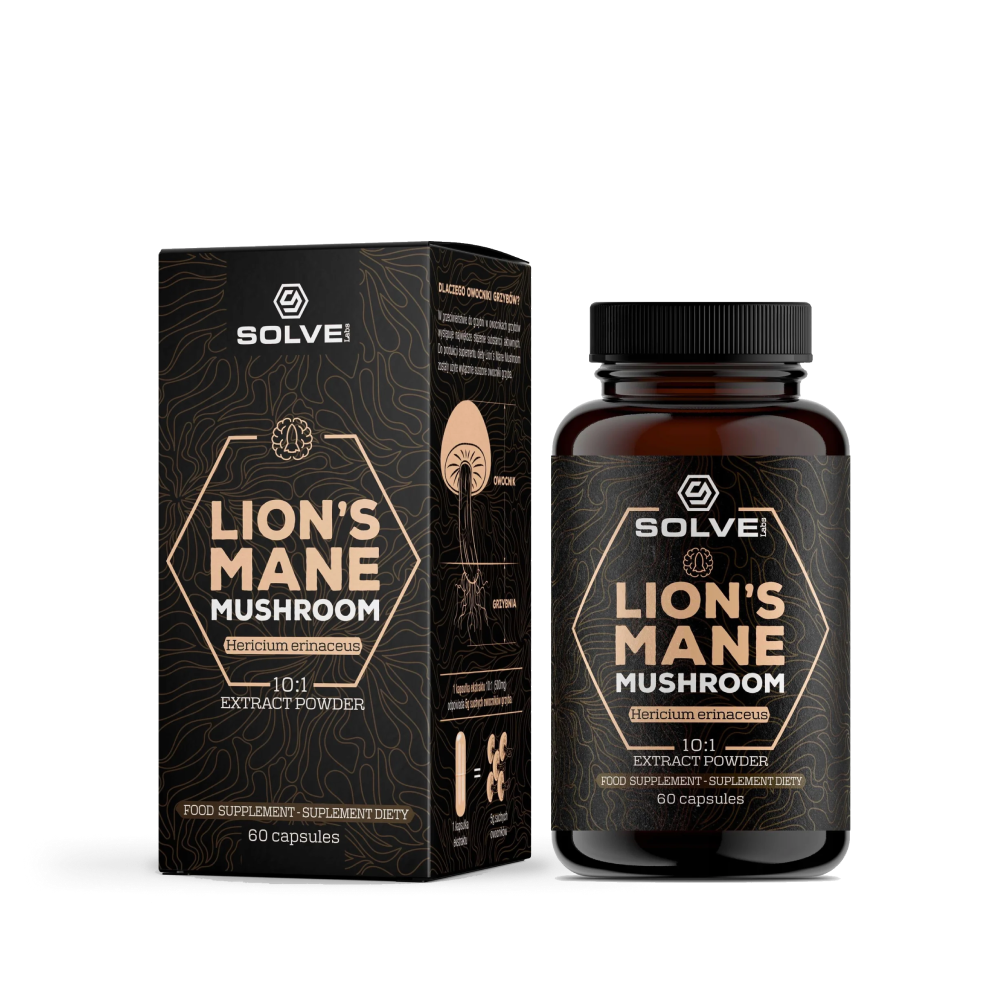
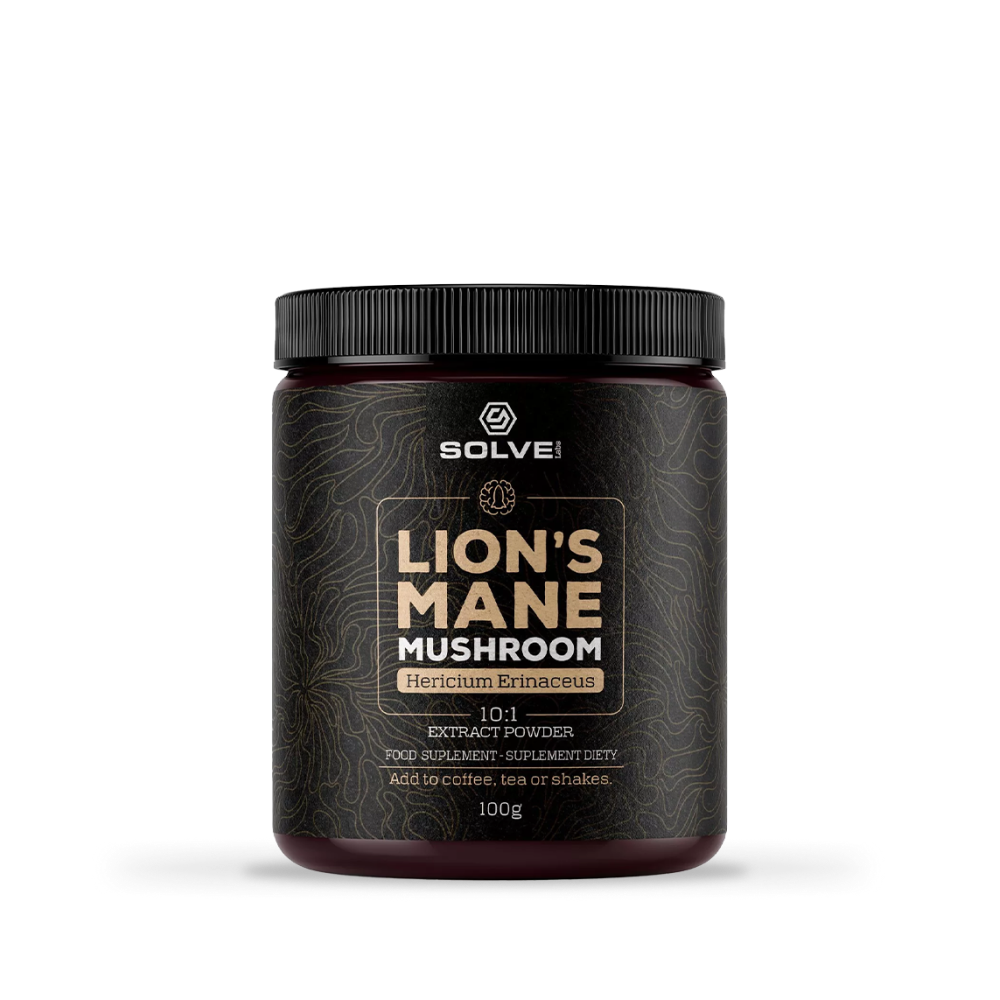
Mentioned in this article: Lion's Mane Capsules from our range.
Disclaimer: These statements have not been evaluated by the Food and Drug Administration. This product is not intended to diagnose, treat, cure, or prevent any disease. Consult a healthcare professional before use.
