
Mushroom Plant Protein & Nut/Soy Allergy: Is It Safe?
Mushroom Plant Protein & Nut/Soy Allergy: Is It Safe?
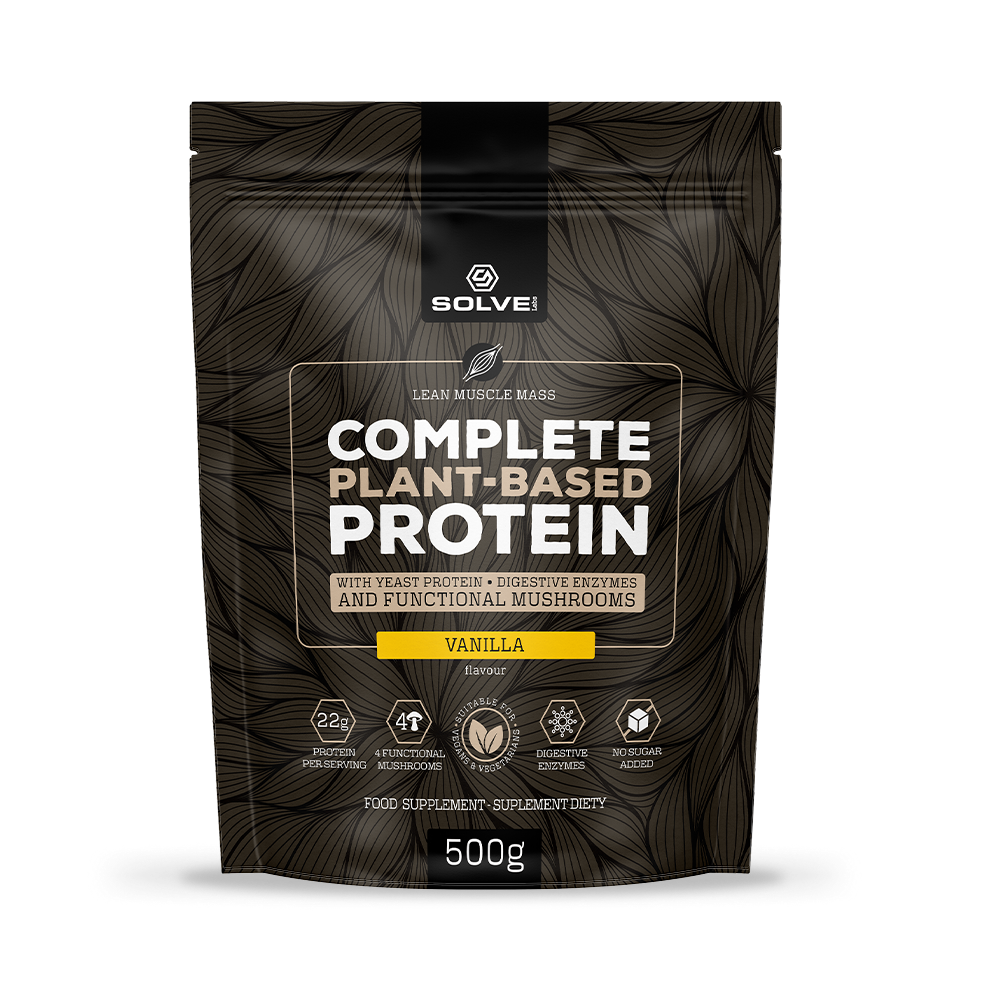
- The four intentional protein sources, pea, rice, pumpkin seed, and yeast, contain no soy or nut, but the label carries a 'may contain' cross-contamination warning listing soy, peanuts, and other nuts.
- For anyone with an IgE-mediated (anaphylactic) soy or nut allergy, a 'may contain' warning means the product is NOT safe without batch-specific allergen testing or a 'free-from' facility certification.
- Each 35 g serving delivers 22-22.4 g of complete plant protein plus 500 mg each of Lion's Mane, Reishi, Cordyceps, and Chaga (2,000 mg total mushroom extract).
- Mushroom doses are below the amounts used in most positive human trials (e.g. Lion's Mane 900 mg/day, Cordyceps 3-5 g/day), so treat the 500 mg inclusions as supportive, not therapeutic.
- Is this protein safe for a nut or soy allergy?
- The four plant protein sources
- Is it a complete protein?
- Will DigeZyme stop the bloating from pea protein?
- How much of each mushroom is in a serving?
- Are the extracts standardised for beta-glucans?
- What the evidence actually says, mushroom by mushroom
- Benefits, with mechanism and grade
- Full macros?
- Meal replacement, or post-workout only?
- Plant protein vs whey vs soy, for allergy-conscious buyers
- Who it fits, and who should verify first
- How long until it works?
- Third-party tested? Certified vegan?
- Sources
Direct answer: Solve Labs Mushroom Plant Protein has no soy or nut as intentional ingredients. Protein comes from pea, rice, pumpkin seed, and yeast. But the label carries a cross-contamination warning, it may contain unintended soy, peanuts, and tree nuts. That warning is the whole story for an allergy sufferer. If your soy or nut allergy is IgE-mediated, a "may contain" product is not safe without a facility free-from certification or batch-specific allergen testing. Boston Children's Hospital is explicit on this: "may contain" is not a safe label for a person with a true food allergy [1].
Two things get confused here, intentionally free-from and verifiably free-from. They are not the same. A clean ingredient list means the recipe skips the allergen. Verifiably free-from means the facility proved trace protein didn't cross over. This guide holds those two apart, then works through the rest of the formula with the doses attached.
| Fact | Detail |
|---|---|
| Intentional allergens | None from soy or nuts. Protein = pea, rice, pumpkin seed, yeast. |
| Cross-contamination warning | "May contain" milk, soy, peanuts, other nuts, sesame, oats, eggs, shellfish, fish, gluten. |
| Safe for IgE nut/soy allergy? | No, not without facility certification or batch testing [1]. |
| Protein per serving | 22-22.4 g, complete amino acid profile. |
| Mushrooms | Lion's Mane, Reishi, Cordyceps, Chaga, 500 mg each, 2,000 mg total. |
| Digestive enzymes | DigeZyme multi-enzyme complex. Dose undisclosed. |
| Allergy-claim evidence grade | Strong. The label statement is explicit. |
Is this protein safe for a nut or soy allergy?
It depends on severity, and the mechanism tells you why. An IgE-mediated allergy fires on trace protein, sometimes in the low milligram range. That is exactly what cross-contamination leaves behind. So the ingredient list can't settle the question. The manufacturing record can.
The label states in Polish: "Produkt może zawierać niezamierzoną obecność alergenów", the product may contain unintended allergens, and it names milk, soy, peanuts, other nuts, sesame, oats, eggs, shellfish, fish, and gluten. Boston Children's Hospital treats "may contain" the same way an allergist does: not safe for someone with a true food allergy, because the manufacturer is telling you the allergen could be present [1].
Anaphylactic soy or nut allergy? Don't read the ingredient panel. Read the allergen-control statement. Request a signed free-from certification or a batch allergen test from the manufacturer before you buy. No document, no purchase.
Mild, non-IgE intolerance, or no allergy at all, different calculus. No intentional soy or nut protein means the practical risk is lower. The caveat still holds. The label guarantees the recipe, not the facility.
The four plant protein sources
22-22.4 g of protein per 35 g serving, from four sources. Each has its own allergen and amino-acid signature.
- Pea protein. Not a common allergen. High in leucine, the branched-chain amino acid that flips on muscle protein synthesis.
- Rice protein. Gluten-free, lactose-free. Rich in cysteine and methionine, the sulphur amino acids pea runs short on. Pea plus rice is the classic complementary pairing.
- Pumpkin seed protein. Adds arginine and magnesium. It's a seed, not a tree nut, so it is not a nut-allergen source.
- Yeast protein. BCAA-dense and complete on essential amino acids. Unusually so for a plant source.
None of the four is soy. None is a tree nut. So the allergen risk is a manufacturing risk, not a formulation one. Hold onto that distinction, it's the entire safety question.
Is it a complete protein?
Yes. The blend covers all essential amino acids because the sources fill each other's gaps, pea and yeast bring leucine and lysine, rice covers the sulphur amino acids. Mechanism: a complete essential-amino-acid profile with enough leucine drives muscle protein synthesis. Yeast is the standout here, it's BCAA-dense for a plant, which lifts the whole blend.
Caveat, up front. "Complete" means the amino acids are present. It does not mean the digestibility matches whey. Plant proteins generally score lower on DIAAS, the digestible indispensable amino acid score. That gap is one reason there's an enzyme complex in the tub.
Will DigeZyme stop the bloating from pea protein?
Mechanism first. Plant-protein bloating usually comes from carbohydrates and fibres that don't fully break down and then ferment in the gut. DigeZyme is a five-enzyme complex, α-amylase, protease, lipase, cellulase, and lactase, built to break those components down before they ferment. Sabinsa's clinical dosing runs 500-1,000 mg per serving [3].
Here's the limit. The product doesn't disclose its DigeZyme dose. Below the ~500 mg lower bound, the benefit may be subtherapeutic. So calibrate expectations, modest bloating reduction at best. Give it 1-2 weeks. Transient soft stools or mild nausea in the first fortnight are common as the gut adapts, not a failure signal.
How much of each mushroom is in a serving?
500 mg of each of four extracts. 2,000 mg total. The number that matters isn't the inclusion, it's the gap between the inclusion and the dose that actually did something in a trial. One of these gaps is citable. The other three are not, and we say so.
| Mushroom | In this product | Cited trial dose | Gap |
|---|---|---|---|
| Lion's Mane (Hericium erinaceus) | 500 mg | 900 mg/day, 49 days, double-blind cognitive trial [2] | ~1.8× short |
| Cordyceps (Cordyceps sinensis) | 500 mg | Commonly cited exercise doses run gram-scale; we hold no verifiable trial here | Not verified |
| Reishi (Ganoderma lucidum) | 500 mg | Immune-modulation doses often reported gram-scale; we hold no verifiable trial here | Not verified |
| Chaga | 500 mg | Human evidence limited; we hold no verifiable trial here | Not verified |
Lion's Mane: 500 mg per serving. The cognitive trial that moved the needle used 900 mg over 49 days [2]. Know the gap. For the other three, we won't attach a number we can't stand behind, the doses often quoted online sit gram-scale, but we hold no citation we'd defend, so treat those as unverified. Bottom line: treat the mushrooms as a supportive add-on to your protein, not a therapeutic dose meant to replicate a clinical result.
Are the extracts standardised for beta-glucans?
Not disclosed. That matters, and here's the mechanism. Reishi and Chaga's immune effects run through β-glucans binding immune-cell receptors. So 500 mg standardised to 30% β-glucans is a different product from 500 mg of raw powder sitting near 2%. Without a stated β-glucan percentage, the active dose is unverifiable, you're buying milligrams of extract, not milligrams of active compound. If immune support from the mushrooms is your goal, ask for the standardisation figure first. Don't assume the 500 mg does the work.
What the evidence actually says, mushroom by mushroom
Graded to the strength of the data, not to the marketing.
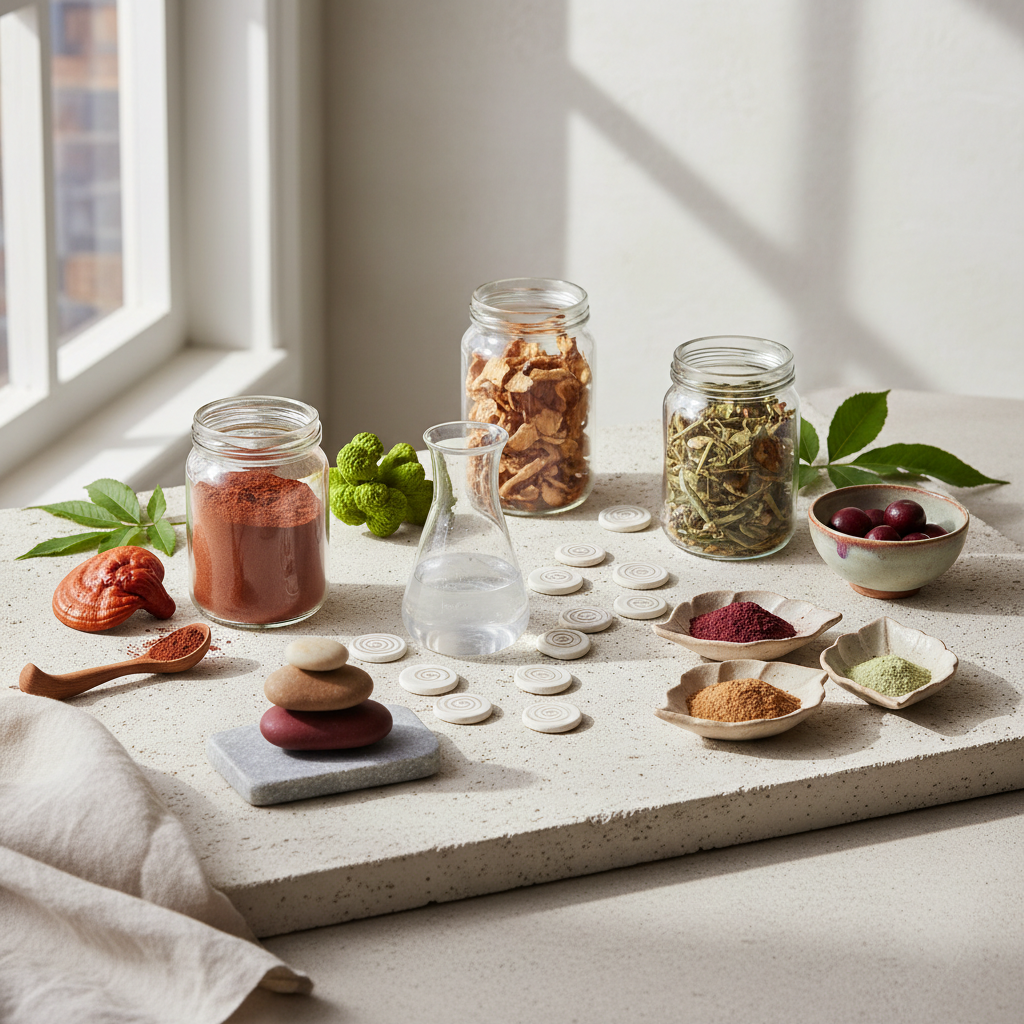
- Lion's Mane, moderate. A 2019 double-blind trial found cognitive improvement at 900 mg/day over 49 days, plausibly via stimulation of nerve growth factor synthesis [2]. Human data exists. Sample sizes are small, and the trial dose exceeds the 500 mg here.
- Cordyceps, plausible mechanism, dose unverified. The proposed pathway, raising ATP production and oxygen utilisation, is coherent, and exercise trials are frequently cited. We hold no citation we'd defend for the specific dose, so we won't quote one. The 500 mg here is below the gram-scale amounts typically referenced.
- Reishi, plausible mechanism, dose unverified. β-glucan immune signalling is a real pathway. We won't attach a trial dose we can't source. Without standardisation data, the active β-glucan load is unknown regardless.
- Chaga, weak. Antioxidant and anti-inflammatory effects show up mainly in animal work; robust human trials are lacking. Be skeptical of strong human claims.
Benefits, with mechanism and grade
- Muscle recovery and synthesis, strong. 22 g of complete, leucine-containing protein per serving drives muscle protein synthesis. This is the product's best-supported benefit. Everything else is secondary.
- Less protein bloating, moderate, dose-dependent. DigeZyme breaks down fermentable carbs and fibres, clinically dosed at 500-1,000 mg [3]. The undisclosed dose caps confidence.
- Cognitive support from Lion's Mane, moderate but underdosed. The NGF mechanism is credible; 500 mg sits below the 900 mg trial dose [2].
- Stamina from Cordyceps, plausible but underdosed and unverified. ATP-production mechanism is sound. 500 mg is below commonly referenced amounts, and we hold no trial citation.
- Immune modulation from Reishi/Chaga, weak-to-moderate, unverifiable. β-glucan mechanism is real. Without standardisation data and at 500 mg, the active dose can't be confirmed.
Full macros?
Headline is 22-22.4 g protein per 35 g serving. Carbohydrate, fat, and calorie figures aren't disclosed. Treat any single-number claim without a published nutrition panel with caution, and check the label on the batch you receive.
Meal replacement, or post-workout only?
At ~22 g protein, it works as a post-workout or between-meal top-up. Full meal replacement is a different job, balanced macros plus added vitamins and minerals, and the undisclosed carbohydrate, fat, and micronutrient content means it isn't built for that. Use it as a protein supplement first.
Plant protein vs whey vs soy, for allergy-conscious buyers
| This blend | Whey | Soy protein | |
|---|---|---|---|
| Dairy allergen | None intentional | Milk allergen | None |
| Soy allergen | None intentional ("may contain") | Usually none | Yes, soy |
| Nut allergen | None intentional ("may contain") | Usually none | Usually none |
| Complete amino acids | Yes (blended) | Yes | Yes |
| Digestibility (DIAAS) | Moderate | High | Moderate-high |
Milk allergy? This blend beats whey, whey is a dairy product. Soy allergy? It avoids soy as an ingredient, but the cross-contamination warning is the deciding factor, not the ingredient list [1].
Who it fits, and who should verify first
Reasonable fit: vegans and vegetarians who want a complete protein, people avoiding dairy, and anyone who wants mushroom extracts bundled with protein and doesn't need therapeutic mushroom doses.
Verify before buying: anyone with an IgE-mediated allergy to soy, peanut, tree nut, sesame, egg, fish, shellfish, milk, or gluten should not use it without a manufacturer free-from certification or a batch allergen test [1]. Pregnant or breastfeeding people, and anyone on immunosuppressants, should consult a clinician before taking Reishi or Cordyceps, both can modulate immune and clotting activity.
How long until it works?
Protein recovery benefits are immediate and stack with training. Digestive comfort from the enzyme complex usually shows within 1-2 weeks, the same window where transient bloating or soft stools may appear as the gut adjusts. Mushroom cognitive effects, where the dose was therapeutic, took 49 days in the Lion's Mane trial [2], and the 500 mg here isn't therapeutic. So: protein results in days. Don't expect clinical-grade mushroom effects at these inclusion levels.
Third-party tested? Certified vegan?
Neither is confirmed in the available information. Given the allergen question, third-party or batch allergen testing is exactly the documentation an allergy-conscious buyer should demand. The absence of a stated certification is a data point, not a reassurance.
Sources
- Boston Children's Hospital, Food Allergies, including "may contain" guidance. childrenshospital.org/conditions/food-allergies
- Hericium erinaceus (Lion's Mane) double-blind cognitive trial, 900 mg/day for 49 days (2019). PubMed.
- Sabinsa DigeZyme multi-enzyme complex, clinical dosing 500-1,000 mg. sabinsa.com/products/digezyme
Frequently asked questions
Is Solve Labs Mushroom Plant Protein safe if I have a peanut allergy?
Not without confirmation. The product contains no intentional nut ingredients, but its label warns it 'may contain' peanuts and other nuts from cross-contamination. Allergist consensus (per Boston Children's Hospital guidance) is that 'may contain' products are unsafe for IgE-mediated allergies unless the manufacturer provides a 'free-from' facility certification or batch-specific allergen testing.
Does the protein powder contain soy?
Not as an intentional ingredient, the protein is from pea, rice, pumpkin seed, and yeast. However, soy is one of the allergens listed in the product's 'may contain' cross-contamination warning, so it cannot be labelled soy-free without independent testing.
Are the mushroom doses high enough to work?
Each serving has 500 mg of Lion's Mane, Reishi, Cordyceps, and Chaga. These sit below the doses used in positive human trials (e.g. Lion's Mane 900 mg/day; Cordyceps 3-5 g/day; Reishi 1.5-3 g/day). Treat the mushrooms as supportive additions, not therapeutic doses, especially without disclosed β-glucan standardisation.
Disclaimer: These statements have not been evaluated by the Food and Drug Administration. This product is not intended to diagnose, treat, cure, or prevent any disease. Consult a healthcare professional before use.
