
Cordyceps vs Lion's Mane for Energy: Which One You Need
Cordyceps vs Lion's Mane for Energy: Which One You Need
- Cordyceps raises VO₂ max by ~11% in 3 weeks in a placebo-controlled trial, its cordycepin compound directly drives ATP production and oxygen utilization.
- Lion's Mane has zero proven effect on physical energy or VO₂ max, its hericenones and erinacines work via nerve growth factor (NGF) to support focus, clarity, and cognitive resilience.
- These two mushrooms target completely different energy pathways, ATP/adenosine signaling (Cordyceps) vs. neurotrophic support (Lion's Mane), with no meaningful overlap.
- Effective doses: 1,000-3,000 mg/day Cordyceps for endurance; 500-3,000 mg/day Lion's Mane for cognitive benefits, subtherapeutic doses are a real risk with many products.
Cordyceps for physical output. Lion's Mane for mental output. That's the decision, and it's the only framework you need. Both get filed under "energy mushrooms," but that label papers over a fundamental difference: they work through entirely separate biological pathways, target different systems, and solve different problems. Choose the wrong one and you're paying for something that won't move the needle on what you actually need.
The single question that determines your choice: Is the energy gap you're closing physical or mental? Everything below is the science behind why that question settles it.
Cordyceps: cellular energy, built from the mitochondria up
Cordyceps doesn't borrow energy from tomorrow the way stimulants do. It improves how your cells manufacture it today. The primary active compound, cordycepin (3′-deoxyadenosine), is a structural analog of adenosine, it slots into the same receptor pathways your cells use to regulate energy expenditure, enhancing mitochondrial ATP synthesis at the source.
That mechanism has measurable, real-world results. In a double-blind, placebo-controlled RCT published in the Journal of the International Society of Sports Nutrition, Cordyceps militaris supplementation raised VO₂ max from 44.0 to 48.8 ml/kg/min across three weeks, an ~11% improvement in aerobic capacity in healthy adults. A separate study in the Journal of Dietary Supplements found improvements in high-intensity exercise tolerance after just one week, with oxygen utilization and time-to-exhaustion continuing to climb at the three-week mark. A broader functional mushrooms evidence review in Nutrients corroborates the performance data pattern across multiple Cordyceps trials.
Practically: Cordyceps extends the ceiling before fatigue hits. No caffeine spike. No crash. Just more efficient cellular energy machinery running longer at higher output.
The honest caveat: The VO₂ max finding is one well-designed study, promising, mechanistically grounded, but not a settled consensus. Broader Cordyceps data is mixed; some trials show modest or no effect. It is not a guaranteed performance enhancer for every person. What the evidence does justify is a credible, science-backed reason to try it, particularly for endurance athletes and anyone doing consistent high-intensity training.
Dosage for physical energy
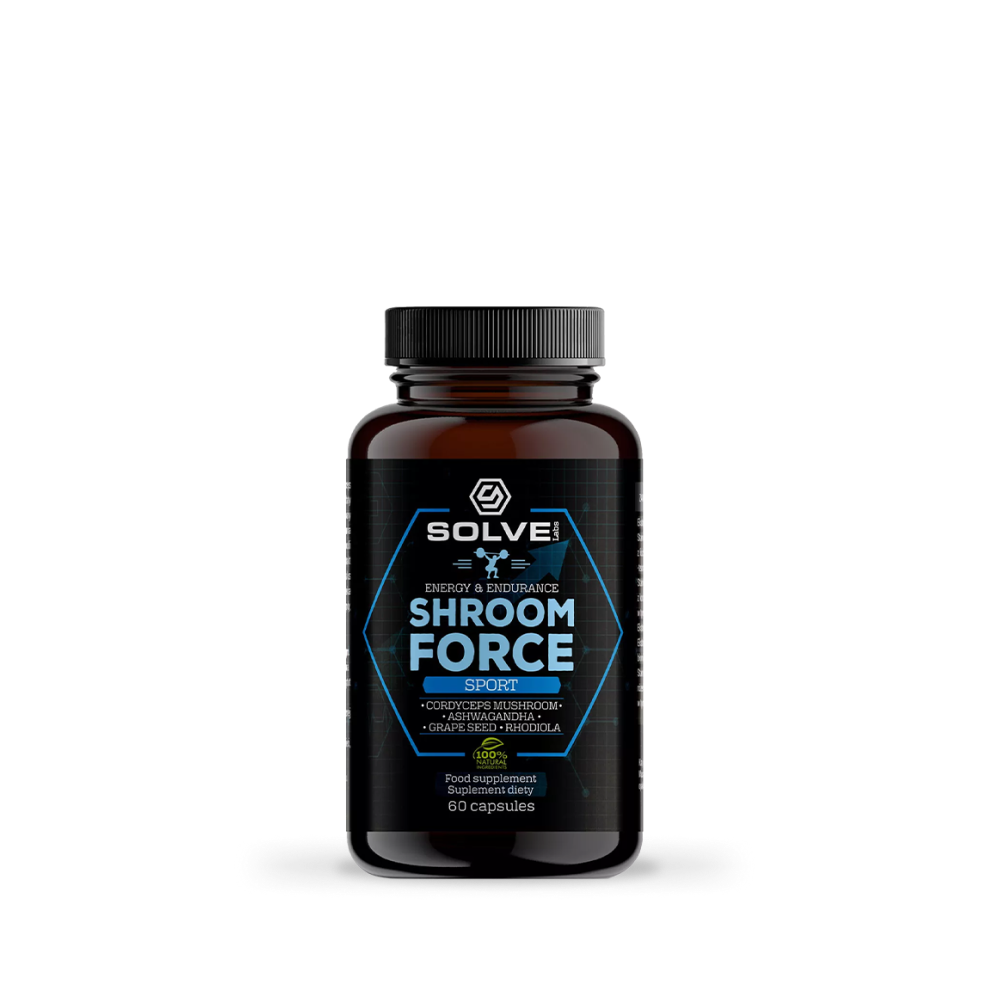
Human performance studies use 1,000-3,000 mg/day of C. militaris extract for two to six weeks. Extract concentration is everything, a 10:1 extract at 1,000 mg delivers the bioactive equivalent of 10,000 mg of raw powder. If a product doesn't declare its extract ratio or standardized beta-glucan content, that's a disqualifier. Subtherapeutic dosing is the single most common reason functional mushroom supplements underdeliver.
One more species note: Cordyceps militaris is the species with human trial evidence. Products claiming C. sinensis are almost never authentic, that species is genuinely rare and prohibitively expensive. If the label just says "Cordyceps," ask which one.
Lion's Mane: mental energy through neurological renovation
Lion's Mane doesn't touch VO₂ max. It doesn't improve oxygen delivery to muscles or modulate adenosine signaling. What it does is structurally more interesting, it promotes the growth and maintenance of neurons themselves.
Two compound classes drive this. Hericenones, concentrated in the fruiting body, and erinacines, found in the mycelium, both cross the blood-brain barrier and activate the TrkA receptor, upregulating NGF (nerve growth factor) gene expression. NGF governs the growth, maintenance, and survival of neurons. More NGF means stronger synaptic connectivity, improved hippocampal neurogenesis, and, over consistent use, sharper memory retention and faster task-switching. The Mori et al. review in NCBI PMC maps this mechanism in detail across both compound classes.
This is mental energy at the structural level. Not a jolt, a renovation. That's why Lion's Mane users typically report gradual improvements in clarity over weeks, not days. Expect nothing from day one. Stick with it for four to six weeks and the cognitive payoff becomes tangible, even if large-scale human RCTs are still catching up to the robust cell and animal data.
There's a mood dimension worth flagging too. Erinacines A and C activate Nrf2, a master antioxidant regulator with neuroprotective effects independent of NGF. Early evidence suggests Lion's Mane may reduce anxiety and mild depressive symptoms by dampening chronic neuroinflammation, the mechanism is credible, the human evidence is preliminary, but it helps explain why consistent users often report sharper focus alongside an improved baseline mood.
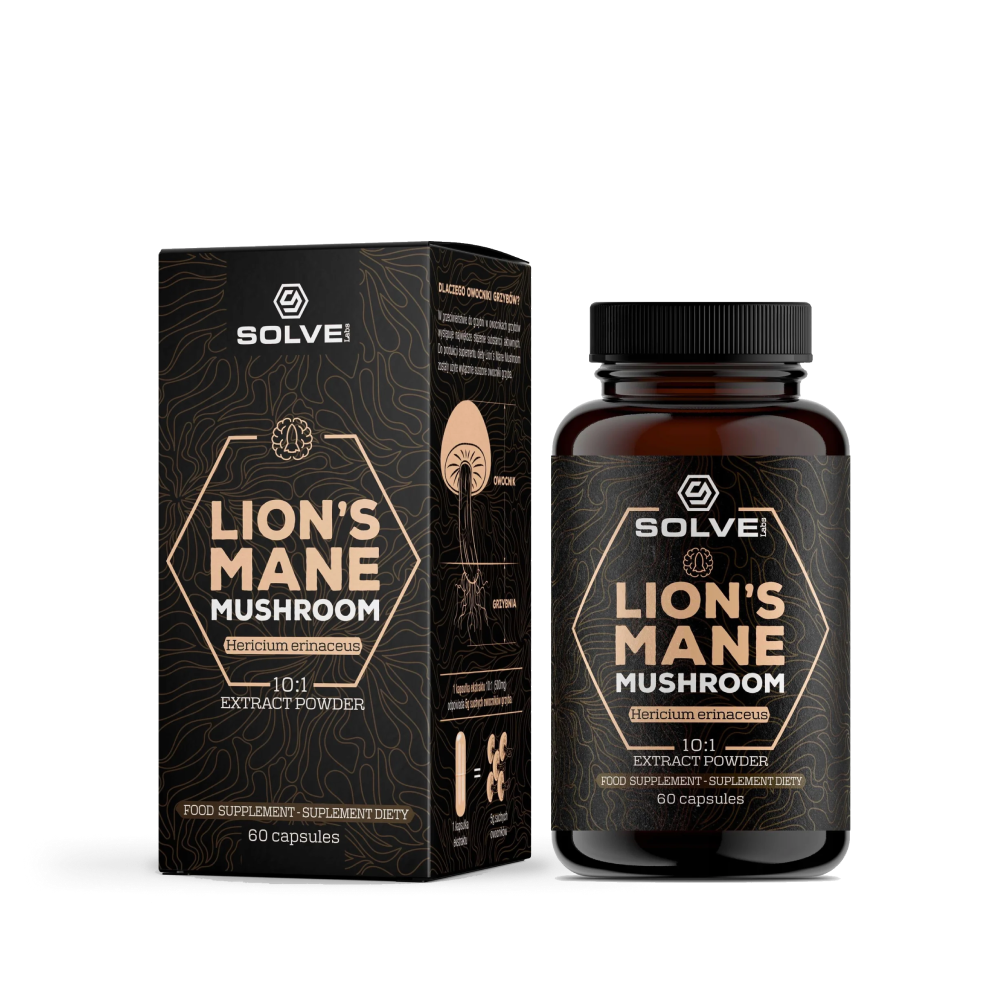
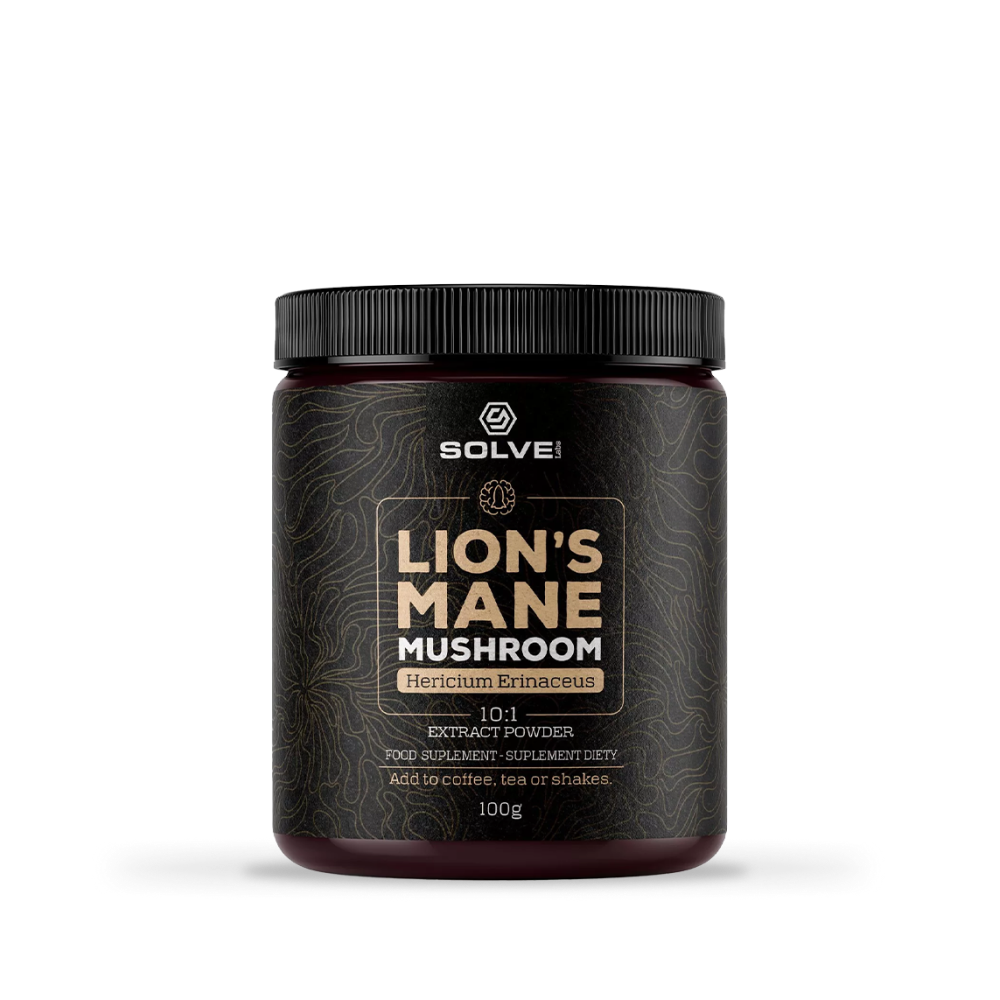
For maximum hericenone content, source matters: fruiting body extracts are your primary delivery vehicle. Mycelium-on-grain products often contain more starch than actives. Solve Labs' Lion's Mane Capsules use 100% fruiting body extract, no mycelium filler, no guesswork.
Dosage for cognitive benefits
Cognitive studies use 500-3,000 mg/day, with higher doses producing more consistent results. Morning or early afternoon dosing works best, there's no performance-timing logic here the way there is with Cordyceps pre-workout. Give it a minimum of three to four weeks before evaluating. Abandoning Lion's Mane at two weeks is the most common way to miss the benefit entirely.
The two-pathway framework: why these mushrooms don't overlap
| Cordyceps | Lion's Mane | |
|---|---|---|
| Primary pathway | Adenosine/ATP signaling | Neurotrophic support (NGF) |
| Target system | Mitochondria, cardiovascular | Central nervous system, neurons |
| Energy type | Physical stamina, endurance | Mental clarity, focus, memory |
| Onset | 1-3 weeks | 3-6 weeks |
| Best timing | Pre-workout or morning | Morning or early afternoon |
| Evidence strength | Strong for VO₂ max (1 RCT); mixed overall | Mechanistically robust; human RCTs evolving |
No meaningful crossover exists between these pathways for performance purposes. Lion's Mane before a run won't improve your oxygen utilization. Cordyceps before a study session won't sharpen your working memory. The "energy mushroom" label applied to both is a marketing convenience, not a biological reality.
The bottom-line recommendation matrix
Stop second-guessing. Here's the decision, mapped to who you actually are:
- You train hard and want better endurance, faster recovery between sets, or higher sustained output → Cordyceps. Start at 1,500 mg/day of a verified C. militaris extract. Assess at week three.
- You need sharper focus, better memory recall, or cleaner cognitive output under pressure → Lion's Mane. Minimum 1,000 mg/day of fruiting body extract. Assess at week four to six.
- Your days demand both, hard physical training and high cognitive output → Stack them. The pathways don't compete and there's no known negative interaction. Cordyceps in the morning on training days; Lion's Mane every morning regardless of training.
- You're dealing with brain fog but also low physical energy → Start with Lion's Mane first. Cognitive drag is more often a neurological issue than an ATP issue. Reassess at six weeks, then layer in Cordyceps if physical fatigue remains.
- You're a high-volume endurance athlete hitting a performance plateau → Cordyceps is your primary target. Lion's Mane as a secondary add-on for mental resilience during long training blocks.
The question was never which mushroom is better. It's which problem you're solving. Physical output or mental output, pick accordingly. Or pick both and cover the full spectrum.
What to look for in a product, and what disqualifies one immediately
Dosage opacity is the most reliable way to waste money on functional mushrooms. Non-negotiables before you buy:
- Extract ratio declared, 10:1 or equivalent concentration, not raw powder weight
- Beta-glucan content standardized, the bioactive polysaccharides behind most effects; look for 30-45%
- Fruiting body vs. mycelium disclosed, mycelium-on-grain products are often majority starch with trace actives
- No proprietary blends obscuring individual doses, if you can't see the dose per ingredient, you can't assess whether it's therapeutic
- Species verified, Cordyceps militaris for performance; Hericium erinaceus for cognition; anything vague is a red flag
Functional mushrooms deliver real, measurable results, when the product is formulated correctly. At subtherapeutic doses, they're expensive placebo. The label tells you everything you need to know. If it's vague, that's your answer.
- Yi et al., Journal of the International Society of Sports Nutrition: Cordyceps militaris VO₂ max RCT
- Journal of Dietary Supplements: Cordyceps high-intensity exercise tolerance study
- Mori et al.: Lion's Mane hericenones/erinacines and NGF stimulation review
- Docherty et al.: Functional mushrooms evidence review including Cordyceps performance data
Frequently asked questions
Can I take Cordyceps and Lion's Mane together?
Yes, and it makes mechanistic sense if you want both physical and mental benefits. They operate through entirely different pathways (ATP/adenosine vs. NGF neurotrophic support) with no known negative interaction. Stack them consistently for at least 3-4 weeks to assess the full effect of each.
How long before I notice effects from Cordyceps or Lion's Mane?
Cordyceps studies show measurable improvements in exercise tolerance in as little as one week, with stronger effects at three weeks. Lion's Mane works more gradually, most users report meaningful cognitive changes after 2-4 weeks of consistent use. Neither produces immediate effects the way caffeine does. Patience is part of the protocol.
Does the extract ratio on the label actually matter?
Significantly. A 10:1 Cordyceps extract at 1,000 mg delivers the bioactive equivalent of 10,000 mg of raw mushroom powder. Products that list only raw powder weight, without specifying extract concentration or beta-glucan content, may be providing a fraction of the dose used in clinical studies. Always check for standardized beta-glucan percentage (aim for 30-45%) and a declared extract ratio.
Mentioned in this article: Lion's Mane Capsules from our range.
Disclaimer: These statements have not been evaluated by the Food and Drug Administration. This product is not intended to diagnose, treat, cure, or prevent any disease. Consult a healthcare professional before use.
