
How Lion's Mane Capsules Work for Cognitive Function
How Lion's Mane Capsules Work for Cognitive Function
- At a glance
- What is lion's mane and what makes it a nootropic?
- How does lion's mane work in the brain?
- What does the evidence actually say?
- How much lion's mane should you take?
- How long before you notice cognitive effects?
- What should you look for in a lion's mane capsule?
- Health benefits, and the strength of evidence behind each
- What are the side effects and risks?
- Can you take lion's mane with other nootropics or medications?
- Lion's mane vs synthetic nootropics, what's the difference?
- Who should consider lion's mane?
Lion's mane capsules support cognitive function primarily by stimulating nerve growth factor (NGF) synthesis. Two families of compounds, hericenones from the fruiting body and erinacines from the mycelium, cross the blood, brain barrier and promote neuroplasticity, neuronal repair, and neuroprotection. The evidence is genuinely promising, especially for mild cognitive impairment, but it is also mixed, preliminary, and reliant on small trials, so temper your expectations.
At a glance
| Fact | Detail |
|---|---|
| Forms | Capsules, powders, tinctures (fruiting body extract, mycelium, or both) |
| Key actives | Hericenones (fruiting body), erinacines (mycelium), beta-glucans |
| How it works | Upregulates NGF and BDNF; crosses the blood, brain barrier |
| Typical dose | 1-3.2 g/day of extract, studied for 12-49 weeks |
| Time to effect | Acute effects in ~60-90 min in some studies; sustained benefits over 8-16 weeks |
| Who it's for | Adults seeking memory/focus support; studied in MCI and mild Alzheimer's |
| Evidence strength | Promising but mixed and preliminary, few placebo-controlled trials |
What is lion's mane and what makes it a nootropic?
Lion's mane (Hericium erinaceus) is an edible mushroom with a shaggy, white, cascading appearance. It has a long history in East Asian cuisine and medicine, but the modern interest is neurological. What separates it from most other functional mushrooms is a specific set of bioactive compounds, hericenones and erinacines, that appear to influence how the brain maintains and rebuilds its own neurons. That's the mechanism that has pulled lion's mane into the nootropic conversation.
How does lion's mane work in the brain?
The core mechanism is nerve growth factor (NGF) stimulation. Hericenones and erinacines promote NGF synthesis and secretion, and supplementation has been shown to increase circulating brain-derived neurotrophic factor (BDNF). Both NGF and BDNF are critical for neuronal survival, neurogenesis, and synaptic plasticity, the brain's ability to form and strengthen connections.
The distinction matters for where the compounds come from:
- Hericenones are concentrated in the fruiting body, the visible mushroom. They stimulate NGF synthesis, supporting neuronal repair.
- Erinacines are found in the mycelium, the root-like network. They cross the blood, brain barrier and boost NGF production directly in the central nervous system.
Crossing the blood, brain barrier is the key property. Many compounds marketed for brain health simply can't reach brain tissue. Erinacines and hericenones can, which is why lion's mane's neurotrophic activity is plausible rather than purely theoretical. In mice, hericene A raised BDNF levels, and parallel memory and mood improvements were later observed in overweight human volunteers.
Beyond NGF, animal models show lion's mane has anti-neuroinflammatory and neuroprotective effects, reducing amyloid-beta plaque-induced neuronal damage and memory loss in mice. Those are the exact mechanisms relevant to Alzheimer's pathology, though animal-to-human translation is far from guaranteed.
What does the evidence actually say?
Here's the honest picture: promising, but inconsistent. The strongest human data comes from mild cognitive impairment (MCI). In a pilot study of adults aged 50-80 with MCI, 3 g/day of H. erinaceus extract for 16 weeks significantly improved cognitive scores at weeks 8, 12, and 16. But the effect reversed four weeks after they stopped taking it, meaning benefits depend on continued use.
Acute (single-dose) studies are more of a mixed bag:
- One study found a single dose improved Stroop task speed at 60 minutes post-dose (p = 0.005) in healthy young adults, a real effect, but with a small sample.
- A 2025 acute-dose study (3 g single dose) found improved pegboard test performance at 90 minutes, but no improvement on global cognitive or mood measures, and, notably, impaired performance on Flanker and Trail Making B tests, which measure executive function.
That last point is important. The effects appear domain-specific: lion's mane may help some cognitive tasks while doing nothing, or possibly hindering, others in a single-dose context.
Longer clinical trials echo this inconsistency. A double-blind trial of 31 adults over 50 taking 3.2 g/day for 12 weeks showed improved Mini Mental State Examination (MMSE) scores, but no change on Benton visual retention or verbal paired association tests. And in a 2020 study of people with mild Alzheimer's disease, 1 g/day for 49 weeks significantly improved cognitive scores versus placebo, encouraging, but this was a small, non-placebo-controlled pilot.
| Study population | Dose | Duration | Outcome |
|---|---|---|---|
| MCI, ages 50-80 | 3 g/day extract | 16 weeks | Improved cognition; reversed after stopping |
| Adults over 50 | 3.2 g/day | 12 weeks | Improved MMSE; no change on other tests |
| Mild Alzheimer's | 1 g/day | 49 weeks | Improved cognitive scores vs placebo (small pilot) |
| Healthy young adults | Single dose | Acute | Faster Stroop at 60 min |
| Healthy adults (2025) | 3 g single dose | Acute | Better pegboard; worse Flanker/Trail Making B |
The bottom line on evidence: the field is in its infancy. There are few placebo-controlled, double-blind studies, and existing trials vary widely in dose, extract form, and cognitive measures. Many report null or mixed findings, and small sample sizes limit how far you can generalise. Anyone claiming lion's mane is a proven brain enhancer is ahead of the science.
How much lion's mane should you take?
There's no official dose, but the studies cluster around a useful range:
- 1 g/day, used in the 49-week Alzheimer's pilot.
- 3 g/day, used in the 16-week MCI study with positive results.
- 3.2 g/day, used in the 12-week MMSE trial.
Most quality capsule products land in the 500 mg, 1,000 mg per capsule range, so hitting a research-relevant dose often means two or more capsules daily. What matters more than raw milligrams is what's inside them, extract strength, and whether it's fruiting body, mycelium, or both. A gram of concentrated dual-extract is not the same as a gram of raw powder or myceliated grain.
How long before you notice cognitive effects?
Two timescales apply. Some studies detected acute effects within 60-90 minutes of a single dose, faster processing on specific tasks. But the meaningful, sustained cognitive improvements in the MCI and Alzheimer's trials emerged over 8 to 16 weeks of daily use, and reversed within weeks of stopping. The practical takeaway: treat lion's mane as a long game. Give it two to four months of consistent daily use before judging it, and understand that benefits appear to require ongoing supplementation.
What should you look for in a lion's mane capsule?
This is where product quality separates real supplements from fillers. Ask these questions before buying:
- Fruiting body, mycelium, or both? Hericenones come from the fruiting body; erinacines from the mycelium. A dual extract captures both compound families. Beware products that are mostly myceliated grain, which dilutes actives with starch.
- Extract concentration and standardisation. Look for a stated extract ratio and, ideally, standardisation to beta-glucans (the marker for a true hot-water extract). Many labels quote total polysaccharides, which can be inflated by grain starch, beta-glucan content is the more honest number.
- Third-party testing. Independent lab verification for purity (heavy metals, contaminants) and potency signals a brand willing to prove what's in the bottle.
- No fillers or myceliated grain. Check the ingredient list for starch, rice flour, or "mycelium on grain", these bulk out the capsule without adding actives.
- Vegan-friendly. Mushrooms are naturally plant-based; confirm the capsule shell is vegetarian (many use plant cellulose rather than gelatine).
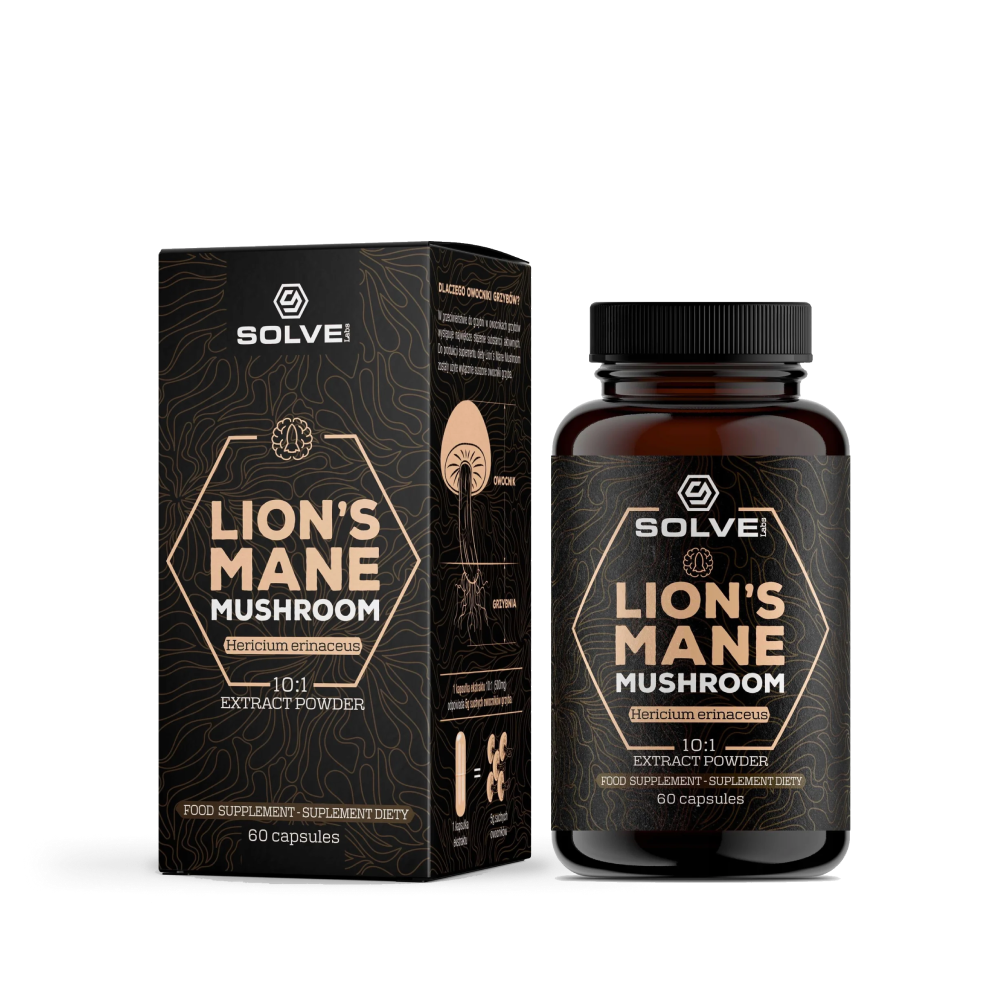
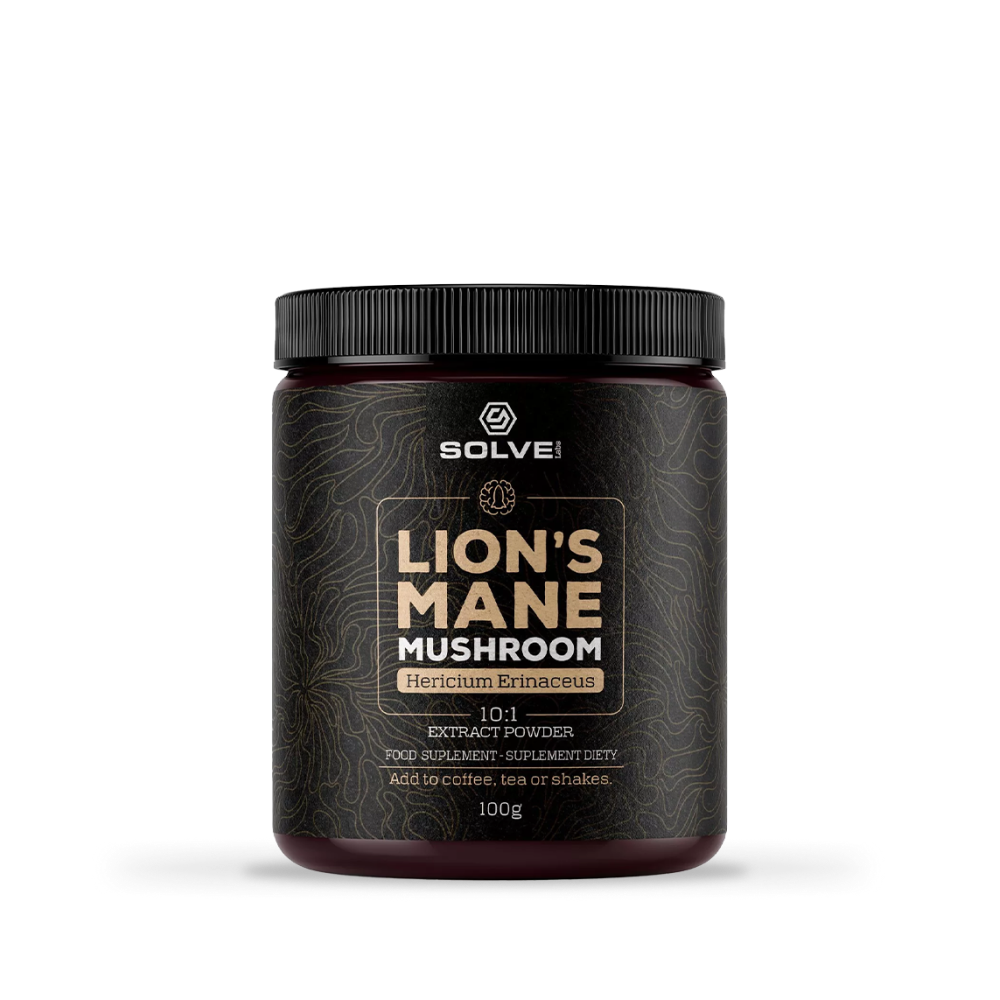
Solve Labs' Lion's Mane Capsules use both fruiting body and mycelium to capture hericenones and erinacines together, the approach that most closely mirrors the compound spectrum studied in the research. If you're comparing options, use the checklist above as your filter regardless of brand.
Health benefits, and the strength of evidence behind each
- Memory support (moderate evidence in specific groups). Mechanism: NGF and BDNF upregulation supporting synaptic plasticity. The MCI and Alzheimer's trials showed real improvements, but in older or impaired populations, over months, with small samples. Weaker evidence in healthy young adults.
- Faster processing speed (weak-to-moderate, acute). Mechanism: not fully understood; possibly circulatory or acute neuromodulation. One study showed faster Stroop performance at 60 minutes, but the sample was small.
- Neuroprotection (strong in animals, unproven in humans). Mechanism: anti-neuroinflammatory action and reduced amyloid-beta-induced damage in mice. This is compelling preclinical work, but human confirmation is lacking.
- Mood support (weak, preliminary). Mechanism: BDNF increases linked to mood in animal models and overweight human volunteers. Not consistently replicated across the acute studies.
Where the evidence is weak, we've said so. The most defensible claim is that lion's mane may support cognition in older adults or those with mild impairment over sustained use, not that it's a reliable focus booster for healthy brains.
What are the side effects and risks?
Lion's mane is an edible mushroom with a good general safety record, and reported side effects in trials are mild, occasional digestive discomfort. The real caveat is what we don't know: there's little published data on the long-term safety of supplements, no established upper dosage limit, and chronic use beyond 16 weeks hasn't been rigorously evaluated for adverse effects. If you have a mushroom allergy, avoid it. As with any supplement, patch your expectations to the evidence, not the marketing.
Can you take lion's mane with other nootropics or medications?
There are no well-documented major drug interactions, but lion's mane may have mild effects on blood sugar and, in some reports, blood clotting, so if you take diabetes medication, blood thinners, or are pregnant or breastfeeding, talk to your doctor first. It's commonly stacked with other nootropics like caffeine or L-theanine without issue, but because the human research is thin, combine cautiously and change one variable at a time so you can tell what's actually working.
Lion's mane vs synthetic nootropics, what's the difference?
Synthetic nootropics like racetams or prescription stimulants tend to act on neurotransmitter systems for a fast, noticeable, often stimulating effect. Lion's mane works differently: it's a slow, gentle upregulation of the brain's own growth factors, aimed at the underlying machinery of neuronal repair rather than an acute jolt. That means no crash, no dependency, and a mild feel, but also a longer runway before results and, honestly, a less certain payoff. It's a structural approach, not a performance stimulant. If you want a lever you pull before an exam, lion's mane isn't it. If you're investing in long-term brain maintenance, it's a rational, low-risk candidate.
Who should consider lion's mane?
Based on the current evidence, lion's mane makes the most sense for adults over 50 interested in supporting memory and cognitive resilience, and for anyone drawn to a natural, non-stimulant approach to brain health who's willing to commit to two to four months of daily use. It's less compelling if you're a young, healthy person expecting sharp acute focus gains, the data there is thin and inconsistent. Set realistic expectations, buy a properly tested extract, and give it time.
Frequently asked questions
How long does lion's mane take to work for cognitive function?
Some studies detected acute effects on specific tasks within 60-90 minutes of a single dose, but the meaningful, sustained cognitive improvements in clinical trials emerged over 8 to 16 weeks of daily use. Those benefits reversed within weeks of stopping, so consistent long-term use appears necessary.
What dose of lion's mane is used in studies?
Human trials have used between 1 g/day (a 49-week Alzheimer's pilot) and 3.2 g/day (a 12-week trial in adults over 50), with 3 g/day producing positive results in a 16-week mild cognitive impairment study. There's no official recommended dose or established upper limit.
Does lion's mane really improve memory and focus?
The evidence is promising but mixed. It shows real memory improvements in older adults and those with mild cognitive impairment over months of use, but results in healthy young adults are inconsistent, with some acute studies even showing impaired executive-function task performance. It's not a proven focus booster for healthy brains.
Disclaimer: These statements have not been evaluated by the Food and Drug Administration. This product is not intended to diagnose, treat, cure, or prevent any disease. Consult a healthcare professional before use.
