
Lion's Mane Dosage: What the Research Actually Says
Lion's Mane Dosage: What the Research Actually Says
- Why the label dose often misleads you
- A three-tier model for dosing by goal
- How hericenones and erinacines work, and why this makes timing matter
- Timing and splitting doses
- What the research honestly cannot tell you yet
- Individual variability, and when to ask a professional
- A practical starting protocol
- Related guides
The honest answer: 500-1,500 mg per day covers most adults seeking cognitive support. If you're dealing with early cognitive decline, the only well-designed human trial used 3,000 mg daily. Everything beyond that is extrapolation from animal studies, promising, but not proven.
Why the label dose often misleads you
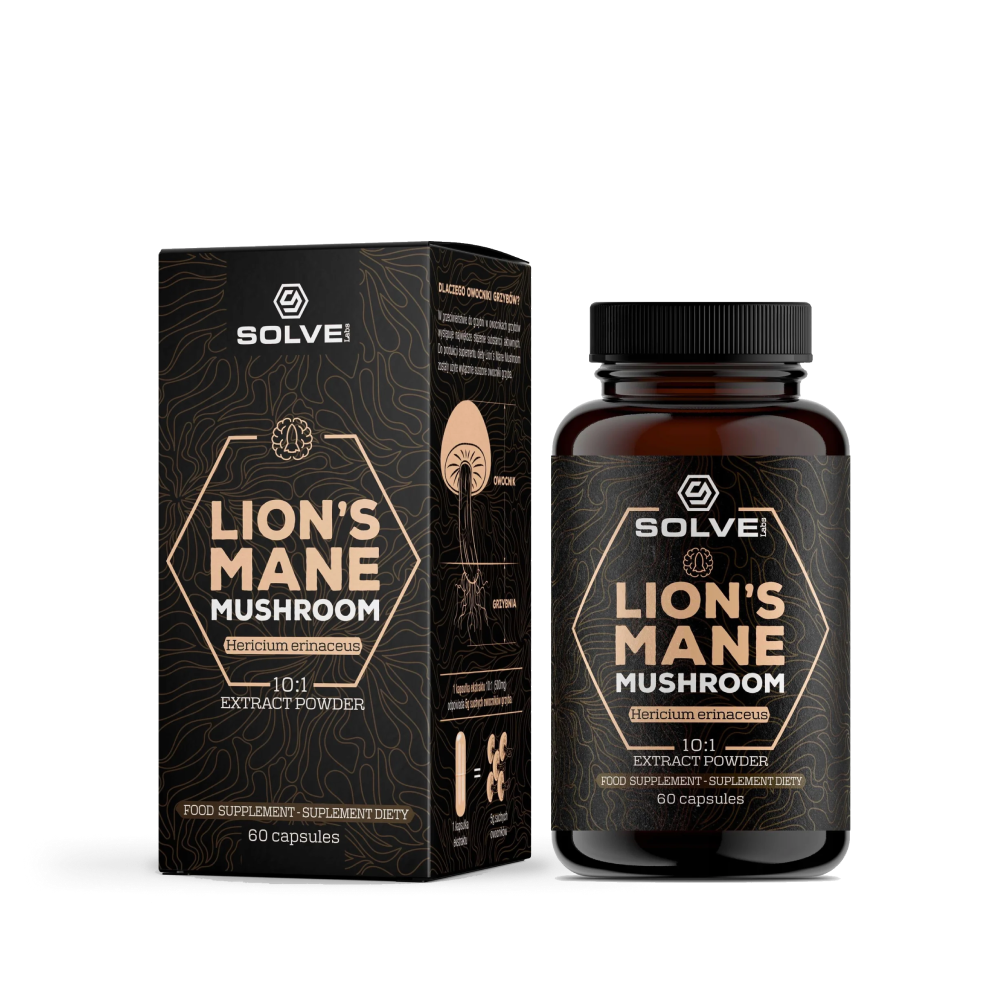
Most Lion's Mane confusion starts here. A capsule labeled "500 mg" could mean three completely different things: raw dried powder, a standard fruiting body extract, or a high-concentration extract like 10:1 or 12:1.
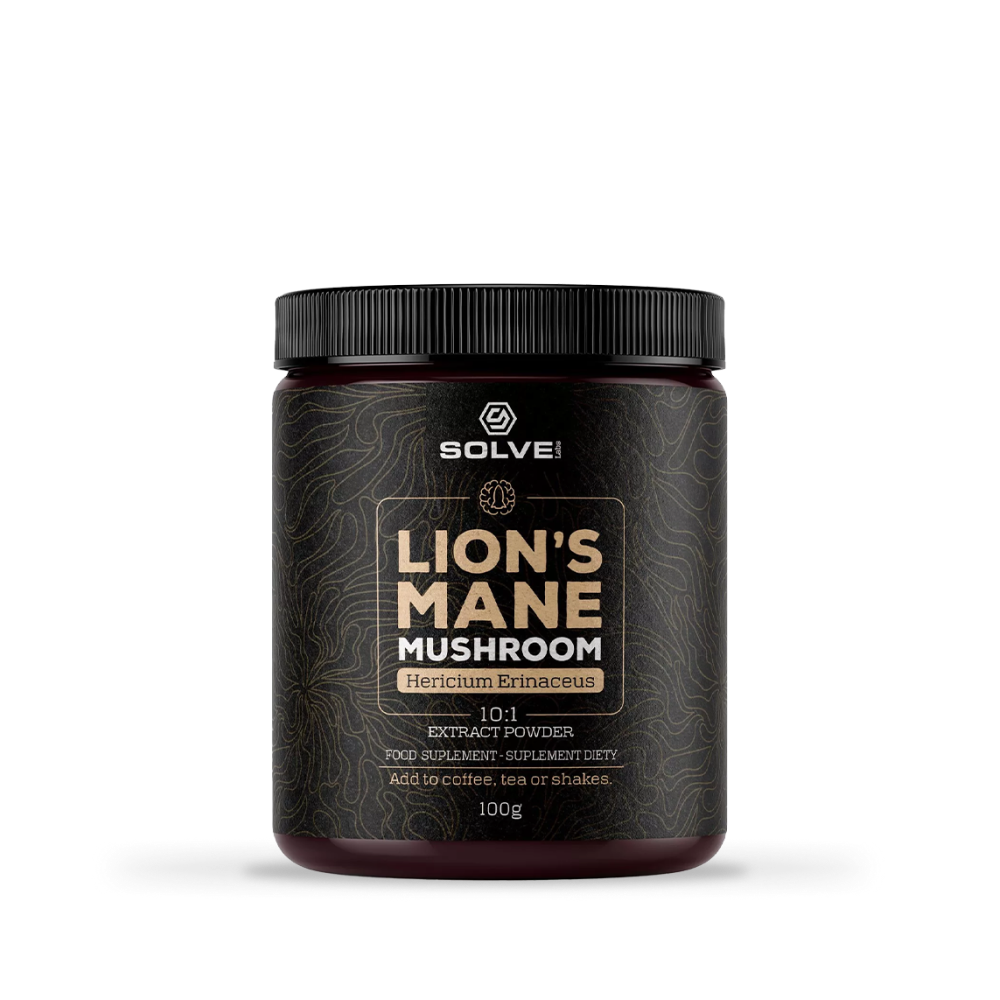
The ratio changes everything. A 10:1 extract means 10 kg of raw mushroom condensed into 1 kg of powder, so 250 mg of 10:1 extract is functionally equivalent to roughly 2,500 mg of raw material. Standard fruiting body extracts (typically 30-50% beta-glucan content) require 500-1,000 mg/day to deliver meaningful active compound levels. High-ratio concentrates can work at 125-500 mg/day.
If a label doesn't specify extraction ratio and beta-glucan percentage, treat that as a yellow flag. You can't dose accurately what you can't measure.
A three-tier model for dosing by goal
Rather than one number, think in tiers:
| Goal | Daily Dose (standard extract) | Evidence Level |
|---|---|---|
| First-time use / tolerance check | 500-1,000 mg | Expert consensus |
| Focus, memory, mood (healthy adults) | 1,000-1,500 mg | Plausible; limited human trials |
| Mild cognitive impairment (older adults) | 3,000 mg | One double-blind RCT (Mori et al. 2009) |
The Mori et al. 2009 trial, the most rigorous human study to date, used 3,000 mg/day of Lion's Mane extract for 16 weeks in adults with mild cognitive impairment and found significant improvement in cognitive function scores, with no adverse effects. That's meaningful. It's also one study, in one specific population. Applying that dose to a 28-year-old trying to focus better at work is a logical stretch that nobody in the literature is making.
How hericenones and erinacines work, and why this makes timing matter
Lion's Mane earns its reputation through two compound classes: hericenones (concentrated in the fruiting body) and erinacines (concentrated in the mycelium). Both stimulate nerve growth factor (NGF) synthesis, a protein critical for neuronal growth, maintenance, and survival. Erinacines are particularly notable because they cross the blood-brain barrier directly, producing measurable NGF increases in brain tissue in preclinical studies.
NGF stimulation isn't a caffeine hit. It's a slow structural process. This is why most researchers and experienced users report meaningful effects only after 4-8 weeks of consistent use. Expecting results in week one sets you up to quit something that was actually starting to work.
One underappreciated detail: NGF synthesis is ongoing, not a one-time trigger. Skipping doses regularly likely blunts cumulative benefit more than it would with an acute supplement. Consistency matters more than precision here.
Timing and splitting doses
No human trial has formally compared morning versus evening dosing. What the available data and user patterns suggest:
- Take it with food. GI discomfort, nausea, mild abdominal upset, occurs in under 10% of users in prolonged trials and is most commonly reported on an empty stomach. Food slows gastric transit and improves tolerability.
- Morning or midday over evening. Because the NGF-stimulating mechanism is neurologically activating over time, some users report mild sleep disruption when dosing late at night. This isn't documented in trials, but it's consistent enough across anecdotes to be worth noting.
- Split doses at higher ranges. At 1,500 mg/day, 750 mg at breakfast and 750 mg at lunch keeps active compound levels more stable and reduces GI irritation risk.
What the research honestly cannot tell you yet
The NCBI Bookshelf states plainly that neuroprotective and cognitive-enhancing effects shown robustly in animal models have not been demonstrated to any great extent in humans. That's not a reason to dismiss Lion's Mane, the mechanistic case is sound, the Mori trial is real, but it's a reason to hold certainty loosely. Anyone telling you Lion's Mane is clinically proven to prevent Alzheimer's is outrunning the evidence by several miles.
The safety picture is clearer. Lion's Mane is classified as GRAS (Generally Recognized as Safe). The NCBI LiverTox database assigns it a Likelihood Score E, "unlikely cause of clinically apparent liver injury", with zero documented cases of hepatotoxicity. No established upper limit exists, but 3,000 mg/day is the ceiling supported by trial data. There's no documented rationale for exceeding 4,000 mg/day.
Individual variability, and when to ask a professional
Response varies considerably. Genetics, gut microbiome composition, baseline NGF levels, and existing neurological health all influence outcomes. Some people report sharper focus within two weeks at 1,000 mg; others feel nothing at 2,000 mg after two months. Neither response is a product failure, it's biology.
If you're on anticoagulants or immunosuppressants, or have a mushroom allergy, talk to your doctor first. Lion's Mane's beta-glucan content has immune-modulating properties, typically a benefit, but worth flagging if medications already affect immune function. Pregnant or breastfeeding? There's no safety data. Skip it for now.
A product like Solve Labs Lion's Mane Capsules that clearly states its extract ratio and beta-glucan content lets you apply these dosing principles accurately, which is the baseline requirement before any of this guidance becomes actionable.
A practical starting protocol
Weeks 1-2: 500-1,000 mg daily with breakfast. Observe tolerance. Week 3 onward: increase to your target dose (most healthy adults: 1,000-1,500 mg/day). Reassess at 8 weeks, that's the minimum window for NGF-mediated effects to accumulate. If nothing has shifted by week 12 at full dose, Lion's Mane may not be the right lever for you. That's a valid outcome, not a failure.
Frequently asked questions
How long before Lion's Mane capsules start working?
Most people don't notice meaningful cognitive effects before 4-6 weeks of consistent daily use. The mechanism, NGF synthesis and neuronal support, is a gradual structural process, not an acute stimulant effect. The Mori et al. trial ran 16 weeks and saw significant results. Give it at least 8 weeks before drawing conclusions.
Is a higher dose always better for focus and memory?
No. For healthy adults seeking cognitive support, 1,000-1,500 mg of a standard extract is well within the effective range. The 3,000 mg dose comes from a trial in older adults with mild cognitive impairment, a different population with different needs. Exceeding 4,000 mg/day has no evidence base and moves past anything a human trial has evaluated.
Does it matter whether Lion's Mane is made from fruiting body or mycelium?
Yes, meaningfully. Hericenones are concentrated in the fruiting body; erinacines are concentrated in the mycelium. Products using only mycelium grown on grain often contain significant starch filler and lower active compound density. Look for products that specify fruiting body content, beta-glucan percentage, and extraction method. Without those details on the label, accurate dosing isn't possible.
Mentioned in this article: Lion's Mane Capsules from our range.
Disclaimer: These statements have not been evaluated by the Food and Drug Administration. This product is not intended to diagnose, treat, cure, or prevent any disease. Consult a healthcare professional before use.
