
Reishi for Sleep and Anxiety: What the Evidence Shows
Reishi for Sleep and Anxiety: What the Evidence Shows
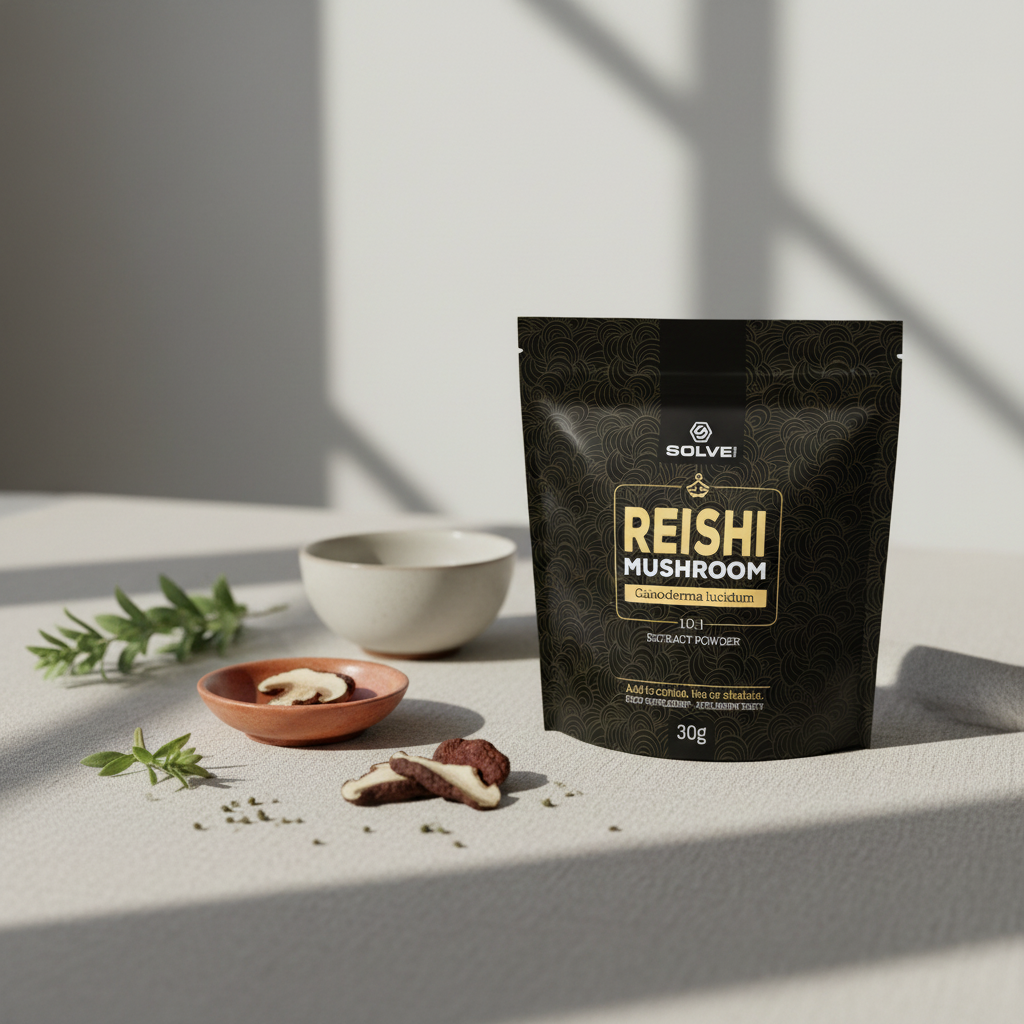
- A randomized controlled trial found 1,000 mg/day of Ganoderma lucidum significantly improved anxiety, depression, and vitality scores within 30 days versus placebo.
- Reishi's sleep effects work through two distinct pathways: adenosine A1 receptor agonism (reduces sleep-onset latency) and GABAergic activity (calms cortisol-driven arousal), the same GABA pathway targeted by benzodiazepines, but without dependency.
- Direct human sleep-architecture data for pure Reishi is still limited, the strongest human evidence is in stressed populations (cancer survivors, anxiety sufferers), not healthy sleepers.
- Expect a 2-4 week onset. Reishi is a gradual regulator, not a knock-you-out supplement, that's a feature, not a flaw.
Reishi supports sleep and helps manage anxiety, and the clinical evidence is real. But the mechanism is different from almost anything else in the wellness space, which is why most people misread the data and give up too soon. Here's what the research actually shows, what to expect, and whether it's the right tool for your specific problem.
Reishi isn't a sedative. It's a regulator. It doesn't force sleep the way melatonin or antihistamines do. It works upstream, calming the neurological and hormonal noise that stops your brain from winding down on its own. That distinction shapes everything: what you should expect, how long to wait, and whether it fits your situation.
The Two Mechanisms Behind Reishi's Calming Effects
Most articles list "adaptogenic properties" and move on. That's not useful. Reishi has two well-characterised neurological pathways, understanding them explains why it works gradually rather than acutely.
Pathway 1: GABAergic Modulation, Quieting Cortisol-Driven Arousal
GABA (gamma-aminobutyric acid) is the brain's primary inhibitory neurotransmitter, it slows neural firing. Benzodiazepines work by binding to GABA receptors. Reishi's triterpenes, specifically the ganoderic acid family, interact with the same GABAergic pathways, but without the receptor downregulation that creates dependency.
The mechanistic evidence is direct: animal research has shown that administering flumazenil, a GABA receptor blocker, significantly attenuates Reishi's sleep-promoting effects, pointing to a clear mechanistic link rather than coincidence. The triterpenes also help inhibit inflammatory cytokines and histamine release, reducing the physiological state of alertness that elevated cortisol sustains. Less neurochemical arousal means the brain can transition into sleep more naturally.
Pathway 2: Adenosine A1 Receptor Agonism, Building Genuine Sleep Pressure
Adenosine accumulates in the brain throughout the day, binding to A1 receptors in areas that directly promote sleep onset. Caffeine works by blocking these exact receptors. Reishi contains adenosine and compounds that act as A1 receptor agonists, amplifying the natural sleep-pressure signal rather than manufacturing sedation. The practical result: reduced sleep-onset latency, because the neurological conditions for sleep are genuinely met, not chemically forced.
There's a third, emerging pathway worth knowing: a 2021 mouse study found that an acidic fraction of Reishi mycelia may promote sleep by shifting gut microbiota composition and raising serotonin levels in brain sleep centres. The gut-brain axis angle is early-stage evidence, but it adds meaningful context for why Reishi's effects build over weeks. You're also reshaping the microbial environment, not just hitting a single receptor.
What the Human Clinical Data Actually Shows
The evidence is real, but it's not uniformly strong across all populations. Here's an honest read.
On Anxiety: The Strongest Human Evidence
A randomised controlled trial found that participants taking Ganoderma lucidum polysaccharides for 12 weeks showed significantly improved scores on validated measures of anxiety, fatigue, and well-being compared to placebo. A proper RCT, a defined dose, validated outcome measures, this is the cleanest human evidence available for Reishi's anxiety-supporting effects.
A separate 12-week RCT using a mushroom blend that included Reishi showed significantly reduced cortisol and ACTH levels, both key HPA axis stress markers, alongside improved sleep quality and reduced anxiety. Reishi helps modulate the HPA axis: the hypothalamic-pituitary-adrenal system governing your cortisol stress response. Lower chronic cortisol output cascades into better sleep, steadier mood, and reduced anxiety over time. That's the adaptogenic mechanism in concrete terms, not a vague wellness claim.
On Sleep: Promising, With Real Caveats
A 4-week randomised, placebo-controlled pilot study of 48 women receiving hormonal therapy for breast cancer found that Reishi spore powder was associated with significantly improved sleep scores on a standard quality-of-life survey. Sleep quality improved in a population under significant physiological and psychological stress, that's meaningful signal. But it's a specific, stressed population, not a general healthy sleeper.
Animal studies are robust: Reishi extract consistently helps reduce sleep-onset latency, supports increased total sleep time, and promotes both NREM and light sleep stages in controlled conditions. Human blend studies have confirmed reduced sleep latency and increased total sleep time. But here's the honest gap: no high-quality human RCT has yet measured sleep architecture directly using pure Reishi alone in a healthy population. The sleep data is largely extrapolated from animal work and stressed-population trials. Strong enough to act on, not strong enough to overstate.
| Outcome | Evidence Level | Key Study |
|---|---|---|
| Anxiety & well-being | Human RCT (strong) | Gao et al. 2004 |
| Cortisol / HPA axis reduction | Human RCT (strong) | Mushroom blend RCT, 2020 |
| Sleep quality (stressed population) | Human RCT pilot (moderate) | Reishi spore powder RCT, 2012 |
| Sleep-onset latency, NREM | Animal models (robust) | Multiple preclinical studies |
| Gut-serotonin-sleep axis | Animal model (early-stage) | Mycelia study, 2021 |
The Non-Habit-Forming Distinction, Why It Matters
Melatonin supplementation can suppress your body's own melatonin production over time. Benzodiazepines cause receptor downregulation and dependency. Some herbal sedatives create tolerance in certain users.
Reishi works differently. It helps modulate the systems governing sleep and stress, the HPA axis, GABA activity, adenosine signalling, rather than overriding them. You're not borrowing from tomorrow's neurochemistry. You're improving the conditions under which your own system operates. That's why effects compound over two to four weeks rather than appearing immediately, and why stopping Reishi isn't associated with rebound insomnia or withdrawal effects.
For anyone wary of dependency, or who's tried melatonin and found it creates grogginess or stops working, that's a meaningful clinical distinction, not marketing language.
Dosage and Quality: What to Actually Look For
The human RCTs used doses ranging from roughly 1,000-1,800 mg/day of standardised extract, that's your reference point. Many products on the market fall well below this, or use mycelium-on-grain preparations where the majority of capsule weight is starch filler, not active mushroom compounds.
Two markers to verify on any label: beta-glucan concentration and triterpene content. These are the compounds carrying the mechanistic weight. If a product doesn't list them separately with verified percentages, you can't confirm therapeutic dosing, and you're likely not getting it. Fruiting body extract matters here: the triterpenes driving GABAergic and cortisol-modulating effects are concentrated in the fruiting body, not the mycelium.
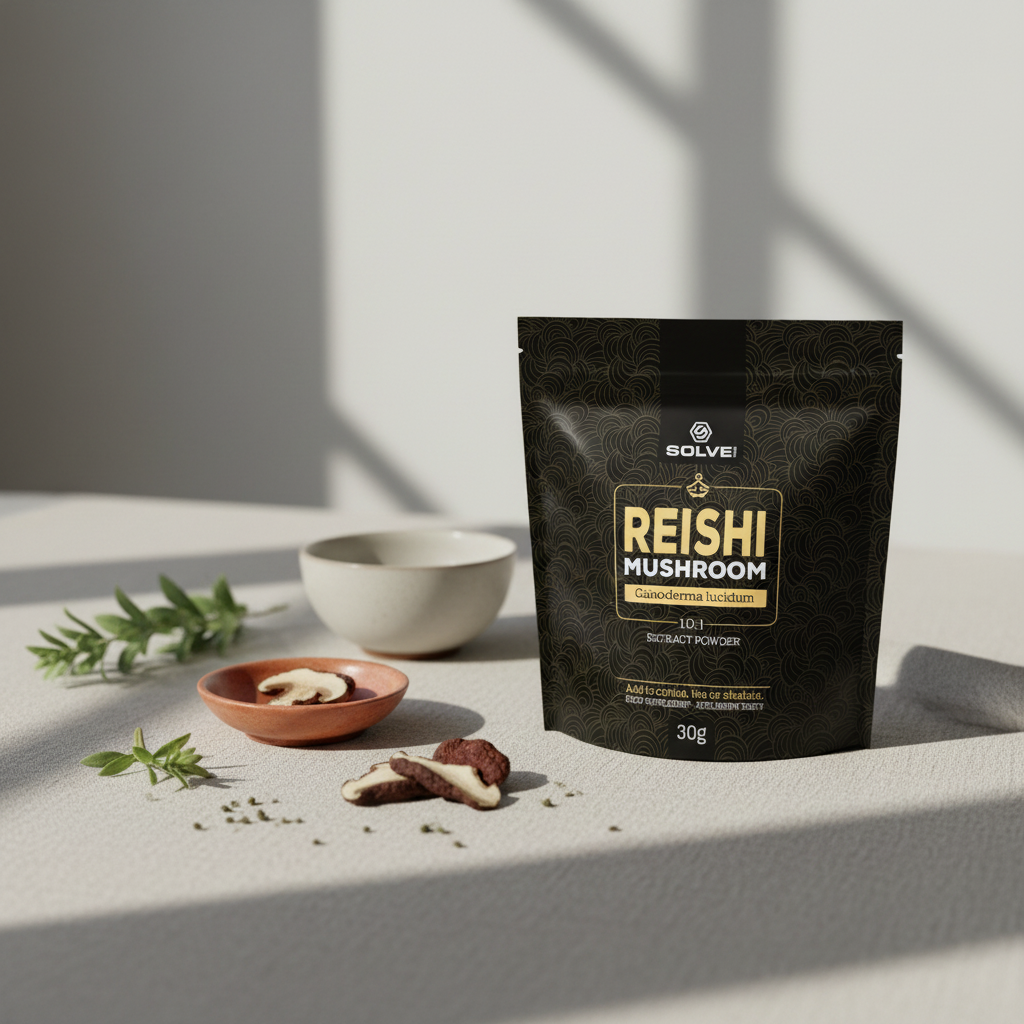
Solve Labs' Reishi uses a 10:1 concentrated fruiting body extract standardised to 51% beta-glucans and 20%+ triterpenes, aligning with the active compound profile used across the clinical literature.
Realistic Expectations: A Timeline That Actually Helps
Reishi is not an acute sleep aid. Set expectations accordingly:
- Week 1-2: Minimal noticeable change. Some users report transient restlessness as the system adjusts, this is documented and temporary.
- Week 2-3: Early shifts in wind-down ease and background stress levels. HPA axis modulation begins to build.
- Week 4+: The range where clinical studies show statistically significant improvements in anxiety scores, cortisol markers, and sleep quality. This is the target window.
Track a baseline before you start, sleep latency, a simple daily anxiety rating, morning energy. Without a reference point, four weeks of gradual improvement is easy to miss.
Who Reishi Is, and Isn't, Right For
Reishi is well-suited for chronic low-grade anxiety, stress-driven sleep disruption, difficulty winding down rather than staying asleep, and anyone looking for a non-habit-forming long-term support tool. The evidence is strongest for people under physiological or psychological stress, which, practically speaking, covers most people seeking this kind of support.
It's a less appropriate fit for acute insomnia requiring immediate intervention, sleep disorders with a structural cause such as sleep apnoea or circadian rhythm disruption, or severe anxiety disorders that warrant clinical treatment. Reishi is considered likely safe for up to one year of continuous use, but reported side effects can include nausea, dizziness, and dry mouth in some users. If you're on immunosuppressants or blood thinners, check with a clinician before adding it.
The bottom line: Reishi's evidence for helping manage anxiety is genuinely solid, human RCT data, defined doses, validated outcomes. Its sleep-supporting evidence is mechanistically convincing and clinically promising, but the human data in healthy populations is still catching up to the animal work. That's not a reason to dismiss it. It's a reason to be precise about what you're taking it for, patient about the timeline, and rigorous about the quality of what you're actually putting in your body.
- Gao et al. (2004), RCT on Ganoderma lucidum polysaccharides, anxiety/well-being outcomes
- Reishi spore powder RCT in breast cancer survivors, insomnia outcomes
- 2021 mouse study: Reishi mycelia, gut microbiota, serotonin, and sleep
- Mushroom blend RCT: cortisol, ACTH, sleep quality, and anxiety reduction
- Adenosine A1 receptor agonism and sleep-onset mechanisms
- Flumazenil/GABA receptor blockade and Reishi sleep effects (animal model)
Frequently asked questions
How long does Reishi take to work for sleep and anxiety?
The clinical evidence points to a 2-4 week onset for meaningful effects. The anxiety RCT used a 30-day protocol. This is because Reishi works by modulating the HPA axis and GABAergic tone over time, not by triggering an acute sedative effect. If you're expecting results in 3-4 days, you'll likely underestimate it. Track your sleep latency and anxiety levels weekly from a consistent baseline, and evaluate at the 4-week mark.
Is Reishi safe to take every day long-term?
Current evidence suggests Reishi is likely safe for up to one year of daily use. Reported side effects are mild and transient for most people, nausea, dry mouth, dizziness, or occasional digestive upset in the first 1-2 weeks. The non-dependency profile is well-established: unlike benzodiazepines or melatonin, Reishi doesn't cause receptor downregulation or rebound effects when stopped. That said, long-term human safety data beyond one year is still limited, so periodic breaks are a reasonable precaution.
What's the difference between Reishi for sleep versus melatonin?
Melatonin directly signals your circadian system to initiate sleep, it's fast-acting but can suppress your own melatonin production over time and causes grogginess in many users. Reishi works upstream: it modulates cortisol output via the HPA axis, enhances GABA activity to reduce arousal, and builds adenosine-driven sleep pressure. The result is that sleep conditions improve naturally rather than being chemically overridden. It takes longer to work, but it doesn't create dependency, tolerance, or next-day grogginess, and it addresses the stress component that melatonin doesn't touch.
Mentioned in this article: Reishi Powder from our range.
Disclaimer: These statements have not been evaluated by the Food and Drug Administration. This product is not intended to diagnose, treat, cure, or prevent any disease. Consult a healthcare professional before use.
