







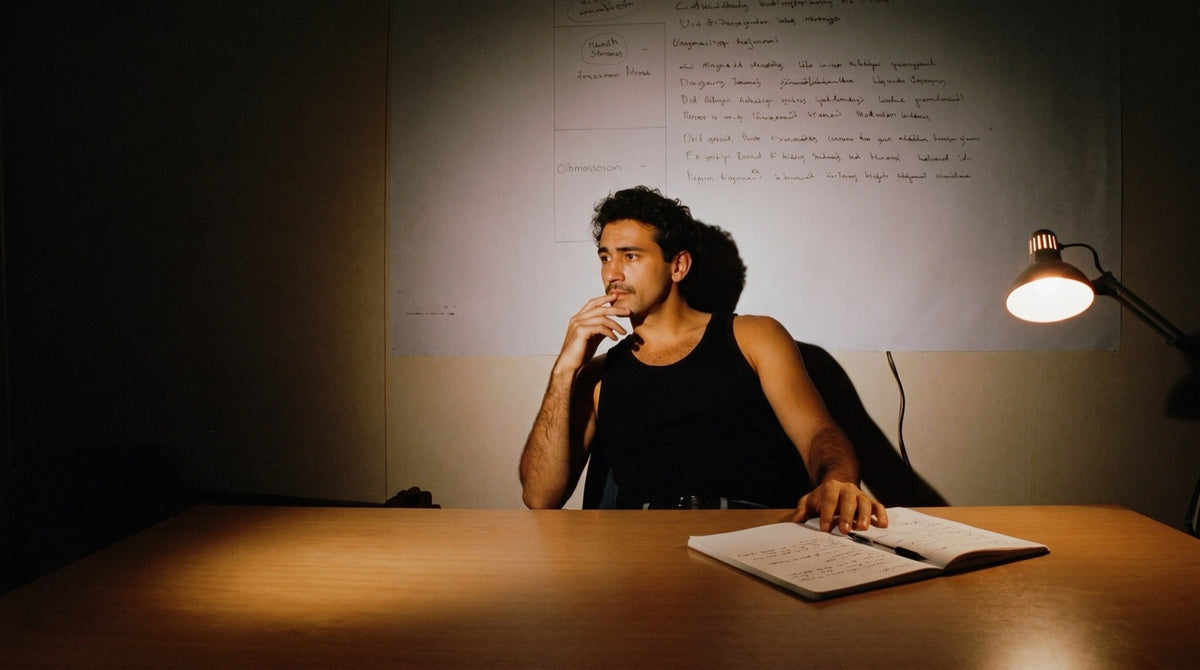
The ten-minute shutdown
The day does not end on its own
Most people stop working when they run out of time, not when they decide to. The laptop closes mid-thought, the last message goes unanswered, and the day leaks into the evening as a low hum of unfinished business that never quite becomes rest.
A shutdown is the deliberate act of ending the day, and it takes about ten minutes. It is the least glamorous habit on this list and probably the highest-return.
An evening spent half-working is worse than one spent working. You get neither the output nor the recovery.
Why an unfinished day follows you
Open loops are expensive. An unfinished task holds a small amount of attention in reserve, and a dozen of them add up to a background noise you stop noticing but keep paying for. Writing the loop down closes it, not because the work is done, but because you have stopped asking your memory to hold it.
This is the entire mechanism behind the shutdown, and it is why the written step matters more than the tidying step.
Recovery is not the absence of activity
“Rest” that consists of lying on a sofa scrolling is not restful in any useful sense — it is low-effort stimulation, which is a different thing. The evenings people describe as genuinely restorative tend to contain one of three things: something physical and gentle, something social, or something absorbing that is not work.
None of that requires a protocol. It requires the day to have ended first, which is the part that usually goes missing.
The version that survives real life
Some evenings have children, deadlines, or a train. The shutdown still fits, because the only irreducible part is thirty seconds long: write down what is unfinished and what tomorrow starts with. Everything else is an improvement on top of that.
- Do it at the desk, not in bed. Bed is where the loops reopen, and once they do you are planning at midnight.
- Do not review the whole week. A shutdown is not a retrospective. Ten minutes, today only.
- Do it even after a bad day. Especially then — a bad day left open is the one that follows you into the weekend.
The shutdown exists to protect tomorrow morning, which is where the work actually happens. The two are one habit with a gap in the middle.
Read the first 90 minutes for the morning half.
Try it once, tonight
Before you shut the laptop: write what is unfinished, write what tomorrow starts with, and close it properly. Then notice whether the evening feels different. Most people find it does, immediately — which is unusual for a habit and the main reason this one tends to stick.
