
Functional Mushrooms in Plant-Based Diets: What Actually Works
Functional Mushrooms in Plant-Based Diets: What Actually Works
Functional mushrooms solve specific problems. Not all problems, specific ones. For plant-based eaters, that distinction matters, because the supplement industry has spent years blurring it into a fog of vague wellness claims. This guide cuts through that. Here's what mushrooms actually fix, what they don't, and how to use them without wasting money.
The two nutrient gaps mushrooms genuinely address
Plant-based diets tend to be strong in fiber, antioxidants, and phytonutrients. They're reliably weak in a few areas. Mushrooms happen to cover two of them unusually well.
Vitamin D2. Mushrooms are the only non-animal food that produces meaningful, bioavailable vitamin D, specifically ergocalciferol (D2), when exposed to UV light. This matters for strict vegans because D3 from lanolin is off the table, and algae-based D3 is expensive. UV-exposed mushrooms or powders made from UV-exposed mycelium give you a genuinely food-derived third option. D2 is slightly less potent than D3 at raising serum 25(OH)D levels, but it works, and the gap narrows with consistent intake.
Niacin (B3). Mushrooms contain 5-10 times more niacin than most vegetables. Niacin drives NAD+ synthesis, the coenzyme your cells use for energy metabolism and DNA repair. Clinical deficiency is rare in plant-based eaters; subclinical shortfall is not. Mushrooms close that gap without adding a pill to your stack.
β-Glucans: the mechanism that's actually well-established
This is where the science is strongest, and it's worth understanding the mechanism rather than just taking the conclusion on faith.
Mushrooms, particularly Turkey Tail (Coriolus versicolor), Shiitake (Lentinus edodes), and Reishi (Ganoderma lucidum), contain specific β-glucan compounds (krestin/PSK, lentinan, schizophyllan) that bind directly to Dectin-1 and CR3 receptors on immune cells. That binding activates Natural Killer cells, neutrophils, and macrophages. In oncology, this is clinically documented: multiple RCTs have shown that PSK from Coriolus versicolor improves survival outcomes in colorectal and gastric cancer patients when added to standard care. Turkey Tail has the strongest clinical evidence base of any functional mushroom, by a significant margin.
For healthy adults, the immune data is robust in vitro and in animal models. Large-scale human RCTs in non-oncology populations are thinner. That's the honest caveat, and any source that glosses over it is selling you something.
Mushrooms also deliver chitin, hemicellulose, and β-(1→3)-D-glucans that function as prebiotics, feeding beneficial gut bacteria in structurally different ways than the fiber in vegetables or legumes does. If microbiome diversity is the goal, mushrooms add an input most plant-based diets are missing entirely.
A straight-talk species guide
| Mushroom | Primary mechanism | Evidence quality | Best use case for plant-based eaters |
|---|---|---|---|
| Lion's Mane (Hericium erinaceus) | Stimulates Nerve Growth Factor (NGF) synthesis via hericenones and erinacines | Strong in vitro and animal data; small human trials show cognitive benefit, promising, not definitive | Long-term cognitive support; worth a 6-week trial if focus or memory is a priority |
| Reishi (Ganoderma lucidum) | Triterpenes modulate cortisol response; β-glucans prime NK cells | Solid clinical data in oncology; stress and sleep data in healthy adults is preliminary | Immune support and stress management; strongest case for anyone immunocompromised |
| Cordyceps (C. militaris) | Increases cellular ATP output via adenosine precursors; improves oxygen utilization | Small human trials show improved VO2 max and reduced fatigue; more data needed | Pre-workout energy and recovery, especially relevant when plant-based athletes skip creatine |
| Turkey Tail (Coriolus versicolor) | PSK and PSP bind immune receptors; potent prebiotic fiber | Strongest clinical evidence of any functional mushroom, multiple oncology RCTs | Gut health and immune defense; the most evidence-backed starting point available |
One note on Cordyceps: wild C. sinensis is a parasitic fungus harvested from caterpillars at altitude in Tibet, not vegan, and not what's in supplements anyway. Virtually all commercial Cordyceps is C. militaris, cultivated on plant substrates. That's the one to look for.
Food first, extract when dose matters
Eat the mushroom when you can. Whole Shiitake, Maitake, and Oyster mushrooms deliver β-glucans, B vitamins, and prebiotic fiber in a food matrix your gut handles well. Cook them, heat breaks down chitin cell walls and dramatically improves bioavailability of the active compounds. Raw mushrooms are largely wasted from a functional standpoint.
Use an extract when the therapeutic dose matters. Realistic food portions of Lion's Mane or Turkey Tail rarely reach the 500-1000mg extract range used in clinical studies. If you're targeting a specific outcome, cognitive support, immune priming, athletic performance, an extract gets you to a consistent, measurable dose that food can't reliably deliver.
What to look for in an extract: hot-water extraction for β-glucans; dual extraction (hot water plus alcohol) for Reishi, which requires both methods to capture triterpenes alongside β-glucans. Fruiting body, not mycelium grown on grain. Mycelium-on-grain products frequently contain more rice or oat starch than active mushroom compounds, the β-glucan percentage on the CoA will confirm this fast.
Third-party testing is non-negotiable. Mushrooms are hyperaccumulators, they pull heavy metals from soil efficiently, which is ecologically useful and personally problematic if the source soil is contaminated. Demand a Certificate of Analysis showing heavy metals, pesticides, and β-glucan content. If a brand won't publish their CoA, that's your answer.
How to actually use mushroom powders
- Morning coffee or matcha: 1/2 tsp Lion's Mane or Cordyceps extract blends cleanly. The umami note doesn't fight the coffee.
- Soups and broths: Stir Turkey Tail or Shiitake powder into miso soup or lentil broth. This is the most food-native application, mushrooms have always been a broth ingredient.
- Smoothies: Reishi powder pairs well with cacao and banana. The bitterness disappears in the fat from nut butter or oat milk.
- Grain bowls: Mix Cordyceps extract into tahini dressing for a pre-workout meal.
- Oatmeal: Lion's Mane dissolves into oats without texture issues. Cinnamon offsets the earthiness.
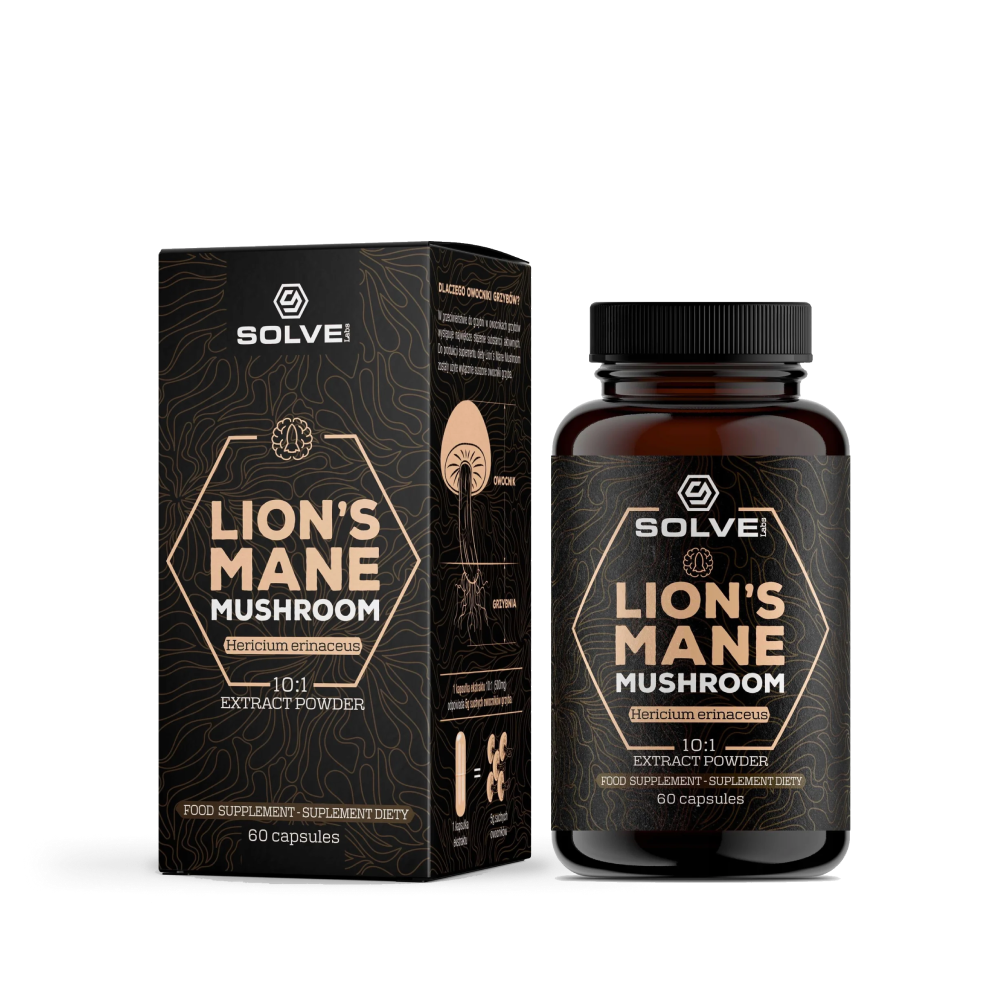
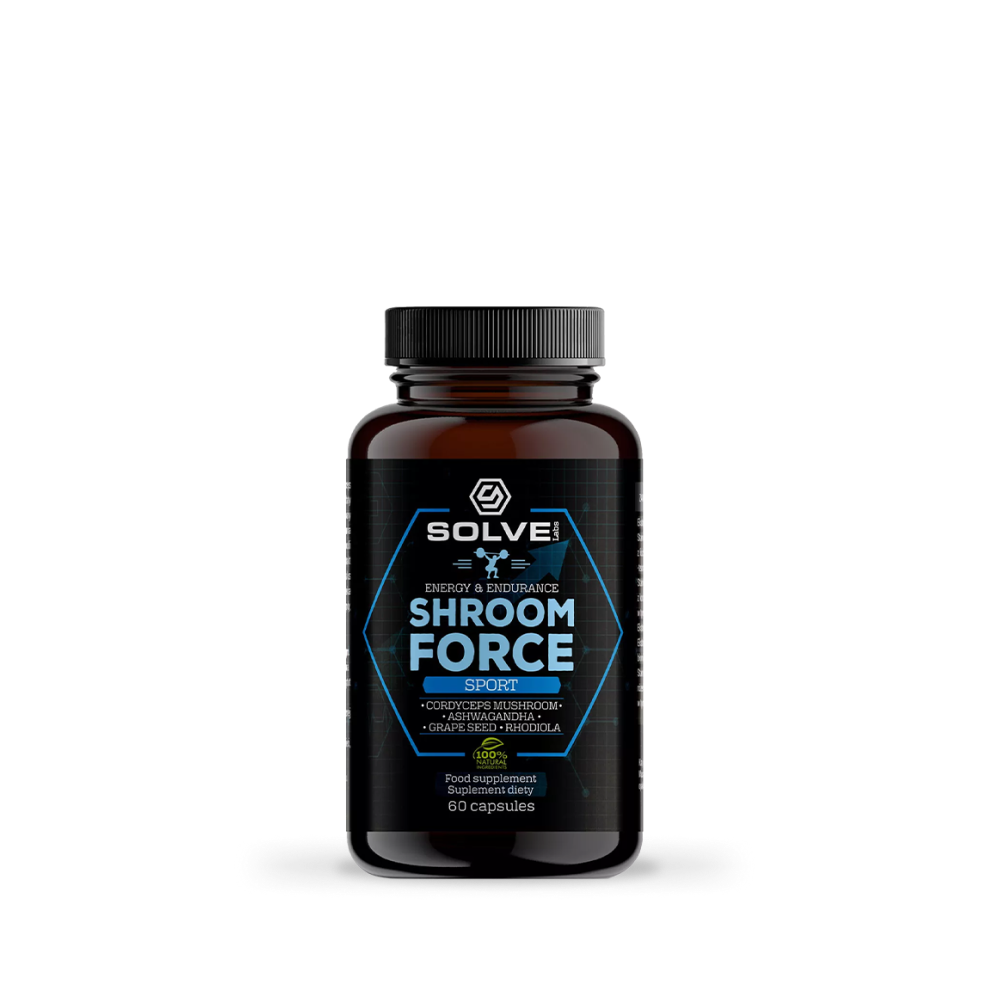
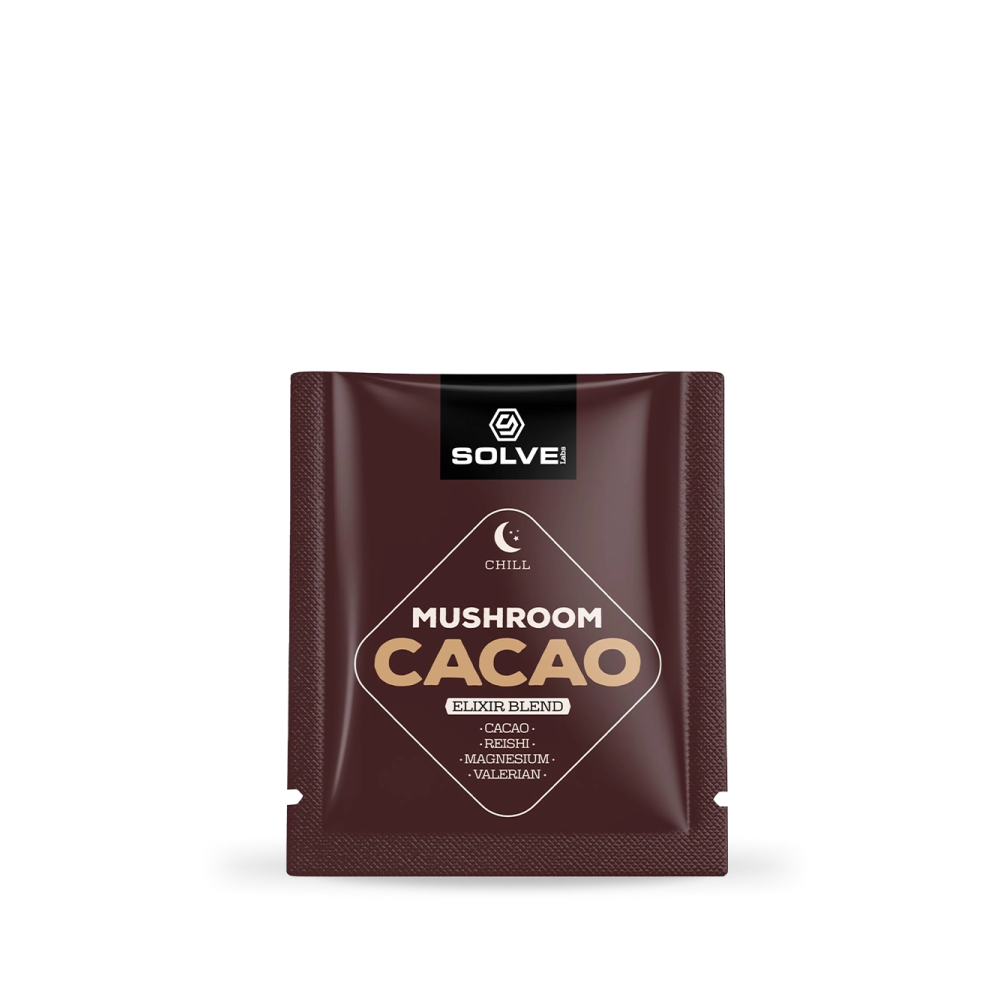
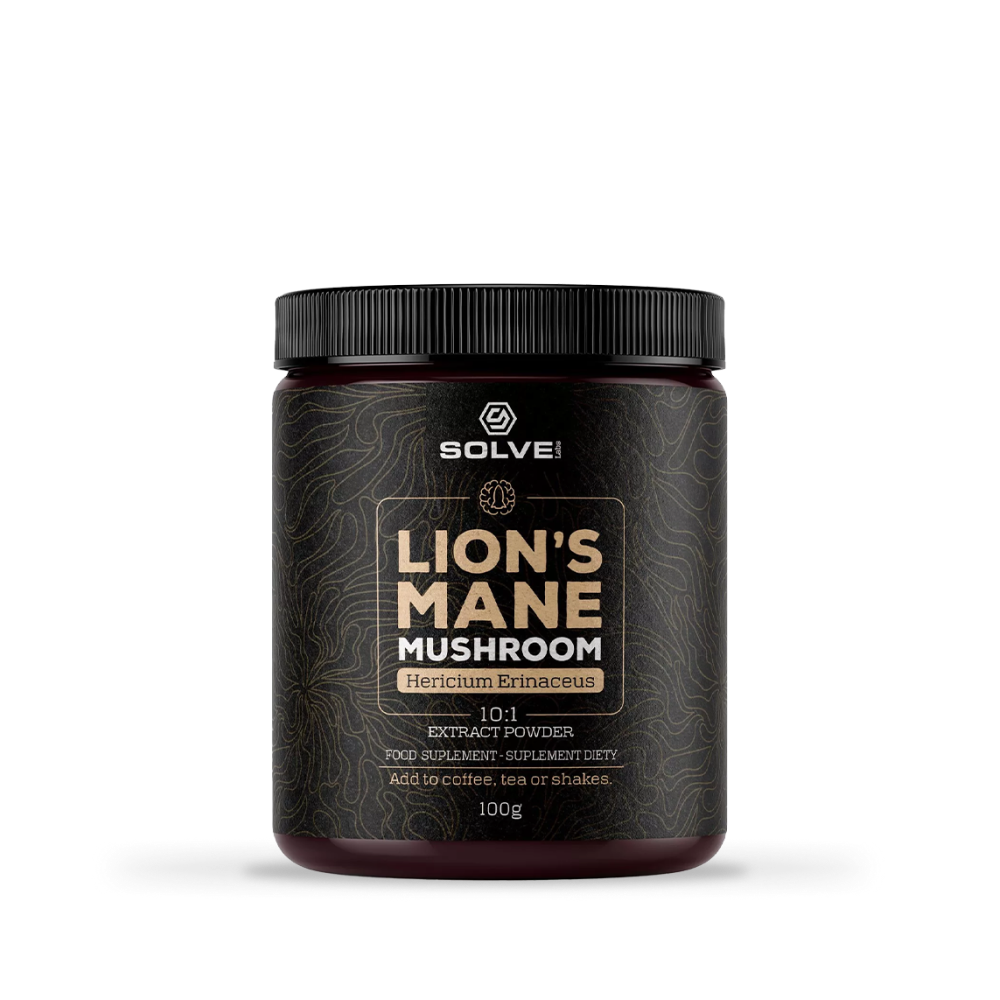
Solve Labs' organic mushroom extract powder is dual-extracted and vegan, the two most important boxes for plant-based use. Any high-quality fruiting-body extract with a published CoA does the same job; this is one option, not the only one.
What functional mushrooms won't do
They will not replace B12, iron, omega-3s, or zinc, the four nutrients plant-based diets most consistently fall short on. Mushrooms contain no bioavailable B12. Their iron is non-heme and poorly absorbed without vitamin C. They are a powerful complement to a well-planned plant-based diet, not a patch for a poorly planned one.
The cognitive enhancement claims, sharper focus, better recall within days, are plausible for Lion's Mane over weeks and months, not overnight. The gut and immune benefits are more immediate and better supported by existing evidence. Manage expectations accordingly.
Start with one species. Run it for four to six weeks at a consistent dose. Then decide whether to add a second. A ten-mushroom blend might look impressive on a label, but if something moves the needle, or doesn't, you'll have no idea what to credit or cut.
- Valverde et al., 'Edible Mushrooms: Improving Human Health and Promoting Quality Life,' International Journal of Microbiology, 2015
- Wasser, 'Medicinal mushroom science: History, current status, future trends, and unsolved problems,' International Journal of Medicinal Mushrooms, 2010
- Muszyńska et al., 'Anti-inflammatory properties of edible mushrooms: A review,' Food Chemistry, 2018
- Venturella et al., 'Edible Wild Mushrooms: A Challenging Perspective for a Sustainable Diet,' Frontiers in Sustainable Food Systems, 2021
- Jayachandran et al., 'A Critical Review on Health Promoting Benefits of Edible Mushrooms through Gut Microbiota,' International Journal of Molecular Sciences, 2017
Frequently asked questions
Are mushroom supplements safe for people with autoimmune conditions?
Proceed carefully. Mushroom β-glucans upregulate immune activity, beneficial for most people, but potentially problematic for anyone whose immune system is already overactive. Reishi has the most data in immunocompromised populations and shows a generally favorable safety profile, but that's different from autoimmune disease, where the immune system misfires rather than underperforms. Anyone with a diagnosed autoimmune condition should consult their doctor before adding immune-modulating supplements. The evidence here genuinely isn't definitive either way.
What's the difference between fruiting body and mycelium supplements, and why does it matter?
The fruiting body is the actual mushroom, cap, stem, and gills. It contains the highest concentration of β-glucans, triterpenes, and the active compounds studied in clinical research. Mycelium supplements are often grown on grain substrates (rice, oats) and may contain more grain starch than mushroom actives, some products test at under 1% β-glucans per gram. Look for 'fruiting body' on the label and verify the β-glucan percentage on the Certificate of Analysis. A legitimate product will list it. If it doesn't, assume the number isn't flattering.
How much mushroom extract do you actually need to see an effect?
It depends on the species and the outcome. Most human trials on Lion's Mane used 500-3000mg of dried extract daily. Turkey Tail PSK studies in oncology used 1-3g daily. For general immune and gut support, 500-1000mg of a high-quality fruiting-body extract is a reasonable starting point. Whole mushroom powders (non-extracted) require higher quantities because β-glucans are locked behind chitin walls and less bioavailable without extraction. Going far above studied dose ranges adds cost without clear added benefit, the dose-response curve for β-glucans isn't linear.
Disclaimer: These statements have not been evaluated by the Food and Drug Administration. This product is not intended to diagnose, treat, cure, or prevent any disease. Consult a healthcare professional before use.
