
Can You Take Cordyceps With Other Supplements?
Can You Take Cordyceps With Other Supplements?
- What Is Cordyceps and How Does It Work?
- Can It Be Taken Alongside Other Supplements or Medications?
- What Does the Evidence Actually Say?
- What Are the Health Benefits of Cordyceps When Stacked Smartly?
- How Much Should You Take, and Does Dose Affect Interaction Risk?
- How Long Until Cordyceps Works?
- What Are the Side Effects and Risks?
- Who Should, and Shouldn't, Take Cordyceps?
- Is Cordyceps Third-Party Tested, and Does That Matter for Stacking?
- Related guides
Yes, you can take cordyceps with most supplements safely. But two specific interactions demand real attention: anticoagulants like warfarin and hypoglycemic agents like insulin or metformin. Outside those two categories, the evidence points to broad tolerability and several genuinely useful stacking combinations. The catch is that the evidence base for cordyceps is uneven in ways most supplement guides won't tell you, and that unevenness matters when you're trying to predict what a stack will actually do.
| Factor | Detail |
|---|---|
| Primary species used | Cordyceps militaris (cultivated); C. sinensis (wild, rare, expensive) |
| Key active compounds | Cordycepin, polysaccharides, ergosterol |
| Typical daily dose | 1,000-3,000 mg extract |
| Who it's generally for | Adults seeking energy, immune support, or endurance |
| Evidence strength | Moderate (immune); weak-to-mixed (athletic performance, blood sugar in humans) |
| Critical drug interactions | Anticoagulants, antiplatelet drugs, hypoglycemic agents |
| Documented contaminant risk | Lead poisoning in two documented cases, third-party testing is non-negotiable |
What Is Cordyceps and How Does It Work?
Cordyceps is a genus of parasitic fungi with two commercially relevant species. Cordyceps sinensis is harvested wild from moth caterpillar larvae on the Tibetan plateau, genuine wild material runs $20,000, $40,000 per kilogram and is almost never what's in your capsule. Cordyceps militaris, cultivated on grain or silkworm pupae substrates, is the basis of virtually every modern supplement and is pharmacologically distinct from its wild relative in ways that matter: it produces significantly higher concentrations of cordycepin, the compound most relevant to its cellular effects.
Three compound classes drive most of what cordyceps does in the body:
- Cordycepin (3'-deoxyadenosine), A nucleoside analogue that mimics adenosine and activates AMP-activated protein kinase (AMPK), a key regulator of cellular energy metabolism. It also interferes with RNA synthesis in abnormal cells, which explains its interest in oncology research. Critically, cordycepin inhibits platelet aggregation, this is the biochemical root of the anticoagulant interaction risk.
- Polysaccharides, Activate macrophages and natural killer (NK) cells, directly enhancing innate immune response. This is the best-supported mechanism in the literature and the reason cordyceps shows up consistently in immune-support stacks.
- Ergosterol and sterols, Modulate inflammatory signaling, with demonstrated relevance in airway and joint inflammation models. Ergosterol is also the precursor to vitamin D2, though dietary conversion from supplements is not a meaningful source.
The mechanism most consequential for stacking decisions: cordyceps stimulates T-helper cells, increases TNF-alpha and IL-1 production, and enhances NK cell activity. That immune amplification is simultaneously the primary benefit and the primary caution flag when combining with other bioactive compounds, particularly anything that also modulates immune activity or blood coagulation.
Can It Be Taken Alongside Other Supplements or Medications?
The honest answer is: it depends entirely on what you're stacking it with and why. The supplement industry tends to present mushroom stacking as uniformly safe and synergistic. The reality is more granular, some combinations are genuinely complementary, some are neutral, and a few are contraindicated enough that they warrant a conversation with a prescriber, not just a label check.
Supplements That Pair Well With Cordyceps
- Other functional mushrooms (Lion's Mane, Reishi, Chaga), No documented interactions. Lion's Mane targets NGF-dependent neurogenesis via hericenones and erinacines; cordyceps targets energy metabolism and immune activation via cordycepin and polysaccharides. These act on genuinely distinct pathways. Multi-mushroom blends combining all three are commercially common and clinically unremarkable in terms of adverse events. This is one of the few stacking combinations where the "synergy" framing has a mechanistic basis rather than being marketing language.
- Adaptogens (Ashwagandha, Rhodiola, Eleuthero), Generally compatible. Both cordyceps and classical adaptogens modulate the HPA axis and support stress resilience through overlapping but non-identical mechanisms. Ashwagandha's withanolides act on cortisol and thyroid pathways; Rhodiola's rosavins target serotonin and dopamine reuptake. No known pharmacokinetic conflicts with cordycepin or cordyceps polysaccharides.
- Nootropics (L-theanine, Bacopa, Phosphatidylserine), No documented interactions. Cordyceps' ATP-support mechanism doesn't overlap with the cholinergic or GABAergic pathways targeted by most nootropics. L-theanine in particular is pharmacologically inert relative to cordyceps' mechanisms.
- Creatine and Beta-Alanine, Theoretically complementary for athletic performance, but a necessary caveat: clinical evidence for cordyceps improving exercise output in healthy, trained humans is mixed to negative. Multiple controlled trials have found no significant improvement in VO2 max or time-to-exhaustion in trained athletes. Don't expect cordyceps to reliably amplify your performance stack, the cellular ATP mechanism is real; translating it to measurable outcomes in humans who already train is inconsistent.
- Vitamin D and Zinc, No interactions. Both support immune function through separate, well-characterized mechanisms. Stacking these with cordyceps for immune support is rational and low-risk.
Medications and Supplements That Require Caution
| Category | Examples | Risk | Evidence Level |
|---|---|---|---|
| Anticoagulants / Antiplatelets | Warfarin, aspirin, clopidogrel, heparin | Potentiated bleeding, cordycepin inhibits platelet aggregation and cordyceps extracts show fibrinolytic activity in human platelet studies and animal models | Moderate (in vitro + animal; mechanism well-characterized) |
| Hypoglycemic agents | Insulin, metformin, glipizide, sulfonylureas | Additive blood glucose lowering via overlapping AMPK activation, risk of hypoglycemia | Weak (preclinical only; human trials lacking) |
| Immunosuppressants | Cyclosporine, tacrolimus, mycophenolate | Cordyceps' immune stimulation may directly counteract the drug's intended suppression, relevant for organ transplant recipients | Theoretical; mechanism-based; high clinical stakes |
| Antidepressants / Stimulants | MAOIs, SNRIs, stimulant medications (amphetamine salts) | Theoretical blood pressure elevation with combined stimulatory effects; MAOIs carry the highest theoretical risk | Weak (theoretical) |
| High-dose immune stimulants | High-dose echinacea, beta-glucan megadosing, high-dose astragalus | Compounded immune activation, theoretical risk of exacerbating autoimmune flares | Theoretical; mechanism-based |
| Nephrotoxic drugs | Aminoglycoside antibiotics, long-term NSAIDs, certain antivirals | Cordyceps shows mixed evidence on renal function, some studies suggest benefit, others are inconclusive; insufficient data to confirm safety as adjuvant to nephrotoxic agents | Weak / insufficient |
The bleeding risk with anticoagulants is the most well-supported interaction in the cordyceps literature. Cordycepin's structural similarity to adenosine means it competes at adenosine receptors on platelets, reducing aggregation. This has been demonstrated in human platelet preparations and replicated in animal models. It is not a theoretical concern extrapolated from a single cell study, the mechanism is characterized and the direction of effect is consistent. If you're on warfarin, aspirin therapy, or any antiplatelet drug, this is a prescriber conversation, not a label-reading exercise.
The hypoglycemia risk with diabetes medications is lower-confidence but mechanistically plausible. Cordyceps activates AMPK, the same pathway metformin targets, which increases glucose uptake and improves insulin sensitivity. The overlap is real at the molecular level. Human clinical data confirming additive glucose-lowering in medicated diabetics doesn't exist yet, but the preclinical signal is directionally consistent enough to warrant monitoring.
What Does the Evidence Actually Say?
The evidence base for cordyceps is genuinely uneven, and pretending otherwise does readers a disservice. Here's an honest accounting by claim:
- Immune function, The best-supported benefit. Polysaccharide-driven NK cell and macrophage activation is well-documented in cell and animal studies, with some supporting human data. The mechanistic chain from polysaccharide → beta-glucan receptor activation → NK cell proliferation is well-characterized. Evidence: moderate.
- Athletic performance and ATP production, Weak to mixed in healthy, trained humans. The AMPK activation and ATP synthesis mechanism is real at the cellular level. Several controlled trials in trained athletes show no significant improvement in VO2 max, lactate threshold, or time-to-exhaustion. Some trials in older, sedentary adults show modest improvements, which suggests the effect may depend heavily on baseline fitness. If you're already well-trained, don't expect cordyceps to move your numbers. Evidence: mechanistic (moderate); clinical in healthy athletes (weak to negative).
- Blood glucose regulation, Preclinical only for humans. Animal models show reduced fasting glucose and improved insulin sensitivity, and the AMPK mechanism provides a credible biological explanation. Human clinical trials are absent. Evidence: preclinical (moderate); human (insufficient).
- Renal support, Mixed and contested. Some clinical studies in chronic kidney disease and renal transplant patients showed improved creatinine clearance with cordyceps supplementation. Systematic reviews have found the trial quality insufficient to draw firm conclusions. Don't stack cordyceps with nephrotoxic drugs on the assumption it's protective, the evidence doesn't support that confidence. Evidence: weak to mixed.
- Anti-inflammatory effects, Reasonable mechanistic basis via ergosterol modulation of COX and NF-κB pathways, with supporting data in asthma and arthritis animal models. Human trial data is limited. Evidence: preclinical (moderate); human (weak).
What Are the Health Benefits of Cordyceps When Stacked Smartly?
Stacking cordyceps intelligently means matching it to goals where the evidence is strongest and pairing it with complements that fill its gaps:
- Immune resilience stack, Cordyceps + Reishi + Vitamin D + Zinc. Cordyceps activates innate immunity (NK cells, macrophages); Reishi modulates adaptive immune response and has documented anti-inflammatory triterpenes; Vitamin D and Zinc support immune function through entirely separate, well-characterized pathways. No interaction risks. This is the most evidence-aligned combination. Allow 4-8 weeks for immune benefits to accumulate.
- Adaptogenic stress stack, Cordyceps + Rhodiola or Ashwagandha. Complementary HPA axis support with no pharmacokinetic conflicts. Rhodiola is better-evidenced for acute cognitive fatigue; Ashwagandha for cortisol reduction and sleep quality. Cordyceps contributes the energy metabolism angle. Allow 4-6 weeks minimum before evaluating.
- Cognitive support stack, Cordyceps + Lion's Mane + L-theanine. Cordyceps contributes indirectly via reduced fatigue and energy metabolism; Lion's Mane directly supports NGF synthesis and neurogenesis; L-theanine modulates alpha-wave activity and reduces anxiety without sedation. Distinct mechanisms, no interactions, and this combination has the most plausible mechanistic rationale for cognitive benefit. Evidence: weak in humans for the combination; mechanistic basis is reasonable.
- Performance nutrition stack, Cordyceps + Creatine + Beta-Alanine. Theoretically complementary. Practically, calibrate expectations: creatine's performance benefits in trained athletes are among the most replicated in sports nutrition research; cordyceps' are not. Cordyceps is the weakest link in this stack from an evidence standpoint. Evidence: creatine (strong); beta-alanine (moderate); cordyceps for performance (weak).
How Much Should You Take, and Does Dose Affect Interaction Risk?
No universal human dose has been established for cordyceps. Traditional and supplement contexts commonly cite 1,000-3,000 mg daily of C. militaris extract, but this range obscures a critical variable: extract concentration. A 500 mg capsule of a 10:1 extract delivers the equivalent of 5,000 mg of raw fruiting body material. A 500 mg capsule of raw powder delivers 500 mg. These are not interchangeable, and brands that don't specify standardization make it impossible to compare doses or predict effects.
Dose matters for interaction risk in a specific way: cordycepin's platelet-inhibiting and AMPK-activating effects are concentration-dependent. Higher doses amplify both the benefits and the interaction risks most relevant to anticoagulants and hypoglycemic medications. If you're combining cordyceps with anything in the caution categories, start at the lower end of the dose range (1,000 mg of a standardized extract), monitor relevant biomarkers, and do so with your prescriber's knowledge, not as a self-experiment.
On sourcing: two documented cases of lead poisoning from cordyceps preparations exist in the medical literature. These aren't theoretical contamination warnings, they're real adverse events traced to specific products. Wild-harvested C. sinensis from high-altitude soils with variable heavy metal content carries higher contamination risk than cultivated C. militaris, but neither is inherently clean. When stacking multiple supplements, cumulative heavy metal load becomes a real variable. Third-party certificates of analysis testing for lead, arsenic, cadmium, and mercury are not optional, they're the minimum due diligence for any mushroom supplement.
How Long Until Cordyceps Works?
Most users report energy and reduced fatigue within 1-2 weeks of consistent daily use, this aligns with the timeline for AMPK pathway upregulation. Immune-related benefits typically require 4-8 weeks of sustained supplementation, consistent with the time needed for meaningful NK cell and macrophage activity changes. If you're stacking cordyceps with adaptogens, allow at least 4-6 weeks before evaluating the combination, adaptogens require cumulative loading and don't produce acute effects in most users. Evaluating a stack at two weeks and concluding it doesn't work is a common mistake that leads to unnecessary cycling and cost.
What Are the Side Effects and Risks?
Cordyceps is genuinely well-tolerated in healthy adults. Documented side effects are mild and typically transient:
- Mild GI discomfort (nausea, loose stools), most common with higher doses on an empty stomach; resolves by taking with food
- Dry mouth, reported occasionally, mechanism unclear
- Potential immune overstimulation in autoimmune conditions (MS, lupus, rheumatoid arthritis), the same NK cell and macrophage activation that makes cordyceps useful for immune support can theoretically exacerbate autoimmune activity
There are no documented severe interactions outside the anticoagulant and hypoglycemic drug categories. The lead contamination risk is the most serious documented safety issue in the literature, and it's entirely a sourcing and manufacturing quality problem, not an intrinsic property of the mushroom. This distinction matters: the risk is avoidable with the right product, not inherent to the ingredient.
If you have an autoimmune condition, are pregnant or breastfeeding, or take any prescription medication, particularly anticoagulants, diabetes medications, or immunosuppressants, consult a healthcare professional before adding cordyceps to your stack. This isn't boilerplate; it's specifically relevant to how cordyceps works.
Who Should, and Shouldn't, Take Cordyceps?
Good candidates:
- Healthy adults seeking non-stimulant energy support, particularly those who are sedentary or moderately active (where the performance evidence is marginally stronger)
- People building a functional mushroom or adaptogen stack for immune resilience
- Athletes looking for a complement to existing performance nutrition, with realistic expectations that cordyceps is the least evidence-supported component of most performance stacks
Proceed with caution or avoid without medical guidance:
- Anyone on warfarin, aspirin therapy, clopidogrel, or other anticoagulants, the bleeding risk is mechanistically characterized, not speculative
- People managing diabetes with insulin, metformin, or sulfonylureas, monitor blood glucose; the AMPK overlap creates an additive risk
- Organ transplant recipients on cyclosporine or tacrolimus, immune stimulation directly conflicts with the therapeutic goal of immunosuppression
- People with active autoimmune conditions, cordyceps' immune activation may worsen flares
- Anyone buying unverified products without third-party heavy metal testing, the contamination risk is real and documented
Is Cordyceps Third-Party Tested, and Does That Matter for Stacking?
When you're taking a single supplement, a contaminated product is a problem. When you're stacking multiple supplements, contaminated products compound into a meaningful cumulative exposure. Two real-world lead poisoning cases from cordyceps preparations aren't a reason to avoid the mushroom, they're a reason to treat sourcing as a non-negotiable variable rather than an afterthought.
What to look for in a certificate of analysis: heavy metals panel (lead, arsenic, cadmium, mercury) with results below USP or NSF limits; microbial contaminant testing; and ideally, active compound verification (cordycepin content, beta-glucan percentage) so you know you're getting what the label claims. A product that lists "cordyceps extract" without specifying the extraction method, active compound content, or third-party testing documentation is asking you to take its quality on faith, which is a reasonable thing to decline.
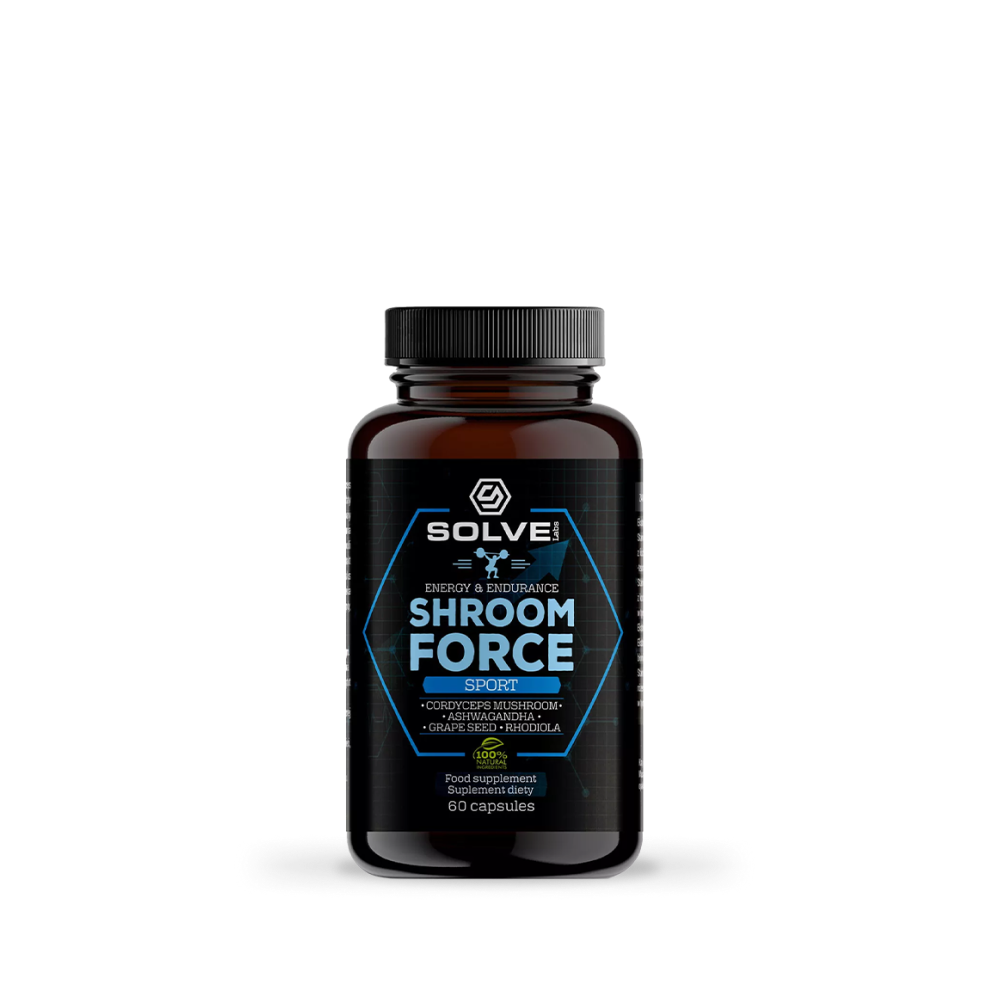
If you're evaluating options, Solve Labs' Cordyceps Capsules are worth reviewing against your own sourcing criteria, confirm the third-party testing documentation before committing to any brand, including this one.
Disclaimer: This article is for informational purposes only and does not constitute medical advice. Always consult a qualified healthcare professional before combining supplements with medications or before making changes to an existing health regimen.
Frequently asked questions
Can I take cordyceps with Lion's Mane and Reishi at the same time?
Yes, no documented interactions exist between cordyceps, Lion's Mane, and Reishi. They work on genuinely distinct pathways: cordyceps targets ATP production and innate immune activation via cordycepin and polysaccharides; Lion's Mane supports NGF-dependent nerve growth via hericenones and erinacines; Reishi modulates adaptive immune response and has anti-inflammatory triterpenes. This three-mushroom stack is common in clinical-use blends and well-tolerated. Allow 4-8 weeks of consistent use before evaluating results, none of these work acutely.
Is it safe to take cordyceps if I'm on blood thinners?
Not without direct medical supervision. Cordycepin, cordyceps' primary active compound, inhibits platelet aggregation by competing at adenosine receptors on platelets. Cordyceps extracts also demonstrate fibrinolytic activity in human platelet preparations and animal models. Combined with anticoagulants like warfarin or antiplatelet drugs like aspirin or clopidogrel, this creates a potentiated bleeding risk. This is the most well-characterized interaction in the cordyceps literature, the mechanism is understood and the direction of effect is consistent across studies. Talk to your prescriber before adding cordyceps to your regimen.
Does cordyceps interact with caffeine or pre-workout supplements?
No documented pharmacokinetic interaction exists between cordyceps and caffeine. However, cordyceps has mild stimulatory effects via AMPK activation and energy metabolism support, and combining it with high-stimulant pre-workouts could theoretically contribute to elevated blood pressure with prolonged use, particularly if your pre-workout contains multiple stimulants. The more significant caution is with MAOIs or prescription stimulant medications, where the theoretical interaction risk is higher. For standard caffeine-based pre-workouts, stacking with cordyceps is generally considered low-risk.
Can I take cordyceps if I have an autoimmune condition?
Proceed with caution and consult your doctor first. Cordyceps stimulates NK cells, macrophages, and T-helper cells, the same immune activation that makes it useful for healthy adults can theoretically exacerbate autoimmune activity in conditions like lupus, MS, or rheumatoid arthritis. This is a mechanism-based concern rather than a documented clinical series of adverse events, but the biological rationale is sound enough that self-experimenting without medical guidance isn't advisable.
Does the species of cordyceps matter for safety and interactions?
Yes, in ways that are underreported. Cultivated Cordyceps militaris contains significantly higher concentrations of cordycepin than wild Cordyceps sinensis, which means the interaction risks (platelet inhibition, AMPK activation) are likely more pronounced with C. militaris extracts at equivalent label doses. Wild C. sinensis carries higher contamination risk from heavy metals in high-altitude soils. Nearly every supplement on the market uses C. militaris, which is the species most of the modern pharmacological research is based on.
Mentioned in this article: Cordyceps Capsules from our range.
Disclaimer: These statements have not been evaluated by the Food and Drug Administration. This product is not intended to diagnose, treat, cure, or prevent any disease. Consult a healthcare professional before use.
