

Cordyceps vs Lion's Mane: Match the Mushroom to Your Goal
Cordyceps vs Lion's Mane: Match the Mushroom to Your Goal

- Lion's Mane stimulates nerve growth factor (NGF) via hericenones and erinacines, making it the clear choice for cognitive performance, memory, and mental clarity.
- Cordyceps boosts ATP production and VO₂ max through cordycepin and adenosine, its primary value is energy output and aerobic endurance, not brain health.
- Onset timelines differ: Cordyceps can improve exercise tolerance within one week; Lion's Mane typically takes 2-4 weeks for focus gains, 8-12 weeks for meaningful memory improvement.
- Both act as adaptogens with shared immune and antioxidant benefits, but stacking them targets genuinely different biological systems, which is why combining them makes sense.
The honest answer is that Cordyceps and Lion's Mane are not rivals, they're specialists. One rebuilds your brain. The other powers your body. Picking the wrong one isn't dangerous; it just means paying for results you won't notice. Here's the decision framework that actually matters.
The Core Rule: Brain vs. Body
Every comparison of these two mushrooms collapses into one clean distinction: Lion's Mane works upstream of cognition by triggering nerve growth factor (NGF) synthesis. Cordyceps works upstream of energy by increasing ATP output and oxygen utilization. These are different biological systems, and knowing which system you need to support is 90% of the decision.
If your main complaint is brain fog, sluggish memory, or scattered focus, Lion's Mane is your mushroom. If your main complaint is fatigue during training, slow recovery, or hitting a wall mid-afternoon, Cordyceps earns its place.
How Lion's Mane Rebuilds Cognitive Function
Lion's Mane (Hericium erinaceus) contains two classes of bioactives found nowhere else in nature: hericenones (from the fruiting body) and erinacines (from the mycelium). Both cross the blood-brain barrier and upregulate NGF synthesis, a protein your brain requires for neuron growth, maintenance, and survival, particularly in the hippocampus, the region most directly tied to memory formation.
This isn't theoretical. In a randomized, double-blind Japanese trial published in 2009, adults aged 50-80 with mild cognitive impairment showed statistically significant cognitive improvement after 16 weeks of Lion's Mane supplementation. The effect reversed within four weeks of stopping, confirming it wasn't placebo, and confirming you need to keep taking it (Mori et al. 2009, Phytotherapy Research). More recently, a 2023 study in Nutrients found that even healthy young adults taking Lion's Mane for 12 weeks showed improved focus, reduced mental fatigue, and better stress markers compared to placebo.
The practical implication: Lion's Mane is a compounding investment. Don't expect a dramatic first-week shift. Expect cleaner thinking at week three, noticeably sharper recall by week eight. It rewards consistency.
Best matched to: Students under cognitive load, knowledge workers managing deep work, anyone experiencing early memory concerns, people coming off burnout.
How Cordyceps Raises ATP Output
Cordyceps (Cordyceps militaris or sinensis) operates through an entirely different pathway. Its primary bioactive, cordycepin, also known as 3′-deoxyadenosine, structurally mimics adenosine and directly upregulates mitochondrial ATP synthesis. More ATP means more usable cellular energy. In parallel, Cordyceps improves oxygen utilization efficiency, raising VO₂ max, the gold standard measure of aerobic capacity.
A randomized controlled trial found that Cordyceps supplementation significantly increased VO₂ max and time to exhaustion in healthy adults over three weeks. A separate study published in the Journal of Dietary Supplements found measurable improvements in high-intensity exercise tolerance after just one week of supplementation, a notably fast onset for a natural supplement.
Cordyceps does not stimulate NGF. It has no direct neurogenic mechanism. If someone sells it to you as a brain supplement, that's a red flag, or at best, a stretch based on secondary anti-inflammatory effects.
Best matched to: Endurance athletes, gym-goers chasing performance plateaus, anyone experiencing energy crashes without a clear clinical cause, people who want natural pre-workout support without stimulants.
Side-by-Side: The Decision Table
| Goal | Lion's Mane | Cordyceps |
|---|---|---|
| Memory and learning | ✓ Primary use | ✗ Not its mechanism |
| Focus and mental clarity | ✓ Backed by 2023 Nutrients trial | Indirect at best |
| Athletic endurance | ✗ Not its mechanism | ✓ Primary use |
| Sustained energy (non-stimulant) | ✗ | ✓ ATP upregulation |
| Nerve regeneration / neuroprotection | ✓ NGF synthesis | ✗ |
| Immune support | ✓ Shared adaptogenic benefit | ✓ Beta-glucans activate NK cells |
| Mood / anxiety | Preliminary, weak evidence | Minimal evidence |
| Time to first effect | 2-4 weeks (focus); 8-12 weeks (memory) | 1-3 weeks (energy/endurance) |
The Honest Case for Stacking Both
Here's where it gets interesting. Your brain and your body don't perform in isolation. Cognitive output degrades when you're physically fatigued, and athletic performance suffers when you're mentally scattered. That's why combining Cordyceps and Lion's Mane isn't marketing padding; it's targeting two genuinely different biological bottlenecks at once.
Think of it this way: Cordyceps fills the tank. Lion's Mane sharpens the driver.
Both mushrooms share adaptogenic properties and contribute to immune resilience, Cordyceps through beta-glucans that activate macrophages and NK cells (via Dectin-1 and CR3 receptors), Lion's Mane through polysaccharide-driven anti-inflammatory pathways. So stacking them doesn't create redundancy; it creates breadth.
The practical stack: take Lion's Mane in the morning with your first meal for consistent NGF stimulation throughout the day. Cordyceps works well 30-60 minutes before physical activity or during the mid-afternoon energy dip. Neither causes jitters. Neither disrupts sleep at standard doses.
What to Look for in Either Supplement
Extract quality matters more than most brands admit. Key things to verify before buying anything:
- Fruiting body, not mycelium on grain. The bioactives, hericenones in Lion's Mane, cordycepin in Cordyceps, concentrate in the fruiting body. Mycelium-on-grain products often contain more starch than active compounds, and the beta-glucan content is rarely disclosed for good reason.
- Beta-glucan percentage, stated explicitly. This is the clearest proxy for extract potency. Look for 30%+ in Lion's Mane; 35-45% in Cordyceps is considered strong.
- Extract ratio. A 10:1 extract means 10kg of raw mushroom concentrated into 1kg of extract. It matters for dose efficiency.
- DNA verification or third-party testing. Species adulteration is a real problem in the mushroom supplement market, particularly with Cordyceps sinensis.
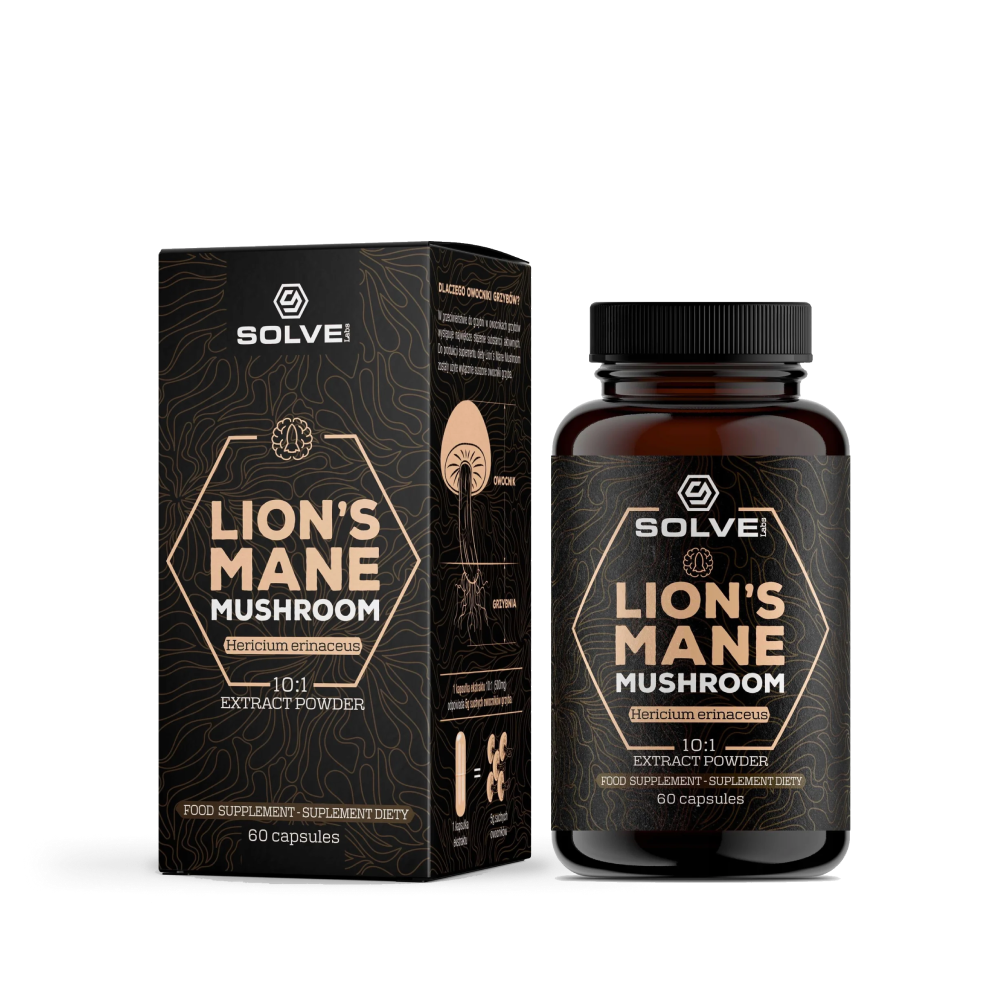
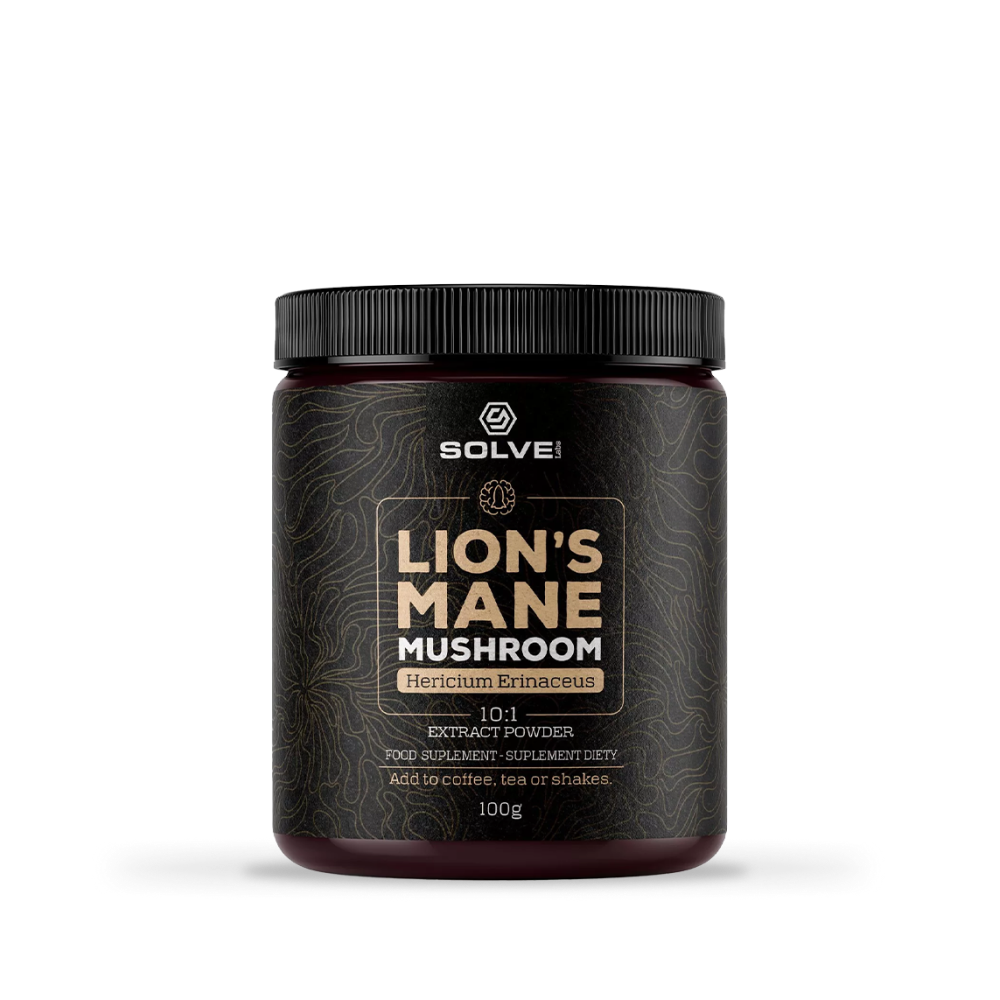
If focus and memory are your primary goal, Solve Labs' Lion's Mane Capsules use a concentrated fruiting body extract standardized for this kind of potency, worth reviewing if you want to compare spec against what you're currently taking.
One Caveat Worth Stating Plainly
The evidence base for both mushrooms is growing but not complete. Most human trials are small and short-term. The cognitive effects of Lion's Mane in healthy young adults are promising, but we don't yet have large-scale, long-term RCTs confirming every mechanism. The Mori et al. (2009) trial remains the most cited human evidence for cognitive improvement, and it used 3g/day of dried powder, a dose some extracts don't reach in bioequivalent terms.
Neither mushroom is a pharmaceutical. Neither is a substitute for sleep, adequate protein, or consistent training. They work best as precision additions to a lifestyle that's already mostly dialed in, not as the whole answer.
Know what you're trying to fix. Choose the mushroom that fixes it. That's the decision.
Frequently asked questions
Can I take Cordyceps and Lion's Mane together, or will they interfere with each other?
They work through completely separate pathways, ATP production vs. NGF synthesis, so there's no known interaction or competition between them. Many people stack both deliberately: Cordyceps for physical energy and endurance, Lion's Mane for sustained cognitive performance. Standard doses of each are generally well-tolerated together. If you're new to either, it's sensible to introduce one at a time so you can identify which effects come from which mushroom.
How long does Lion's Mane take to actually work for focus and memory?
Most people notice sharper focus and reduced mental fatigue within 2-4 weeks at a consistent dose. Meaningful memory improvements, the kind that showed up in the Mori et al. randomized trial, typically require 8-12 weeks of daily use. The 2023 Nutrients study confirmed benefits in young adults at 12 weeks. The key word is consistent: Lion's Mane is a compounding supplement. Missing days slows the timeline. The same trial showed effects reversed within four weeks of stopping entirely.
Is Cordyceps actually useful for people who aren't athletes, or is it only for performance?
Cordyceps' primary mechanism, upregulating ATP synthesis and improving oxygen utilization, benefits anyone whose energy system is under-performing, not just competitive athletes. If you experience chronic afternoon energy crashes, fatigue after moderate activity, or general low vitality without a clear clinical cause, Cordyceps may help. It provides non-stimulant energy support, meaning no caffeine spike and no subsequent crash. The beta-glucan content also contributes to immune function, which is relevant regardless of fitness level.
Mentioned in this article: Lion's Mane Capsules from our range.
Disclaimer: These statements have not been evaluated by the Food and Drug Administration. This product is not intended to diagnose, treat, cure, or prevent any disease. Consult a healthcare professional before use.
