
How to Read a Mushroom Supplement Label
How to Read a Mushroom Supplement Label
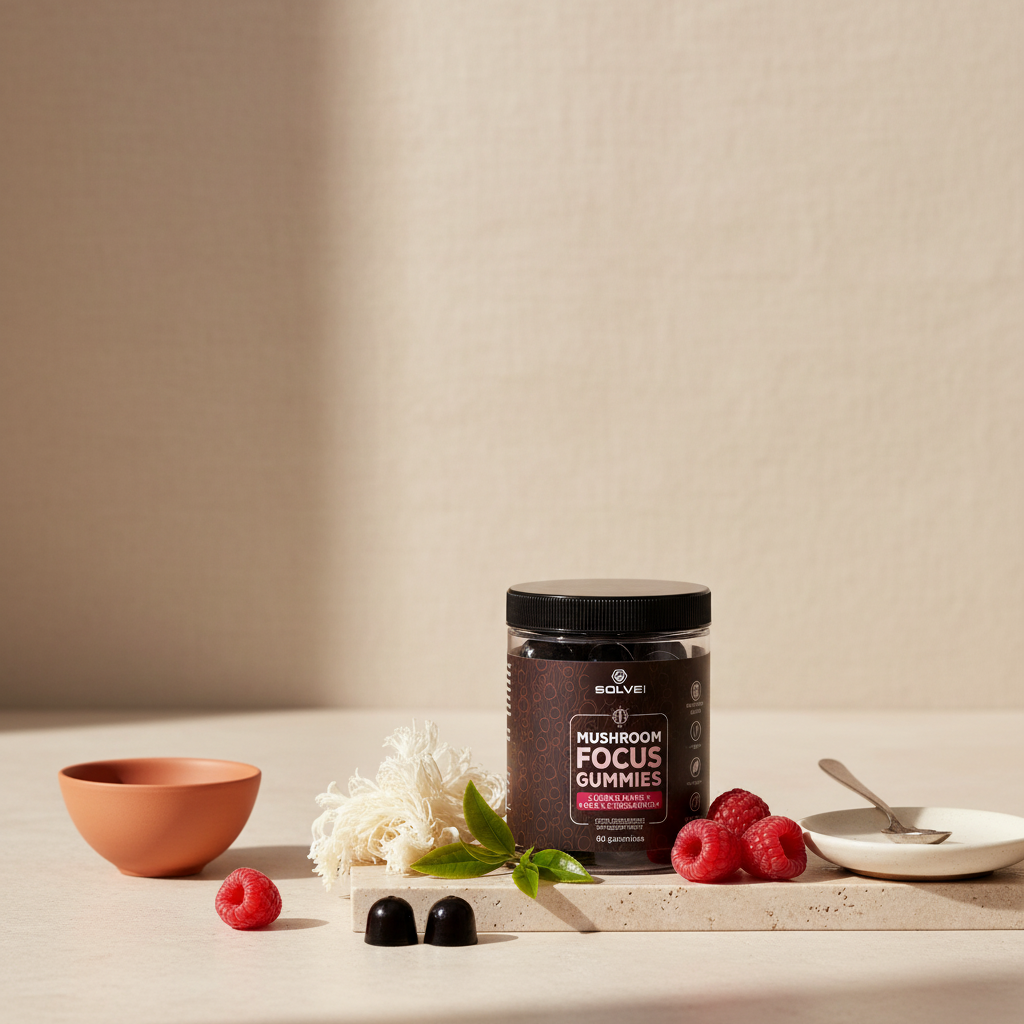
- A quality label states '100% fruiting body', not 'mycelium on grain,' which is mostly starch filler with negligible active compounds.
- Look for a stated beta-glucan content of 25-40%; a vague 'total polysaccharides' figure can mask cheap starch.
- Reishi and other triterpene-rich mushrooms need dual extraction (hot water + alcohol); water alone misses key compounds.
- Effective daily doses are real numbers, Reishi 1,000-2,000 mg, Turkey Tail 1,000+ mg, listed per mushroom, not hidden in a proprietary blend.
- What is on a mushroom supplement label, exactly?
- Fruiting body vs. mycelium on grain, which does the label say?
- What does the beta-glucan percentage tell you?
- Why does the extraction method matter?
- How do you read the dose (mg per serving)?
- What certifications and testing should be on the label?
- What do "full-spectrum" and "dual extract" actually mean?
- How long until a mushroom supplement works?
- Health benefits, what the evidence actually supports
- A 30-second label check before you buy
- Frequently asked questions
- Related guides
To read a mushroom supplement label like an expert, verify three things: that the product specifies 100% fruiting body (not mycelium grown on grain), that it lists a beta-glucan content of 25-40%, and that it confirms dual extraction, hot water plus alcohol, to capture both polysaccharides and triterpenes. Everything else on the label is secondary to those three checks. This guide walks you through each line so you can tell a genuine extract from an expensive bag of starch.
Reviewed against published beta-glucan and supplement-regulation literature from the NCBI and the NIH Office of Dietary Supplements.
| Label element | What to look for | Red flag | Why it matters |
|---|---|---|---|
| Mushroom part | "100% fruiting body" | "Mycelium on grain," "myceliated biomass" | Actives concentrate in the fruiting body |
| Beta-glucans | Stated 25-40% | Only "total polysaccharides" listed | Beta-glucan is the potency benchmark |
| Extraction | "Dual-extracted" or both methods named | "Extract" with no method | Triterpenes need alcohol; glucans need water |
| Dosing | mg per individual mushroom | "Proprietary blend" total only | Benefits are dose-dependent |
| Testing | Third-party CoA, heavy-metal panel | No CoA link, vague "tested" claims | Verifies potency and safety |
What is on a mushroom supplement label, exactly?
A functional mushroom label carries five pieces of information that decide quality: the species and the part of the mushroom used, the extraction method, the standardized active content (usually beta-glucans), the dose per serving in milligrams, and third-party testing details. The marketing language, "full-spectrum," "premium," "clinical strength", is unregulated and tells you nothing.
Here is why this matters more than in any other supplement category. Per the NIH Office of Dietary Supplements, the U.S. does not test supplements for potency before they hit shelves. The label and its supporting Certificate of Analysis are the only evidence of what is inside the bottle. That evidence only exists when a brand chooses to publish it, and most don't.
Takeaway: The label is not marketing, it is documentation, read it as a spec sheet, not an ad.
Fruiting body vs. mycelium on grain, which does the label say?
This is the single most important line on the label. The therapeutic compounds, beta-glucans and triterpenes, concentrate in the fruiting body, the mushroom you would recognize. Mycelium grown on grain (usually brown rice) is the root-like network harvested together with its starchy substrate. That substrate is undigested grain, not medicine, and you cannot separate the two once they're milled into powder.
A Certificate of Analysis makes this measurable. Starch content above 30% confirms leftover grain substrate; a true fruiting-body extract shows high beta-glucan and low starch. So the label check is binary:
- Buy: "100% fruiting body," "made from fruiting bodies."
- Skip: "mycelium on grain," "myceliated brown rice," "mycelium biomass."
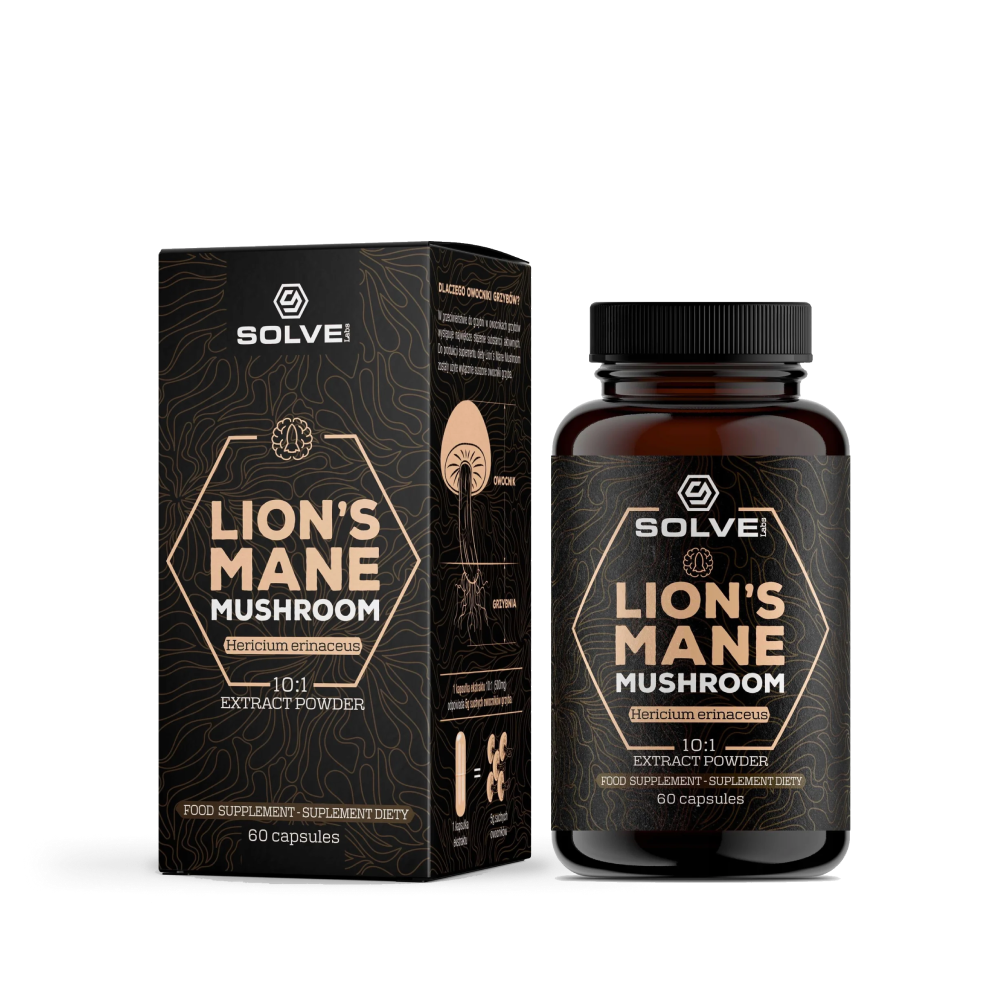
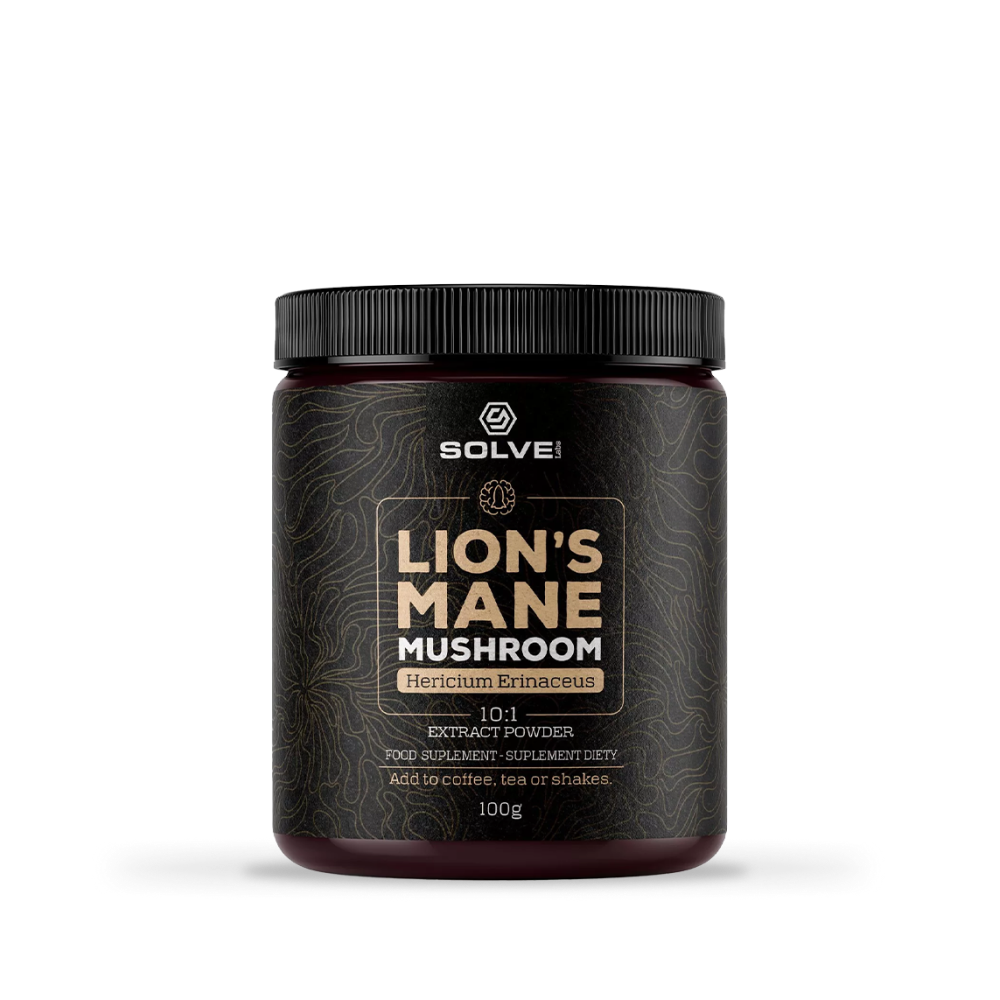
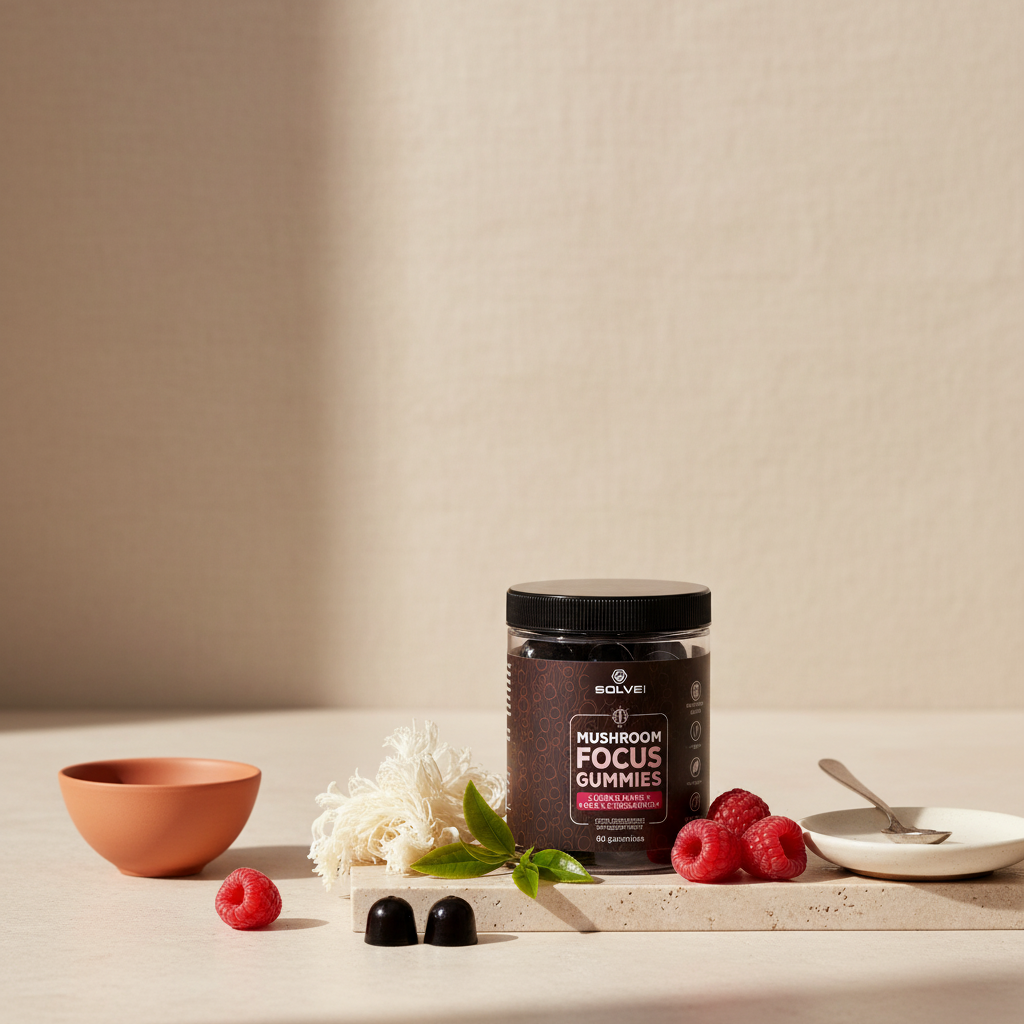
Mycelium is not worthless. But mycelium grown on grain and sold as a whole-mass powder dilutes the actives to negligible levels, you are paying extract prices for rice flour. For Lion's Mane specifically, the species most people buy for cognitive support, fruiting-body sourcing preserves the hericenones and erinacines tied to its studied effects. Solve Labs uses fruiting body in its Lion's Mane Focus Gummies for exactly this reason.
Takeaway: If the label doesn't say "fruiting body," it's grain until a CoA proves otherwise.
What does the beta-glucan percentage tell you?
Beta-glucans are the primary immune-modulating polysaccharides in medicinal mushrooms, and the percentage is your gold-standard potency marker. Research indexed by the NCBI ties beta-glucans directly to immune-cell receptor activity, this is the fraction that does the work. A quality extract states a beta-glucan content of 25-40% on the label or CoA.
Watch for the oldest trick in the category. Many products list only "total polysaccharides," which can hit 40-50% and look impressive, but that number folds in alpha-glucans (starch) from grain substrate, which carry none of the same benefits. A high "total polysaccharide" figure is not a potency claim. It is a way to make grain look like medicine.
| What the label says | Interpretation |
|---|---|
| "Beta-glucans 30%" | Strong, a specific, verifiable potency claim |
| "Total polysaccharides 45%" | Ambiguous, likely padded with starch |
| No polysaccharide figure at all | Weak, no way to judge potency |
Solve Labs formulates with concentrated extracts so the beta-glucan fraction stays in that 25-40% range instead of being diluted by substrate.
Takeaway: A stated beta-glucan percentage beats any "total polysaccharide" number, demand the specific figure.
Why does the extraction method matter?
Because no single solvent captures everything. Hot water extraction dissolves beta-glucans (the water-soluble polysaccharides). Alcohol extraction dissolves triterpenes, the bitter, fat-soluble molecules that drive much of Reishi's studied activity. Water alone leaves the triterpenes behind. Alcohol alone misses the glucans.
Dual extraction (also written "dual-extracted") uses both, which is why it's the benchmark for Reishi, Chaga, and Turkey Tail. On the label, look for "dual-extracted," "hot water and alcohol extracted," or an explicit mention of both methods. A label that just says "mushroom extract" with no method named usually means plain dried powder, not a concentrated extract.
Two things to keep straight. First, not every mushroom needs alcohol: Lion's Mane's key actives come through water and gentle processing, so dual extraction matters most for the triterpene-heavy species. Second, "dual-extracted" is a process claim, not proof, it only counts when a beta-glucan figure and a CoA back it up. Treat the words as a filter, then verify.
Takeaway: For Reishi, Chaga, and Turkey Tail, insist on dual extraction, for Lion's Mane it's less critical.
How do you read the dose (mg per serving)?
Benefits are dose-dependent, and the proprietary blend is how labels hide underdosing, a single "blend" weight ("1,500 mg mushroom complex") that conceals how much of each mushroom you actually get. A quality label lists milligrams per individual mushroom, so you can check each against evidence-based ranges.
| Mushroom / ingredient | Effective daily range | Note |
|---|---|---|
| Reishi | 1,000-2,000 mg extract | Triterpenes require alcohol extraction |
| Turkey Tail (Coriolus) | 1,000+ mg | Studied for immune support |
| Cordyceps | Higher for whole powders; a 40-person RCT showed NK-cell effects at just 2 mg of a concentrated C. militaris drink | Dose depends entirely on concentration |
The Cordyceps line is the whole lesson in one row. That 2 mg figure comes from a small (n=40) randomized controlled trial using a highly concentrated preparation, not whole-mushroom powder. Raw milligrams mean nothing without the part, the extraction, and the concentration. A transparent label gives you all three; a blend total gives you none.
Better formulations also name supporting actives at exact doses, say 500 mg Reishi alongside 100 mg GABA in a calm or sleep product. Listing both amounts is what "transparent" actually means: you can look each dose up against the literature yourself.
Takeaway: A blend total without per-mushroom milligrams is an unverifiable dose, treat it as underdosed.
What certifications and testing should be on the label?
Because regulators don't pre-test potency, a third-party Certificate of Analysis (CoA) is the closest thing to proof you'll get. The NIH Office of Dietary Supplements flags independent testing as the practical safeguard for buyers. A good label links to a batch-specific CoA that includes:
- Potency verification, confirming the beta-glucan percentage and dose match the label.
- A contaminant panel, with stated limits for heavy metals. Mushrooms are efficient bioaccumulators, pulling arsenic, cadmium, and lead straight out of the soil they grow in, so this is not optional.
- Microbial and pesticide screening where relevant.
USDA Organic cuts pesticide and heavy-metal exposure at the growing stage; third-party lab testing confirms the finished product. "Lab tested" printed on a box without a linkable, batch-specific CoA is a claim, not evidence. Solve Labs publishes third-party testing and heavy-metal screening rather than lean on the phrase.
Takeaway: "Tested" is a word; a batch-specific, linkable CoA with heavy-metal limits is proof.
What do "full-spectrum" and "dual extract" actually mean?
These two phrases cause the most confusion, so here is the plain reading:
- "Full-spectrum", not fine print for potency, but a polite label for including mycelium and substrate alongside fruiting body. It's unregulated and often means grain is in the jar. Cross-check it against the beta-glucan figure every time.
- "Dual extract", a specific, meaningful process claim (water + alcohol), credible only when paired with a stated beta-glucan percentage and a CoA.
The same actives arrive in different formats, capsules, powders, gummies, mushroom coffees, and the format never changes these rules. A gummy still has to declare fruiting body, dose per mushroom, and testing. Delivery form is about convenience and taste, not potency. Pick the format you'll actually take daily, then apply the same five checks.
Takeaway: "Full-spectrum" is marketing; "dual extract" is a process, verify both with the beta-glucan number and CoA.
How long until a mushroom supplement works?
Functional mushrooms are not stimulants, so don't judge them like one. For generally healthy people, subtle cognitive or stress-resilience effects build over two to eight weeks of consistent daily use, and the timeline shifts with the individual, the dose, and the extract quality. Felt nothing on day one? That's expected, not a failure.
Mild, temporary GI effects, bloating, soft stools, brief nausea, are common in the first one to two weeks as your gut adapts to the polysaccharides, and they usually settle. Taking the product with food and starting at a lower dose blunts most of it.
Takeaway: Give any mushroom supplement a consistent 4-8 week trial before judging it, and expect a shift, not a jolt.
Health benefits, what the evidence actually supports
This is where the label meets the science. Strength-of-evidence flags, no inflation:
- Immune modulation (moderate evidence). Beta-glucans bind immune-cell receptors, per the NCBI literature, and Turkey Tail and Cordyceps carry human data, including the 40-person Cordyceps RCT that showed enhanced natural killer cell activity. Strongest where beta-glucan content is verified.
- Cognitive support / focus (early-to-moderate evidence). Lion's Mane fruiting body contains compounds studied for nerve growth factor support; small human trials are encouraging but short and underpowered. Promising, not settled.
- Stress resilience and calmer baseline (weak-to-moderate). Reishi is traditionally used for calm and sleep, often paired with GABA; human clinical data is thin and quality-dependent.
- Sleep quality (weak). Largely traditional and anecdotal for Reishi. Read sleep claims skeptically.
Every one of these benefits is only as real as the label. A product without fruiting body, verified beta-glucans, or a CoA cannot reliably deliver any of them, no matter what the front of the box promises.
Takeaway: The evidence is real but modest, buy on label quality, and keep expectations proportionate to the science.
A 30-second label check before you buy
- Does it say 100% fruiting body? (No = skip.)
- Is a beta-glucan % stated, ideally 25-40%? (Only "total polysaccharides" = caution.)
- Is it dual-extracted (for Reishi/Chaga/Turkey Tail)?
- Are per-mushroom milligrams listed, not just a blend total?
- Is there a linkable third-party CoA with a heavy-metal panel?
Pass all five and you're holding a genuine product. Fail two or more and you're paying extract prices for grain powder.
Frequently asked questions
Is mycelium always bad?
No, mycelium isn't worthless, but mycelium grown on grain and sold as whole-mass powder dilutes the actives with undigested starch. If a label wants credit for mycelium, it needs a CoA showing starch under 30% and a real beta-glucan figure.
Does a higher polysaccharide percentage mean a stronger product?
Not necessarily. "Total polysaccharides" can include alpha-glucans (starch) that carry no benefit. A specific beta-glucan percentage of 25-40% is the number that matters.
Do gummies and coffees work as well as capsules?
Format is about convenience, not potency. A gummy that declares fruiting body, per-mushroom milligrams, and third-party testing can match a capsule. Pick what you'll take consistently, then apply the same label checks.
Do I need dual extraction for Lion's Mane?
Less so. Lion's Mane's key actives come through hot water and gentle processing. Dual extraction matters most for triterpene-heavy species like Reishi, Chaga, and Turkey Tail.
How do I know a product is heavy-metal safe?
Look for a batch-specific CoA with stated limits for arsenic, cadmium, and lead. Mushrooms bioaccumulate metals from soil, so a contaminant panel, not the word "tested", is your safeguard.
Frequently asked questions
Is mycelium always worse than fruiting body?
Not always in principle, but mycelium grown on grain and sold as whole biomass is mostly starch substrate with diluted actives. A starch content above 30% on the CoA confirms significant grain. If a label says 'mycelium on grain' or 'myceliated brown rice' without a strong beta-glucan figure, treat it as low potency.
What beta-glucan percentage is good on a mushroom label?
A quality extract lists a specific beta-glucan content of 25-40%. Be cautious if the label only shows 'total polysaccharides,' since that figure can include alpha-glucans (starch) and mask lower true potency.
Why do I need dual extraction?
Hot water dissolves beta-glucans while alcohol dissolves triterpenes, so dual extraction captures both. It matters most for triterpene-rich species like Reishi, Chaga, and Turkey Tail. Lion's Mane relies less on alcohol extraction, so it's less critical there.
Mentioned in this article: Lion's Mane Focus Gummies from our range.
Disclaimer: These statements have not been evaluated by the Food and Drug Administration. This product is not intended to diagnose, treat, cure, or prevent any disease. Consult a healthcare professional before use.
