
Chaga-Ashwagandha vs Reishi Mushroom Coffee
Chaga-Ashwagandha vs Reishi Mushroom Coffee
- No mushroom coffee blend has been tested as a whole in human trials; benefits are inferred from isolated-ingredient studies, and coffee-level doses are usually sub-clinical.
- Chaga + ashwagandha blends target daytime energy and stress resilience; reishi blends are positioned for evening relaxation and sleep, a 2025 RCT (n=499) supports reishi for stress and sleep outcomes.
- Ashwagandha needs 300-600 mg extract daily to lower cortisol in trials; a single cup of coffee likely delivers less, so verify the per-serving milligrams before assuming a therapeutic effect.
- Chaga has zero completed human clinical trials and documented oxalate-nephropathy (kidney injury) cases at 10-15 g/day, caution is warranted, and most mushroom coffees still contain caffeine.
- At a glance
- What is chaga-ashwagandha coffee vs reishi coffee?
- How does each one work?
- What does the evidence actually say?
- How much do you actually get in a cup, and is it enough?
- How long until it works?
- What are the side effects and risks?
- Chaga-ashwagandha vs reishi: which should you choose?
- Health benefits, graded honestly
- Who should take it, and who shouldn't
- Related guides
Chaga-ashwagandha coffee is a morning drink. Reishi coffee is a nighttime one. That is the whole decision in one line, but here is the honest part most brands bury: no mushroom coffee blend has ever been tested as a finished product in a human trial [7]. So we grade the ingredients instead. Chaga + ashwagandha blends chase daytime energy and stress resilience through antioxidant and cortisol-modulating mechanisms, with ashwagandha carrying the only moderate-strength human evidence in either cup [2][3]. Reishi blends chase evening wind-down and sleep, backed by one large randomized controlled trial (n=499) [7]. The catch that applies to both, the dose of active compound in a typical cup usually lands below the dose used in research [2][7]. Read on for the math.
Provenance: Solve Labs editorial. This guide grades evidence per ingredient, separates mechanism from benefit from safety, and flags every place the coffee dose likely falls short of the studied dose. Where evidence is weak or absent, we say so, and we cite only human-relevant trials, review data, and dietetic guidance, never marketing claims.
At a glance
| Attribute | Chaga + Ashwagandha coffee | Reishi coffee |
|---|---|---|
| Primary positioning | Daytime energy, stress resilience, antioxidant/immune support | Evening relaxation, sleep, stress recovery |
| Best time of day | Morning / midday | Afternoon / evening |
| Key actives | Chaga polyphenols/beta-glucans; ashwagandha withanolides | Reishi triterpenes/beta-glucans |
| Studied dose (isolated) | Ashwagandha extract 300-600 mg/day [2]; chaga has no human trials [7] | Reishi RCT n=499 for stress/sleep (dose not stated in summary) [7] |
| Evidence strength | Moderate for ashwagandha (stress); none in humans for chaga [7] | One large RCT for stress/sleep; otherwise limited [7] |
| Caffeine | Usually present (instant coffee base) [2] | Usually present [2] |
| Main risk | Chaga oxalate nephropathy at high intakes (10-15 g/day cases) [7] | Generally well tolerated; monitor with anticoagulants |
What is chaga-ashwagandha coffee vs reishi coffee?
Both are instant or ground coffee blended with dried mushroom or root extracts. What separates them is what's added, and why. Chaga (Inonotus obliquus) is a birch fungus with a high polyphenol and antioxidant load in lab assays [7]. Ashwagandha (Withania somnifera) is not a mushroom at all, it's an adaptogenic root often blended alongside the fungi, and it works chiefly by dialling down cortisol and the stress-hormone axis [1][3]. Stack them and the pitch writes itself: an energising, stress-buffering morning cup.
Reishi (Ganoderma lucidum) is a woody mushroom used traditionally as a calming immunomodulator. Reishi coffee is aimed at the opposite end of the clock, winding down, relaxing, sleeping. So these two products aren't rivals for the same slot. One is a daytime tool. The other is an evening one. Treating them as interchangeable is the first mistake most buyers make.
How does each one work?
Mechanism first, recommendation second.
Chaga delivers polyphenols and beta-glucans that show antioxidant and immunomodulatory activity in lab and preliminary models [7]. Here's the honest boundary: these are lab findings. There are zero completed human clinical trials on chaga supplementation. So systemic claims, antimicrobial, anticancer, rest on a 2023 review of preclinical data, not on human outcomes [1][7]. Promising is not the same as proven.
Ashwagandha lowers circulating cortisol. Because chronically elevated cortisol tracks with perceived stress and poor sleep, reducing it is the plausible route to its calming, stress-resilience effect [1][3]. This is the best-evidenced ingredient in either blend for a specific human outcome, but the effect is dose-dependent, and that dose matters more than the marketing does.
Reishi acts as an immunomodulator and adaptogen. A randomized controlled trial in 499 participants reported benefit for stress and sleep outcomes, which is precisely why reishi anchors evening blends [7]. It is the only ingredient across both products with large-RCT support for its headline claim.
What does the evidence actually say?
One fact towers over the rest, benefits are inferred from studies on isolated, purified extracts at research doses, not from the finished coffee [2][7]. Grade each ingredient on its own merits:
- Ashwagandha, moderate evidence. Robust human data support stress reduction, but trials typically use 300-600 mg/day of extract [2][3].
- Reishi, limited-to-moderate. One large RCT (n=499) supports stress and sleep outcomes; the summary doesn't report the dose used, which limits how well you can match it in a cup [7].
- Chaga, very weak in humans. No completed human trials. Benefit claims are preclinical only [1][7].
- Lion's Mane, mixed and small. A 2023 study (n=41) found faster cognitive task completion after a single dose, but the 28-day stress-reduction result was not statistically significant, and the British Dietetic Association states there's no solid evidence that typical coffee-level doses meaningfully improve memory or focus [1][2].
- Cordyceps, dose-gap. Endurance benefits appear at 2-4 g/day over 3-12 weeks. Coffees deliver milligram-level extracts, likely too little to reproduce the effect [7].
How much do you actually get in a cup, and is it enough?
This is the crux of the value question, and it's where most functional coffees quietly fail. Dietetic guidance notes these products frequently contain amounts below research dosages [2]. The math is unforgiving.
| Ingredient | Studied effective dose | Typical coffee serving | Verdict |
|---|---|---|---|
| Ashwagandha extract | 300-600 mg/day [2] | Often well under 300 mg | Likely sub-clinical unless label states ≥300 mg |
| Cordyceps | 2,000-4,000 mg/day [7] | Milligram-level extract | Almost certainly sub-clinical |
| Reishi | RCT dose not disclosed [7] | Varies; often unverified | Cannot confirm therapeutic match |
| Chaga | No human trial dose exists [7] | Varies | No benchmark to meet |
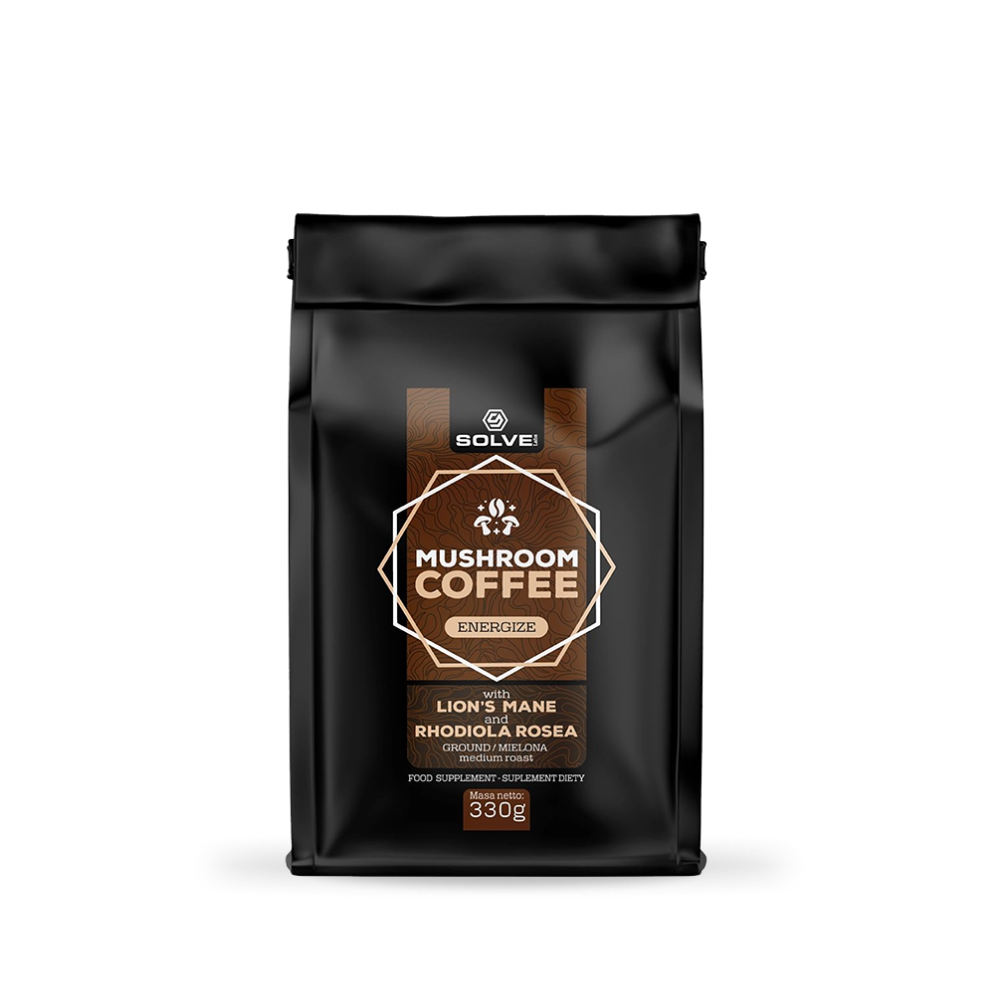
The takeaway is uncomfortable, many mushroom coffees amount to "weaker coffee with unproven additions" rather than a therapeutic dose [7]. But there's a defence, and it's simple: the label test. Buy blends that print per-serving milligrams for each active. A product that shows "ashwagandha extract, 300 mg" lets you check it clears the studied threshold. A "proprietary blend, 1,500 mg" figure, one combined weight for six ingredients, does not. You cannot do the arithmetic on a number that hides its parts. Solve Labs discloses per-ingredient doses so you can run that check yourself; treat opacity as a red flag, not a trade secret.
How long until it works?
Manage expectations by mechanism, not by hope. Caffeine, present in most of these coffees despite "jitter-free" marketing, acts within 30-60 minutes [2]. Lion's Mane's single-dose task-speed signal appeared acutely in the 2023 study [1]. Cortisol-mediated effects from ashwagandha are a different timescale entirely: trials measure outcomes at 4-8 weeks, and both the reishi RCT and the Lion's Mane stress arm ran to 28 days [1][7]. So if you expect a measurable stress or sleep shift in days, you'll be disappointed. The honest window is weeks, and only if the dose is adequate. Anything you feel on day one is caffeine, not the fungus.
What are the side effects and risks?
Benefits and safety are separate ledgers. We volunteer the caveats before you ask.
- Chaga and kidney injury. Multiple case reports document chaga-induced oxalate nephropathy, acute kidney injury, in people consuming 10-15 g/day; the risk is dose-dependent [7]. Coffee doses are likely lower, but they're unverified for safety. Anyone with kidney disease, a kidney-stone history, or on an oxalate-restricted diet should be especially cautious.
- GI discomfort. Bloating, soft stools, and transient nausea are commonly reported in the first 1-2 weeks with mushroom beta-glucans. These usually settle.
- Caffeine. Because most blends contain real coffee [2], the usual cautions apply, anxiety, disrupted sleep if taken late, and stimulant sensitivity. One more reason reishi (evening) and chaga-ashwagandha (morning) are not interchangeable.
- Medication interactions. Reishi may affect platelet function, caution is advised with anticoagulants. Ashwagandha may interact with thyroid, sedative, and immunosuppressant medications, and is not recommended in pregnancy.
None of these ingredients is regulated as a drug, so contents and potency vary between products. The label test isn't optional here. It's the only quality control you get.
Chaga-ashwagandha vs reishi: which should you choose?
Choose by outcome and time of day. Not by which sounds more exotic.
- Pick chaga + ashwagandha if you want a morning or midday cup aimed at energy and stress resilience. The ashwagandha component carries the strongest human evidence in either blend, provided the label shows ≥300 mg of extract per serving [2]. Treat the chaga's antioxidant and immune claims as promising-but-unproven in humans [7].
- Pick reishi if your goal is evening wind-down, relaxation, or sleep. Reishi uniquely has a large RCT (n=499) behind its stress and sleep positioning, though the undisclosed trial dose limits how precisely you can match it [7].
- Pick neither for cognition alone. If focus is your primary aim, note the BDA's position that typical coffee-level Lion's Mane doses lack solid evidence for memory or focus [2], and that plain caffeine already accounts for most of the alertness you'll feel.
Health benefits, graded honestly
- Stress reduction (ashwagandha), moderate evidence. Mechanism: lowers cortisol [1][3]. Effective at 300-600 mg/day of extract; unproven at typical coffee doses [2].
- Sleep and stress support (reishi), limited-to-moderate. One RCT (n=499) supports these outcomes [7]. Dose transparency is the weak link.
- Antioxidant / immune (chaga), preclinical only. High polyphenol content in lab assays; no completed human trials, so systemic benefit is inferred, not demonstrated [1][7].
- Alertness (caffeine), strong, but not the mushroom. The reliable stimulant effect comes from the coffee base, not the fungi [2].
- Endurance / recovery (cordyceps, when present), weak in coffee. Benefits documented at 2-4 g/day; coffee milligram doses are almost certainly too low [7].
- Cognition (Lion's Mane, when present), mixed and small. Acute task-speed signal (n=41), non-significant 28-day stress result, no solid evidence at coffee doses per the BDA [1][2].
Who should take it, and who shouldn't
Reasonable for generally healthy adults who want a coffee ritual with a modest, mostly unproven wellness upside, and who read the label for actual milligrams. Approach with caution or avoid if you have kidney disease or a stone history (chaga), take anticoagulants (reishi), are pregnant or on thyroid or sedative medication (ashwagandha), or are highly caffeine-sensitive. When in doubt, run the safest test there is: pick a transparent, dose-disclosed product, start at a low serving, and give it 1-2 weeks to gauge GI tolerance before scaling up. Match the cup to the clock, chaga-ashwagandha before noon, reishi after, and let the label, not the marketing, decide whether it's worth your money.
Frequently asked questions
Is chaga-ashwagandha coffee better than reishi coffee?
Neither is objectively "better", they target different outcomes. Chaga-ashwagandha blends aim at daytime energy and stress resilience (ashwagandha has the stronger human evidence, at 300-600 mg/day), while reishi blends target evening relaxation and sleep and have one large RCT (n=499) behind them. Choose by goal and time of day, not by hierarchy.
Is there enough mushroom in these coffees to actually do anything?
Often not. Dietetic associations note functional coffees frequently contain sub-clinical amounts, ashwagandha needs 300-600 mg/day and cordyceps 2-4 g/day, while coffees often deliver less. Buy blends that disclose per-serving milligrams so you can verify the dose meets research thresholds.
Is mushroom coffee caffeine-free?
Usually not. Despite "jitter-free" marketing, most mushroom coffees are built on instant or ground coffee blended with extracts, so they contain caffeine. Check the label if you're caffeine-sensitive, and reserve reishi blends for evening use accordingly.
Disclaimer: These statements have not been evaluated by the Food and Drug Administration. This product is not intended to diagnose, treat, cure, or prevent any disease. Consult a healthcare professional before use.
