
Why our
mushrooms
work.
Extracted twice, concentrated ten to one and tested by three independent laboratories. This is what we do to the mushroom, and every report that proves it.
- 5species confirmed by DNA, at 97.4% to 100% match
- 3independent laboratories: ALS, InventUR and GBA Polska
- 9lab reports, all open to download
Sourcing

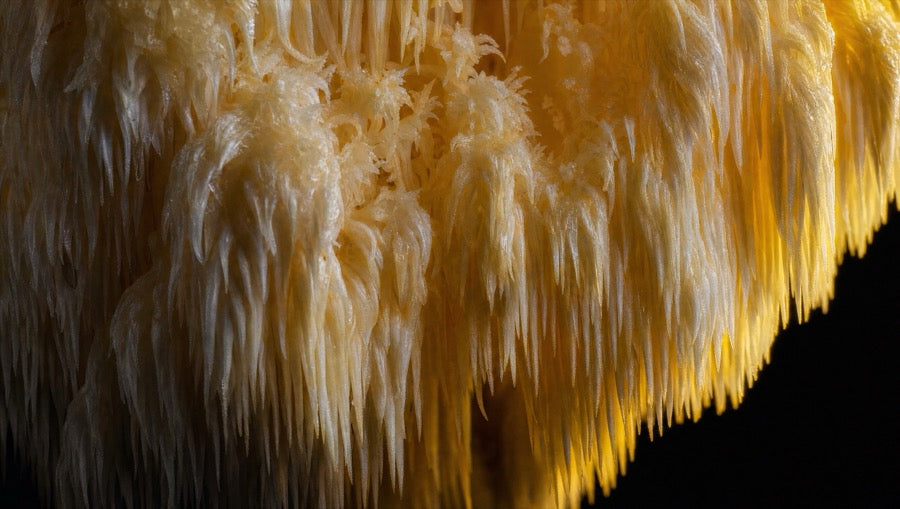
100% fruiting body
The fruiting body is the mushroom itself: the part you would recognise, and the part that carries the beta-glucans, hericenones and hericenes Lion’s Mane is known for. Many products are made from mycelium instead, the root-like network grown on grain. It is cheaper to produce, and the grain comes with it: starch that ends up in the powder and takes the place of mushroom.
Origin & cultivation
Our Hericium erinaceus is grown on wood under controlled conditions: temperature, humidity and harvest timing are set, not left to the weather. That keeps one harvest like the next and keeps environmental pollutants out. The same producer has grown and extracted for us since 2016.
Extraction
- Raw fruiting body 10 kg of mushroom
- Hot water extraction Beta-glucans · polysaccharides
- Alcohol extraction Hericenones · hericenes · terpenoids
- Combined extract Both fractions together
- 10:1 concentration 10 kg become 1 kg
- Final powder 1 kg of 10:1 extract
Fig. 2 — Dual extraction. Hot water and alcohol run sequentially, then the fractions are recombined.
Dual extraction
A single method captures only part of the spectrum. Hot water pulls the water-soluble compounds (beta-glucans, polysaccharides); alcohol pulls the alcohol-soluble ones (hericenones, hericenes, terpenoids). We run both, one after the other, and combine the two extracts into one.
10:1 concentration ratio
Plain mushroom powder is one to one: a kilo of dried mushroom, milled, is a kilo of powder. Ours is concentrated ten to one, so ten kilos of fruiting body become one kilo of extract and a 1,000 mg serving stands for 10 g of mushroom. The Lion’s Mane extract measured 31.8% beta-glucans at ALS (33.9% on dry matter).
Verification
ITS region sequencing on production samples
- SampleTaken from production
- DNA extractionFungal DNA isolated
- PCR amplificationThe ITS barcode region amplified
- SequencingThe sequence read
- GenBank verificationMatched against NCBI GenBank
- Species confirmedHericium erinaceus · 99.2%
Fig. 3 — Tested samples are sequenced against the NCBI GenBank reference database to verify species identity.
DNA barcoding
DNA barcoding is the standard for species authentication in mycology. We extract DNA from tested production samples, amplify the ITS (Internal Transcribed Spacer) region — the universal barcode marker for fungi — and compare the sequence against the NCBI GenBank database.
Why this matters
Mushroom supplements get mislabelled: published analyses have found jars sold as one species that held another. A beta-glucan test cannot tell species apart. DNA can. It is expensive and no regulation asks for it, which is why almost nobody publishes one.
Testing
Three independent laboratories test our extracts: ALS for beta-glucans, InventUR at the University of Rzeszów for species DNA, and GBA Polska for heavy metals, microbiology and contaminants. Every report is published here.
| What we checked | 273 products on the shelf | Solve Labs |
|---|---|---|
| A lab report you can open | 4.5% of products | All nine, below |
| A DNA species report | 1 brand of 178 | Published, five species |
| Ingredients that are not mushroom | 73% list one | None: the extract and nothing else |
Our own reading of 273 public product listings from 178 brands, on 15–16 August 2026.
The reports
Nine documents, each signed by the laboratory that ran it. Open any of them.
Each report names its sample, its lot and its date. Results relate to the sample that was tested. The DNA report is in English. Every other report opens with an English summary, followed by the laboratory’s original in Polish.
Transparency
If it is in the extract, it is on the label.
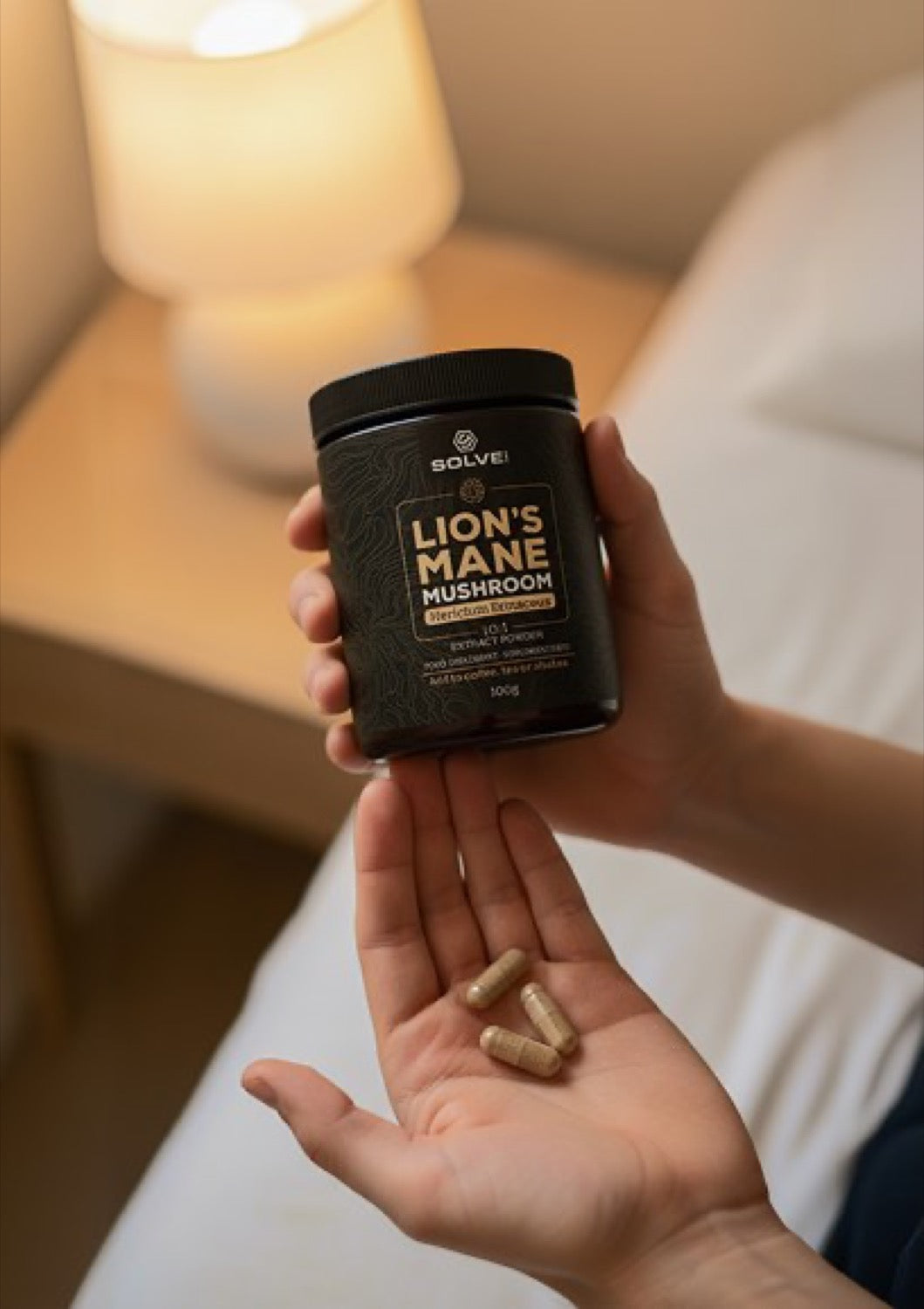
Supplement facts
Serving size: 2 capsules · Servings per container: 30
| Amount per serving | |
|---|---|
| Lion’s Mane extract (10:1) | 1,000 mg |
| Beta-glucans, measured | 31.8% |
| Fruiting body it is made from | 10,000 mg |
Other ingredients: the plant-based capsule (HPMC). Nothing else.
Fig. 4 — Lion’s Mane capsules, per daily serving.
No proprietary blends
A “proprietary blend” lets a brand list its ingredients without saying how much of each. We do not use them. Every product shows the extract, its ratio and its amount, on the label and on its page.
One ingredient
A capsule holds the extract and its plant-based shell. No flow agents, no flavouring.
Reports you can open
Not “lab tested” as a badge: the documents themselves, with the laboratory, the sample and the date on them. See all nine.
Research
The published record.
These four species have been studied for years. Here are fifteen published papers, each linked to its PubMed record. One of them found no effect, and it stays on the list.
These studies were run on the species, not on our products.
Choose your protocol.
One jar per moment of the day. Everything on this page applies to all three.


60 days to decide, even opened · Free UK delivery over £50 · Cancel any time. Food supplements: not a substitute for a varied diet and a healthy lifestyle.