
Mushroom Plant Protein: Meal Replacement or Post-Workout?
Mushroom Plant Protein: Meal Replacement or Post-Workout?
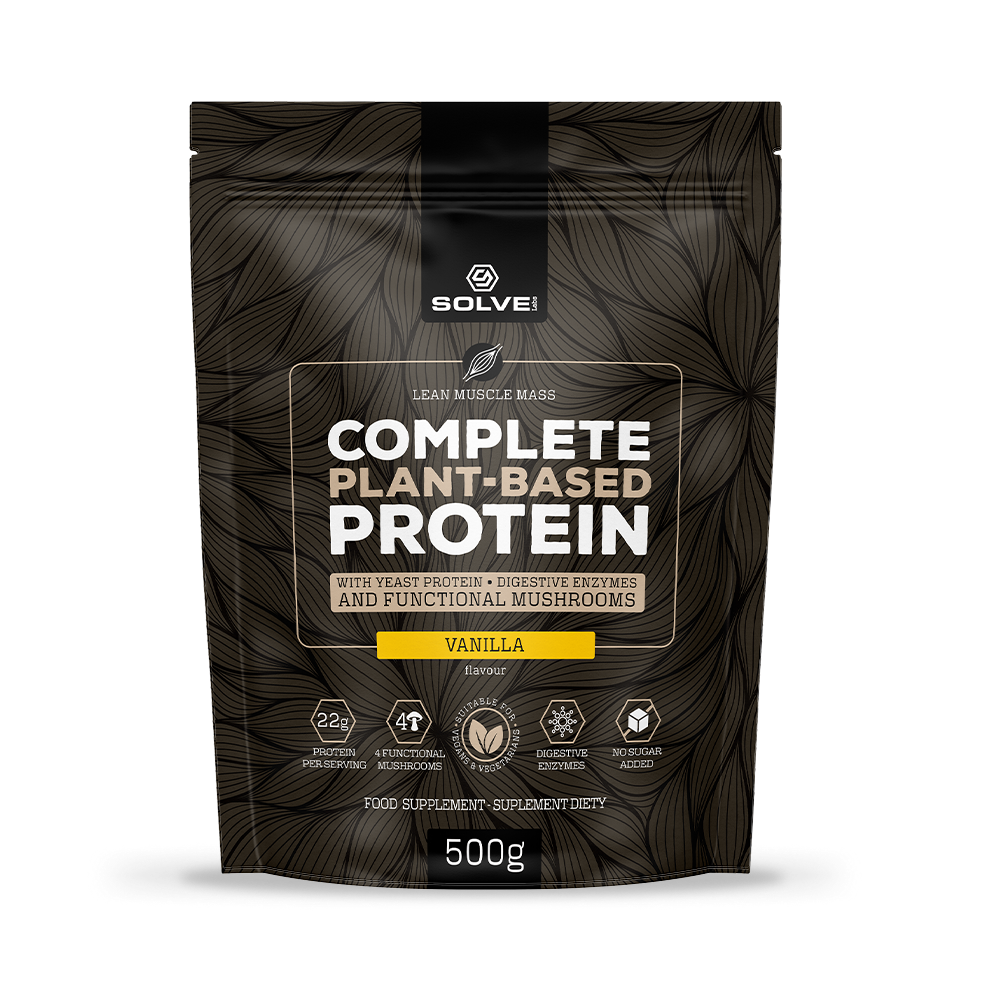
- Each serving delivers 22.4g of complete plant protein (pea, rice, pumpkin, yeast) at 128 kcal, engineered more for post-workout recovery than as a full meal replacement.
- The four mushrooms are dosed at 500mg each (2g total), below the 1-3g/day used in most clinical trials, so treat them as a supportive adaptogen blend, not a therapeutic dose.
- DigeZyme® is the standout evidence-backed inclusion: a 5-enzyme complex shown in a clinical trial to reduce delayed-onset muscle soreness (DOMS) after eccentric exercise.
- As a meal replacement it works for calorie-controlled, muscle-maintenance goals but lacks the fibre, carbohydrate, and micronutrient density of a full meal.
- At a glance
- Meal replacement or post-workout protein? The math decides.
- The four plant protein sources, and why single-source powders fall short
- Exactly how much of each mushroom, and is it enough?
- How each ingredient actually works
- Will DigeZyme® actually stop the bloating I get from pea protein?
- How to use it for each goal
- The health benefits, graded honestly
- Nut or soy allergies, and is it vegan?
- How does it taste versus standard plant proteins?
- Who should take it, and who should hold off
- The bottom line
- Related guides
Direct answer: Solve Labs' Complete Plant-Based Protein is a post-workout protein that can double as a light meal, not a nutritionally complete meal replacement. It delivers 22.4 g of four-source plant protein, 2 g of functional mushrooms, and the DigeZyme® enzyme complex in 128 kcal. That macro profile, 23 g protein, 3 g fat, 2.4 g carbohydrate, is engineered to preserve muscle and speed recovery. It is not built to sustain you the way a 350-400 kcal meal does. Use it after training or to hit your daily protein target. Reach for something with more calories, fibre, and micronutrients when you need to replace a full meal. The mushroom doses are supportive, not clinical, and we'll show you the exact math on why below.
Author: Solve Labs Research Team · Fact-checked against the cited sources below · Evidence grade: strong for protein and DigeZyme® DOMS; weak-to-moderate for mushrooms at label dose.
At a glance
| Attribute | Detail |
|---|---|
| Primary form | Vegan powder, protein + functional mushroom blend |
| Protein per serving | 22.4 g (pea, rice, pumpkin, Saccharomyces cerevisiae yeast) |
| Functional mushrooms | 500 mg each of Lion's Mane, Reishi, Cordyceps, Chaga (2 g total) |
| Enzyme complex | DigeZyme® (α-amylase, protease, lipase, cellulase, lactase) |
| Calories | 128 kcal per serving |
| Macros | 23 g protein · 3 g fat · 2.4 g carbs |
| Best for | Active adults wanting post-workout protein + digestive support |
| Evidence strength | Strong for protein & DigeZyme® DOMS; weak-to-moderate for mushrooms at this dose |
Meal replacement or post-workout protein? The math decides.
This is a post-workout protein that stands in for a light meal. It is not a complete meal replacement, and the macronutrient math tells you why. One serving is 128 kcal, 23 g protein, 3 g fat, 2.4 g carbohydrate. That is a high-protein, low-carbohydrate profile built for muscle repair, not for the sustained energy and micronutrient load a meal delivers.
Compare it to the meal-replacement category standard, products like Huel or Soylent, which typically run 300-400 kcal, 20-30 g protein, 30-45 g carbohydrate, 6-8 g fibre, and 25+ vitamins and minerals at meaningful percentages of daily reference intakes. Solve Labs' powder hits protein but deliberately skips the rest. Here's the mechanism that matters: protein preserves lean mass; calories and micronutrients keep you fed. At 128 kcal, this product nails the first job and only partly touches the second.
Use it as a meal replacement in exactly one scenario: calorie restriction with muscle protection. That's a deliberate deficit, not a full nutritional substitute.
The four plant protein sources, and why single-source powders fall short
The 22.4 g of protein comes from four sources: pea, rice, pumpkin seed, and yeast protein (Saccharomyces cerevisiae). This isn't marketing arithmetic. It fixes a genuine flaw in single-source plant proteins.
Pea protein is rich in lysine and branched-chain amino acids (BCAAs) but low in the sulphur amino acids methionine and cysteine. Rice protein is the exact mirror, high in methionine, low in lysine. Blend the two and you cover both gaps. Pumpkin and yeast protein widen the amino acid spread further. The result is a complete amino acid profile, all nine essential amino acids plus BCAAs, comparable to dairy proteins. That completeness is what triggers muscle protein synthesis after training.
Is the protein truly complete?
Yes. Complete means containing all nine essential amino acids in adequate ratios, and a four-source blend is a proven route there. One honest caveat: plant proteins score lower on digestibility (DIAAS) than whey or casein, so slightly less of what you ingest gets absorbed. DigeZyme® is in the formula partly to close that gap by improving proteolytic breakdown, more on that below.
Exactly how much of each mushroom, and is it enough?
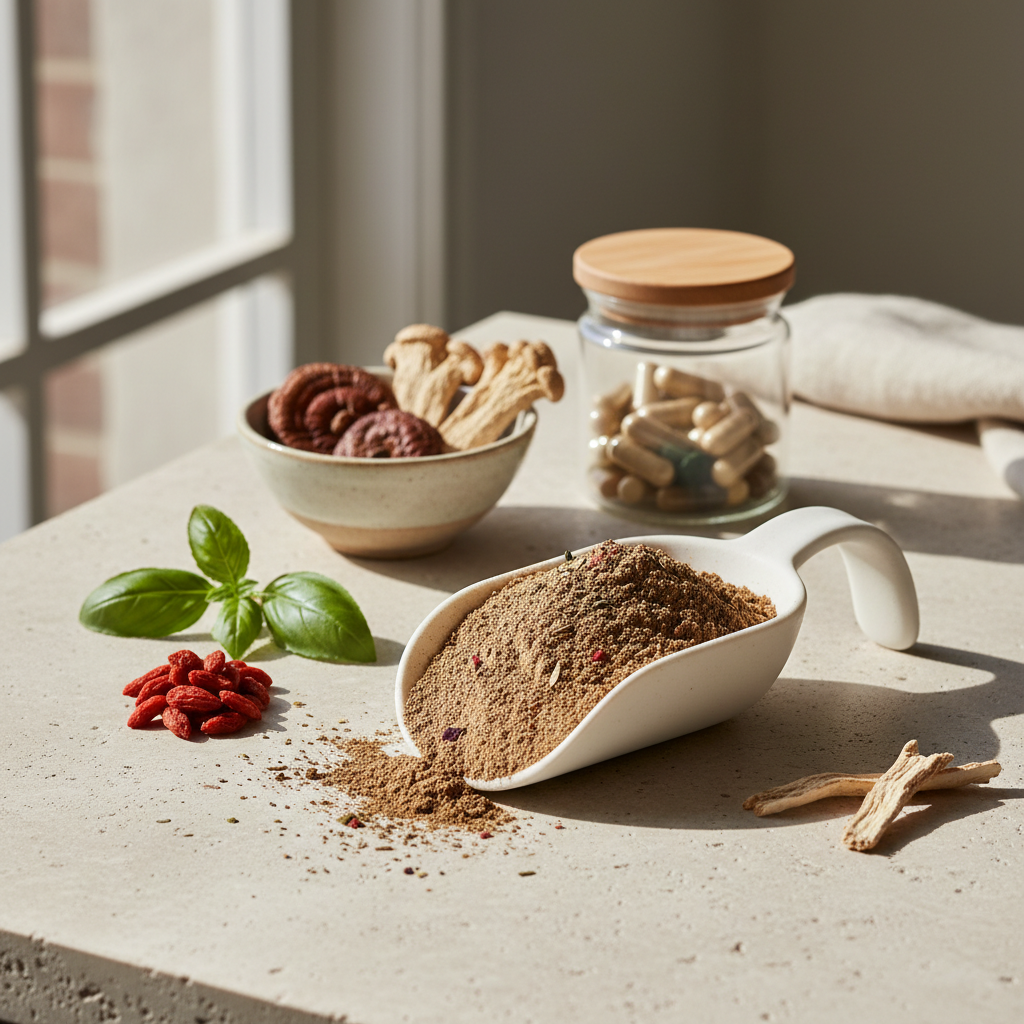
Each serving contains 500 mg each of Lion's Mane, Reishi, Cordyceps, and Chaga, 2 g total. We disclose every per-ingredient amount. Proprietary blends usually hide these numbers behind a single "blend" figure. But full disclosure cuts both ways, so here's the limitation stated plainly.
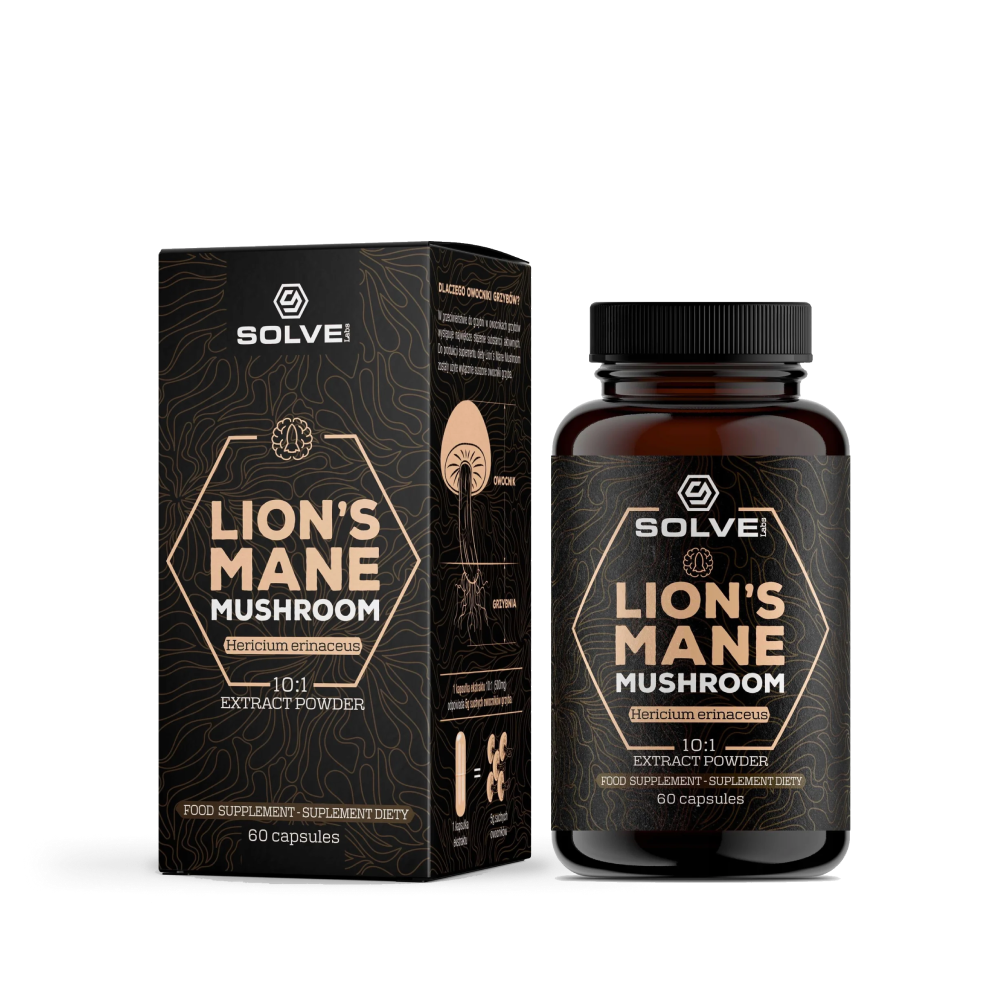
Most clinical trials on these mushrooms use 1-3 g per day of a single mushroom. At 500 mg each, the doses here sit below the ranges where isolated therapeutic effects have been demonstrated. Read them as a supportive adaptogen layer on a protein base, not as a clinical mushroom delivery system. If your primary goal is, say, Lion's Mane for cognition, a dedicated 1-3 g extract is the evidence-aligned move (Examine: Lion's Mane).
| Mushroom | Dose here | Typical clinical dose | Assessment |
|---|---|---|---|
| Lion's Mane | 500 mg | 1-3 g/day | Sub-therapeutic; mild support |
| Reishi | 500 mg | 1.5-3 g/day | Modest; stress-adaptation adjunct |
| Cordyceps | 500 mg | 1-3 g/day | Supportive for recovery, not primary ergogenic |
| Chaga | 500 mg | No standard clinical dose | Traditional immune/antioxidant use |
Are the extracts standardised (e.g. % beta-glucans)?
The active fraction is what determines potency: beta-D-glucans drive immune activity, erinacines drive Lion's Mane's neural effects. If a label doesn't state a standardisation percentage, you can't verify how much active fraction you're getting, and that's a fair question to put to any mushroom product on the market, ours included. Our rule: where a manufacturer publishes third-party testing, prioritise it. Where it doesn't, discount the mushroom claims accordingly.
How each ingredient actually works
Mechanism first, recommendation second. Here's what each active does, and how strong the evidence is at these specific doses.
- Plant protein blend → muscle protein synthesis. Dietary protein supplies the amino acids, leucine chief among the BCAAs, that trigger mTOR-mediated muscle protein synthesis. 22.4 g comfortably clears the ~20-40 g per-serving threshold linked to maximal post-exercise anabolic response in most adults. Evidence: strong.
- Cordyceps → oxygen utilisation. Cordyceps compounds (adenosine, cordycepin) are proposed to support ATP production and VO₂ max, potentially blunting post-workout fatigue. Trials use 1-3 g/day; at 500 mg this is a supportive contribution, not a primary ergogenic one (Examine: Cordyceps). Evidence: moderate for the compound, weak at this dose.
- Lion's Mane → nerve growth factor (NGF). Hericenones and erinacines can stimulate NGF, supporting neuronal maintenance and focus. 500 mg sits below cognition-trial ranges, so expect subtle support at best. Evidence: promising but preliminary; weak at this dose.
- Reishi → parasympathetic activation. Triterpenes and polysaccharides may promote nervous-system calming and deeper NREM sleep. Sleep studies use 1.5-3 g/day (Examine: Reishi). Evidence: weak-to-moderate; weak at this dose.
- Chaga → antioxidant and immune support. Rich in beta-D-glucans and polyphenols, traditionally used for immune resilience. No standardised clinical dose exists. Evidence: mostly traditional/preclinical.
- DigeZyme® → digestion and DOMS reduction. A five-enzyme complex that improves breakdown of plant proteins; a clinical study reported that regular use reduced delayed-onset muscle soreness after eccentric exercise (Sabinsa: DigeZyme®). Evidence: the strongest, most specific claim in the formula.
Will DigeZyme® actually stop the bloating I get from pea protein?
Very likely, and this is the formula's most defensible functional feature. Pea and other plant proteins carry indigestible carbohydrates and often break down incompletely, producing gas and bloating in sensitive people. DigeZyme® supplies α-amylase, protease, lipase, cellulase, and lactase, targeting starches, proteins, fats, plant cell walls, and lactose respectively. By improving proteolytic and carbohydrate digestion, it cuts the fermentable residue that reaches your colon.
The benefit runs beyond comfort. A clinical study on DigeZyme® reported reduced DOMS after eccentric exercise, a rare, evidence-backed post-workout payoff tied to better nutrient absorption (Sabinsa: DigeZyme®). Realistic expectation: it improves tolerability for most users, but if you have significant GI sensitivity you may still notice mild bloating, soft stools, or transient nausea in the first 1-2 weeks while your gut adjusts.
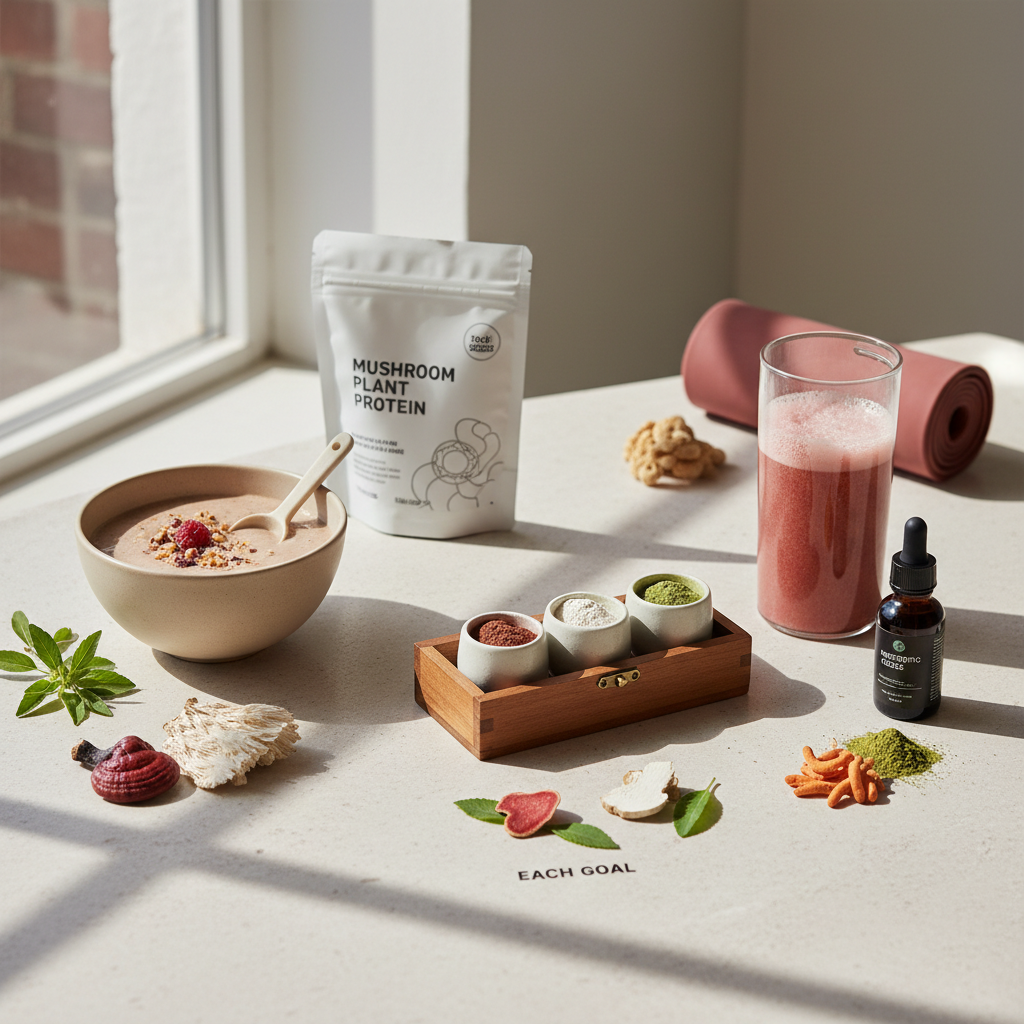
How to use it for each goal
| Goal | When to take | How |
|---|---|---|
| Post-workout recovery | Within ~1-2 hours of training | 1 serving; the 22.4 g protein drives repair, DigeZyme® supports soreness recovery |
| Daily protein top-up | Any time intake falls short | 1 serving toward ~1.6-2.2 g/kg bodyweight for active adults |
| Muscle growth | Post-workout + a second serving | Pair with adequate total calories & carbohydrate; one serving alone won't build a surplus |
| Light meal replacement | During calorie restriction | Blend with fruit, oats, or nut butter to add calories, fibre & micronutrients |
Run the per-bodyweight math. A 75 kg active person targeting 1.6 g/kg needs ~120 g protein daily, one 22.4 g serving covers roughly a fifth. For muscle growth, protein without enough total energy underperforms. So if you use this as a meal replacement while building muscle, add carbohydrate and calories. Don't lean on the powder alone.
The health benefits, graded honestly
- Muscle recovery and maintenance (strong). 22.4 g of complete protein clears the threshold for post-exercise muscle protein synthesis in most adults.
- Reduced post-exercise soreness (moderate, strong). Backed by a specific DigeZyme® clinical trial showing lower DOMS after eccentric exercise.
- Improved digestion of plant protein (moderate). The enzyme complex directly attacks the incomplete digestibility that causes bloating.
- Cognitive and focus support (weak at this dose). Lion's Mane's NGF mechanism is real, but 500 mg falls below cognition-trial doses.
- Stress adaptation and sleep (weak at this dose). Reishi's parasympathetic effects are plausible but studied at 1.5-3 g/day.
- Endurance and stamina (weak at this dose). Cordyceps' VO₂-max mechanism holds up; 500 mg is supportive, not ergogenic.
- Immune and antioxidant support (mostly traditional/preclinical). Chaga's beta-glucans and polyphenols lack strong human-trial backing at this dose.
One caveat over all of it: there are no human trials on this specific four-mushroom blend at these exact doses. The individual mechanisms are documented. The combination's synergy claims are not. We'd rather tell you that than sell you the synergy.
Nut or soy allergies, and is it vegan?
The protein sources, pea, rice, pumpkin seed, and yeast, declare no soy and no tree nuts or peanuts, which makes this a candidate for anyone avoiding soy or nut proteins. Cross-contamination depends on the manufacturing facility, so if you have a diagnosed allergy, confirm the allergen statement and shared-line disclosures before buying. The formula is plant-based by design; check the label for explicit vegan certification and third-party testing to verify both purity and label accuracy.
How does it taste versus standard plant proteins?
Taste is subjective, and we won't oversell it. Plant proteins, pea especially, carry an earthy, slightly bitter base, and functional mushrooms add a faint savoury undertone. Blend with plant milk, banana, or a spoon of cocoa and that base note largely disappears. On mouthfeel: four-source blends tend to be smoother than pea-only powders, because rice and pumpkin proteins have a finer particle texture.
Who should take it, and who should hold off
It fits active adults who want a vegan post-workout protein with digestive support and a mild adaptogen layer. It's a solid daily protein supplement if you struggle to hit your target from food alone.
Hold off, or check with a clinician first, if you are: pregnant or breastfeeding (limited safety data on medicinal mushrooms); taking immunosuppressants or anticoagulants (Reishi and Chaga may interact); allergic to mushrooms; or living with kidney disease, where total protein intake needs clinical management. Introduce it gradually to minimise the transient GI effects some users report in the first 1-2 weeks.
The bottom line
Judged on its strongest evidence, this is a well-built vegan post-workout and daily protein powder, 22.4 g of complete protein plus a clinically supported enzyme complex, with a mushroom blend that is transparent but modest in dose. Buy it for the protein and DigeZyme®. Treat the mushrooms as a bonus, not the headline. And if you need a true meal replacement, either bulk it up with extra calories and micronutrients or pick a product built to that spec.
Frequently asked questions
Can I use this as a meal replacement?
It can replace a light meal during calorie restriction, but at 128 kcal, 2.4 g carbohydrate, and limited fibre and micronutrients, it isn't a nutritionally complete meal replacement. For that use, blend it with fruit, oats, or nut butter to add energy and nutrients.
Are the mushroom doses actually effective?
The 500 mg per mushroom (2 g total) is below the 1-3 g/day used in most clinical trials, so treat the mushrooms as a supportive adaptogen layer rather than a therapeutic dose. The protein and DigeZyme® are the evidence-backed core of the formula.
Does it contain all essential amino acids?
Yes. The four-source blend (pea, rice, pumpkin, yeast) is designed to be complete, combining pea's lysine and BCAAs with rice's methionine to cover all nine essential amino acids in ratios comparable to dairy protein.
Disclaimer: These statements have not been evaluated by the Food and Drug Administration. This product is not intended to diagnose, treat, cure, or prevent any disease. Consult a healthcare professional before use.
