


Ingredientes con
propósito.
Cada ingrediente activo de la gama: la especie, la parte, la proporción del extracto y los compuestos que medimos en él.
Hongos.
8 ingredientesOcho especies, con doble extracción: primero agua caliente y después alcohol, para que tanto los compuestos solubles en agua como los solubles en alcohol acaben en el polvo. Extractos de cuerpo fructífero; el Cordyceps se cultiva por fermentación líquida. Cada lote se analiza para beta-D-glucanos y la cifra figura aquí.
Adaptógenos.
8 ingredientesRaíces y resinas usadas durante siglos, compradas como extractos estandarizados para que la fracción activa sea una cantidad conocida y no una esperanza: 5% de witanólidos, 3% de rosavinas, 1% de salidrósidos.
Botánicos.
18 ingredientesPlantas, granos y bayas, elegidos por lo que aportan: crocina en el azafrán, curcuminoides en la cúrcuma, catequinas en el matcha, vitamina C en la acerola.
Vitaminas.
3 ingredientesLas vitaminas tienen declaraciones autorizadas en el Reino Unido, así que estas son las fichas en las que podemos decirte con claridad qué hacen, con la redacción que fija el registro de GB.
Minerales.
3 ingredientesLos minerales, como las vitaminas, tienen declaraciones autorizadas. Se indican a la dosis que cumple las condiciones para hacerlas.
Otros activos.
21 ingredientesCompuestos aislados, péptidos, fibras y mezclas, incluida la L-teanina con una estandarización del 98%, el ingrediente con más ensayos de todos los que usamos.
Los complementos alimenticios no sustituyen a una dieta variada ni a un estilo de vida saludable. Las cifras de composición proceden de nuestros propios certificados de lote y especificaciones de producto. Cuando se describe un estudio, se describe como el hallazgo de ese estudio. Las declaraciones sobre vitaminas y minerales se hacen con la redacción autorizada en el registro de GB. Si estás embarazada, en periodo de lactancia, tomas medicación o estás bajo supervisión médica, habla con un médico o un farmacéutico antes de cambiar lo que tomas.

Melena de León
Hericium erinaceus (Bull.; Fr.) Pers.
El hongo de madera dura con púas
- Beta-D-glucanos
- Hericenonas
- Polisacáridos
- Fibra alimentaria
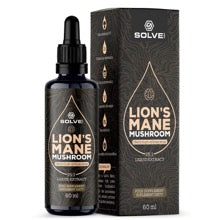
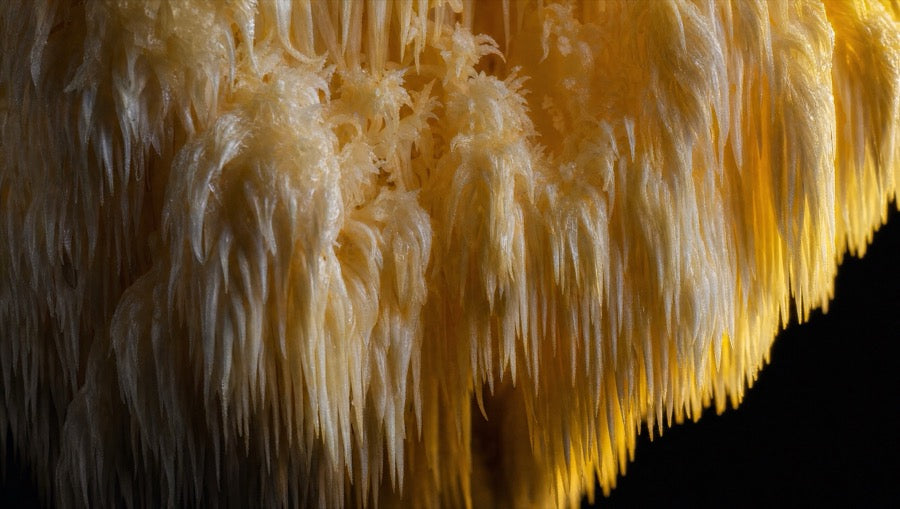
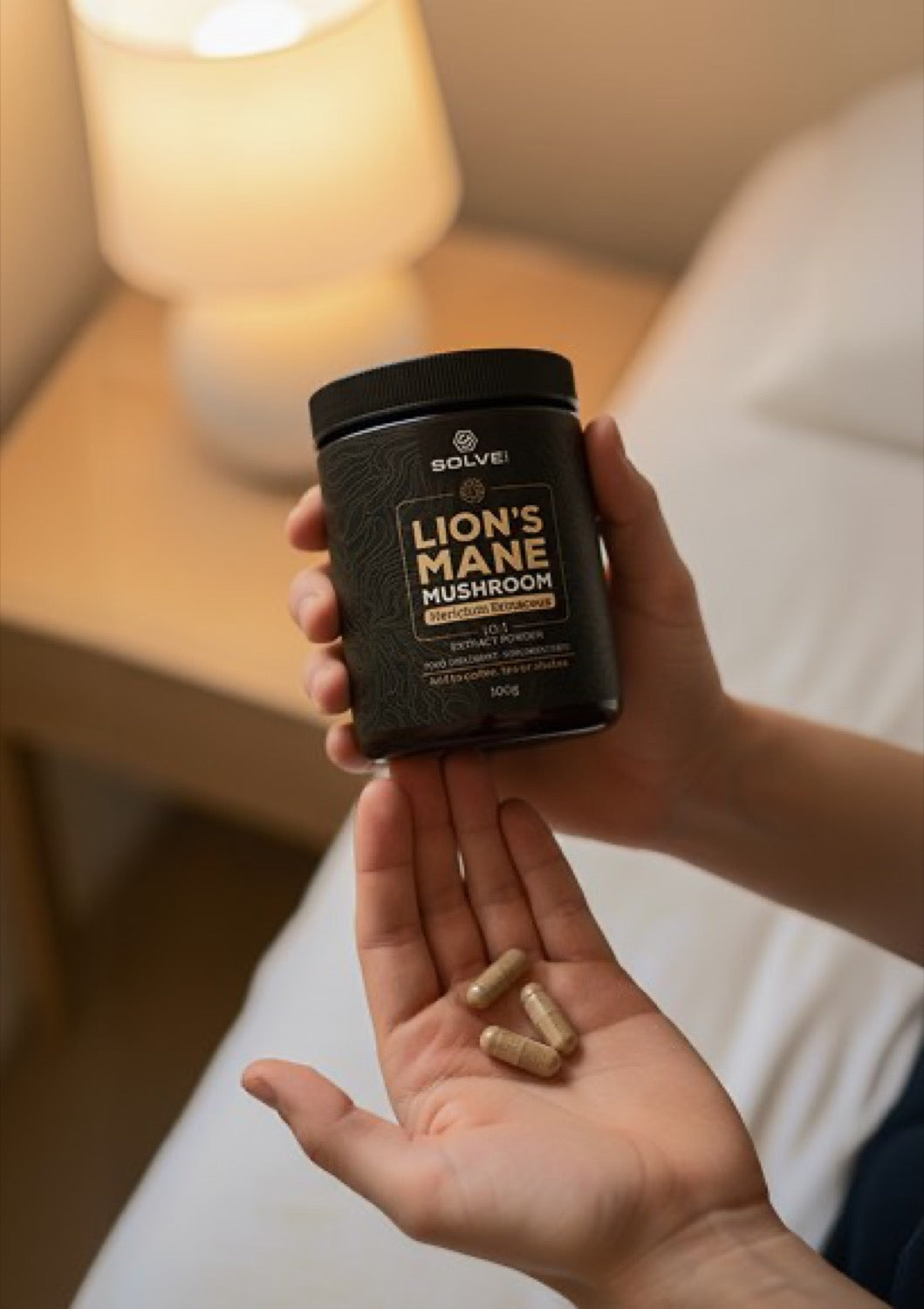
La Melena de León es un hongo comestible que crece como una cascada de púas blancas y suaves sobre madera dura, sin sombrero ni pie. Su cuerpo fructífero contiene hericenonas, y en su fracción de polisacáridos predominan los beta-D-glucanos. La nuestra es solo cuerpo fructífero, con doble extracción en agua caliente y después en alcohol.
Las hericenonas se encuentran en el cuerpo fructífero; las erinacinas, emparentadas con ellas, en el micelio — así que la parte que se usa cambia la química, no solo la etiqueta. La doble extracción recupera tanto los polisacáridos solubles en agua como los compuestos solubles en alcohol, y nuestro análisis da un 33,9% de beta-D-glucanos en base seca.
- Formato
- Cuerpo fructífero
- Proporción del extracto
- Extracto 10:1 de doble extracción
- En las gotas
- 15:1
- Análisis
- 33,9% de beta-D-glucanos (base seca)
Un ensayo controlado en humanos y un estudio más reciente en adultos sanos.

Reishi
Ganoderma lucidum (Curtis) P. Karst.
Lingzhi, la repisa lacada
- Beta-D-glucanos
- Triterpenos (ácidos ganodéricos)
- Peptidoglicanos
- Esteroles
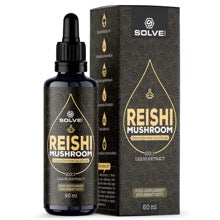
El Reishi es un hongo de repisa lacado, de color marrón rojizo, que crece sobre madera dura moribunda y se conoce en la medicina china como lingzhi. Contiene dos fracciones distintas — beta-D-glucanos solubles en agua y triterpenos solubles en alcohol llamados ácidos ganodéricos, que le dan su amargor. El nuestro es cuerpo fructífero, con doble extracción 10:1.
Un solo disolvente no puede recuperar las dos: el agua caliente deja atrás los triterpenos y el alcohol deja atrás los polisacáridos. La doble extracción reúne ambas en el mismo polvo, y el amargor es la forma de notar en el sabor que ha funcionado. El análisis de nuestro lote da un 44,3% de beta-D-glucanos.
- Formato
- Cuerpo fructífero
- Proporción del extracto
- Extracto 10:1 de doble extracción
- En las gotas
- 20:1
- Análisis
- 44,3% de beta-D-glucanos
Una revisión agrupada de la literatura clínica.

Chaga
Inonotus obliquus (Ach. ex Pers.) Pilát
El esclerocio del abedul
- Beta-D-glucanos
- Melanina
- Derivados del ácido betulínico
- Polifenoles
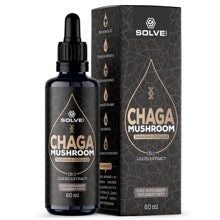
El Chaga no es una seta convencional, sino un esclerocio — una masa densa, negra como el carbón, que se forma durante años sobre abedules vivos y se agrieta dejando ver un interior ocre dorado. Contiene beta-D-glucanos, melanina y polifenoles. El nuestro tiene doble extracción 10:1.
La costra negra es melanina, y el chaga es una de las poquísimas fuentes alimentarias de ella. Sus derivados del ácido betulínico proceden del propio abedul, así que el árbol huésped forma parte de la composición. El chaga también es naturalmente rico en oxalato, y por eso nuestra dosis se indica con claridad más abajo.
- Formato
- Esclerocio
- Proporción del extracto
- Extracto 10:1 de doble extracción
- En las gotas
- 15:1
- Análisis
- 10% de beta-D-glucanos
El Chaga es naturalmente rico en oxalatos. Nuestra dosis es de 1,5 g al día. El único caso publicado de lesión renal correspondía a 10–15 g al día de polvo de chaga crudo durante tres meses — aproximadamente entre siete y diez veces nuestra dosis. Si has tenido cálculos renales de oxalato cálcico o tienes la función renal reducida, habla antes con tu médico.

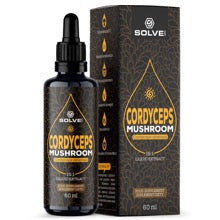
Cordyceps
Cordyceps sinensis (Berk.)
El hongo en forma de maza del Himalaya
- Beta-D-glucanos
- Cordicepina
- Adenosina
- Manitol
El Cordyceps es un hongo de la meseta del Himalaya cuyos marcadores analíticos son la cordicepina y la adenosina, junto con el manitol y los beta-D-glucanos. El cuerpo fructífero silvestre no se puede cultivar a gran escala, así que casi todo el cordyceps comercial — y casi toda la investigación en humanos — usa una preparación cultivada.
La mayor parte del trabajo controlado en humanos usó Cs-4, un producto de fermentación de C. sinensis. Por eso la especie y la preparación se nombran en el producto en lugar de difuminarse: un ensayo con Cs-4 no describe un cuerpo fructífero de militaris. El nuestro tiene un 30% de beta-D-glucanos según análisis.
- Formato
- Preparación cultivada — indicada en cada producto
- Proporción del extracto
- extracto 10:1
- En las gotas
- 15:1
- Análisis
- 30% de beta-D-glucanos
Un ensayo controlado con la misma especie que usamos.

Tremella
Tremella fuciformis
Hongo de la nieve
- Polisacárido galactomanano
- Capacidad excepcional de retener agua
- Fibra alimentaria
La Tremella es un hongo translúcido y con volantes, usado desde hace mucho en las cocinas chinas y en el cuidado de la piel, donde se conoce como hongo de la nieve. Su compuesto característico es el galactomanano, un polisacárido con una capacidad excepcional de retener agua. La nuestra es cuerpo fructífero, con doble extracción 10:1.
El galactomanano es una cadena principal de manosa con ramificaciones de galactosa, y esa ramificación le da tanto su capacidad de retener agua como su viscosidad en disolución — la propiedad por la que se compara a la tremella con el ácido hialurónico. Mientras que nuestros otros hongos se caracterizan por los betaglucanos, este se caracteriza por eso.
- Formato
- Cuerpo fructífero
- Proporción del extracto
- Extracto 10:1 de doble extracción

Maitake
Grifola frondosa
Gallina del bosque
- Beta-D-glucanos
- Ergosterol
- Fibra alimentaria
El Maitake crece en abanicos superpuestos de color gris pardo al pie de los robles, y ya era una seta culinaria muy apreciada en Japón mucho antes de que a nadie se le ocurriera extraerla. Contiene beta-D-glucanos con una estructura inusualmente ramificada, además de ergosterol. El nuestro es cuerpo fructífero, con doble extracción 10:1.
El glucano ramificado que la literatura llama grifolano es propio de esta especie. Su ergosterol es el mismo esterol fúngico que la luz UV convierte en vitamina D2 — la reacción que usamos deliberadamente en nuestro extracto de shiitake, y un recordatorio de que estos hongos comparten una química que merece la pena entender.
- Formato
- Cuerpo fructífero
- Proporción del extracto
- Extracto 10:1 de doble extracción

Auricularia
Auricularia auricula-judae
Oreja de Judas, el hongo negro
- Polisacáridos
- Fibra alimentaria soluble
- Contiene hierro de forma natural
La Auricularia es la oreja de Judas — marrón oscuro, con forma de oreja, translúcida y gelatinosa en fresco, y el hongo negro de la cocina china. Algo poco habitual en un extracto de hongo: gran parte de su fracción de polisacáridos es fibra alimentaria soluble. La nuestra es cuerpo fructífero, con doble extracción 10:1.
Esa fracción de fibra es la que da al hongo fresco su textura crujiente, y la razón por la que la oreja de Judas se comporta en el agua de forma distinta a todo lo demás de la gama. También está entre los hongos comestibles más ricos en minerales, en hierro sobre todo. La nuestra es un polvo de una sola especie y no una mezcla.
- Formato
- Cuerpo fructífero
- Proporción del extracto
- Extracto 10:1 de doble extracción

Shiitake
Lentinula edodes (Berk.) Pegler
La seta de la vitamina D expuesta a rayos UV
- Vitamina D2 (ergocalciferol)
- Lentinano, un betaglucano
- Eritadenina
- Ergosterol
El Shiitake es una seta cultivada sobre madera dura y la mejor fuente vegetal de vitamina D que existe. Exponer los cuerpos fructíferos a la luz UV convierte su ergosterol en ergocalciferol — vitamina D2. El nuestro está estandarizado al 0,025% de ella y aporta 2000 UI.
Es la misma fotoquímica que ocurre en la piel humana, aplicada a una seta: la luz UV-B abre el anillo B de un esterol. En nosotros ese esterol es el 7-deshidrocolesterol y el producto es la D3; en los hongos es el ergosterol y el producto es la D2. La vitamina D3 procede casi siempre de la lanolina. Esta no.
- Formato
- Cuerpo fructífero
- Estandarizado a
- 0,025% de ergocalciferol (vitamina D2)

Ashwagandha
Withania somnifera (L.) Dunal
La raíz solanácea ayurvédica
- Witanólidos
- Witaferina A
- Alcaloides
La ashwagandha es un arbusto de la familia de las solanáceas propio de las zonas secas de la India, cuya raíz se estandariza por sus witanólidos — las lactonas esteroideas que mide todo ensayo serio, con la witaferina A a la cabeza. La nuestra es un extracto de raíz al 5% de witanólidos.
El polvo de raíz cruda y un extracto al 5% de witanólidos pueden diferir en un orden de magnitud en esa fracción y, aun así, leerse igual en una lista de ingredientes; por eso el porcentaje importa más que el peso en miligramos que tiene al lado. Los ensayos de abajo se hicieron con extractos estandarizados, que es lo que es el nuestro.
- Formato
- Extracto de raíz
- Estandarizado a
- 5% de witanólidos
Entre los botánicos con mejor evidencia de los que usamos, con el hallazgo sobre el cortisol replicado en ensayos independientes.

Rodiola
Rhodiola rosea L.
La raíz ártico-alpina
- Rosavinas
- Salidrósidos
- Tirosol
Rhodiola rosea es una planta ártico-alpina de lugares fríos, altos y de suelos pobres, estandarizada por dos marcadores en lugar de uno. La nuestra contiene un 3% de rosavinas y un 1% de salidrósidos — la misma doble especificación que define al SHR-5, la preparación que está detrás de la mayor parte de la buena investigación sobre la rodiola.
Las rosavinas se encuentran en R. rosea y se usan para autenticarla; el salidrósido está mucho más extendido. Estandarizar por ambos es la forma de demostrar que tienes la especie que estudió la literatura y no un sustituto más barato — por eso los ensayos de abajo son aplicables a un material como el nuestro.
- Formato
- Extracto de raíz
- Estandarizado a
- 3% de rosavinas, 1% de salidrósidos
Se corresponde inusualmente bien con nuestro material, porque la estandarización es la misma.

L-teanina
de Camellia sinensis
El aminoácido del té
- Un aminoácido que se encuentra casi solo en el té
- Estructuralmente cercano al glutamato
- Aparece junto a la cafeína en la misma hoja
La L-teanina es un aminoácido de origen natural que se encuentra casi solo en las hojas de té. La nuestra es un extracto de té verde estandarizado al 98% de L-teanina, y es el ingrediente individual con más ensayos de nuestra gama — 31 ensayos controlados aleatorizados agrupados en un solo metaanálisis.
Es estructuralmente cercana al glutamato, y así es como atraviesa la barrera hematoencefálica; es además el compuesto responsable de la nota sabrosa, umami, del buen té verde. De forma natural aparece junto a la cafeína en la misma hoja, y por eso la mayor parte de la investigación se sitúa en la combinación — no en el compuesto aislado.
- Formato
- Extracto de hoja de té verde
- Estandarizado a
- 98% de L-teanina
El ingrediente individual con más evidencia de toda nuestra gama, con mucha diferencia.

Bacopa
Bacopa monnieri
Brahmi, la hierba de pantano
- Bacósidos A y B
- Saponinas triterpénicas
Bacopa monnieri es una hierba rastrera de los pantanos de la India, conocida en el ayurveda como brahmi y estandarizada por sus bacósidos — un grupo de saponinas triterpénicas, de las cuales los bacósidos A y B son los dos que suelen cuantificarse.
Las saponinas de este tipo no son de acción rápida, y la literatura de ensayos lo refleja: los estudios administran las dosis durante ocho a doce semanas, no durante horas. Eso encaja con su uso tradicional en tomas prolongadas, y por eso la bacopa está en Brain Tech, una fórmula pensada para tomarse a diario.
- Formato
- Extracto de planta entera

Gotu kola
Centella asiatica
Centella, la verde de los humedales
- Saponinas triterpénicas
- Asiaticósido
- Madecasósido
La gotu kola es una planta baja de humedal, con hojas en abanico, usada tanto en la tradición ayurvédica como en la china, y que se come como verdura de diario en zonas de Sri Lanka. Sus compuestos característicos son las saponinas triterpénicas asiaticósido y madecasósido.
Ambos llevan el nombre de la propia planta, Centella asiatica, y ambos están entre los triterpenos vegetales mejor caracterizados — por eso la gotu kola aparece en el cuidado tópico de la piel tan a menudo como en los suplementos. La nuestra está en Brain Tech junto a la bacopa: las dos son botánicos de toma prolongada y no de uso puntual.
- Formato
- Extracto de hoja

Ginseng
Panax sp.
La raíz tónica Panax
- Ginsenósidos
- Polisacáridos
El ginseng es la raíz tónica clásica de Asia oriental, estandarizada por sus ginsenósidos — una clase de más de cien saponinas emparentadas. La palabra abarca varias especies con una química realmente distinta, así que cuál usa un producto no es un detalle.
Panax ginseng y Panax quinquefolius no son intercambiables, y el «ginseng» siberiano ni siquiera es un Panax; el procesado vuelve a alterar la proporción de ginsenósidos. Por eso la literatura es más difícil de agrupar de lo que parece, y por eso el nuestro nombra la especie en la etiqueta.
- Formato
- Extracto de raíz

Astrágalo
Astragalus membranaceus Moench
Huang qi, la raíz en láminas
- Astragalósidos
- Polisacáridos
- Flavonoides
El astrágalo es la raíz de una leguminosa usada desde hace mucho en la medicina china, cortada en láminas que muestran una veta radial pálida. Contiene astragalósidos — glucósidos triterpénicos de tipo cicloartano — junto con una fracción de polisacáridos y flavonoides.
El astragalósido IV es el marcador que suele cuantificar el trabajo analítico, y está presente en porcentajes bajos incluso en un buen material — por eso merece la pena indicar la proporción del extracto donde un peso en crudo no lo merece. El nuestro es un extracto de raíz 10:1 en Shroom Force.
- Formato
- Extracto de raíz seca

Semilla de uva
Vitis vinifera L.
El subproducto del vino
- Proantocianidinas oligoméricas (OPC)
- Polifenoles
- Catequinas
El extracto de semilla de uva se obtiene prensando semillas de uva de vinificación y se estandariza por sus proantocianidinas oligoméricas — OPC, cadenas de unidades de catequina. Está entre las fuentes de polifenoles más concentradas que existen.
La longitud de la cadena es la especificación que importa: los oligómeros más cortos son aquellos en los que se centran los estudios de absorción, así que una cifra de proantocianidinas totales te dice menos que la fracción oligomérica. El nuestro es un extracto de semilla en Shroom Force y no un polvo de fruto entero, porque es en la semilla donde están las OPC.
- Formato
- Extracto de semilla

Azafrán
Crocus sativus
La especia más cara del mundo
- Crocina
- Safranal
- Picrocrocina
El azafrán es el estigma seco de Crocus sativus, y la especia más cara del planeta por peso — unas 150.000 flores recogidas a mano por kilogramo. Cada uno de sus tres compuestos distintivos hace un trabajo diferente: la crocina, el color; la picrocrocina, el amargor; el safranal, el aroma.
La crocina sirve además de marcador de calidad, porque la norma ISO 3632 clasifica el azafrán por su poder colorante — algo que importa en una especia tan adulterada. El nuestro está en las Gominolas Calm de Reishi a nivel de extracto, lo que, al precio del azafrán, es menos habitual de lo que debería.
- Formato
- Estigmas

Valeriana
Valeriana officinalis
La raíz de la noche
- Ácido valerénico
- Sesquiterpenos
- Aceite volátil
La valeriana es una planta alta de flor cuya raíz tiene una larga historia en Europa como hierba de la noche, y un olor inconfundible. Se estandariza por su ácido valerénico, junto con un grupo de sesquiterpenos presentes en su aceite volátil.
El ácido valerénico es inestable, así que la forma de secar y almacenar la raíz cambia el material final más que en la mayoría de los botánicos — el olor es el aceite volátil escapándose. La nuestra va en el Cacao con hongos, una bebida de noche, que es el único lugar de la gama donde encaja.
- Formato
- Raíz

Maca
Lepidium meyenii
La raíz comestible andina
- Macamidas
- Glucosinolatos
- Esteroles vegetales
La maca es una raíz comestible de la familia de las crucíferas que se cultiva por encima de los 4000 metros en los Andes peruanos, donde se come como alimento en lugar de tomarse como suplemento. Contiene macamidas — bencilalcamidas que no se encuentran prácticamente en nada más — además de glucosinolatos y esteroles vegetales.
Como es un cultivo alimentario, el consumo tradicional se mide en gramos de raíz, no en miligramos de extracto. Esa es toda la razón de que exista un concentrado: el nuestro es 4:1, en el Matcha con hongos, y así es como una fracción significativa de una dosis culinaria cabe en una bebida.
- Formato
- Extracto de raíz 4:1
- Proporción del extracto
- 4:1

Matcha
Camellia sinensis
Té cultivado a la sombra y molido en piedra
- L-teanina
- Catequinas (EGCG)
- Cafeína presente de forma natural
- Clorofila
El matcha es té verde japonés cultivado a la sombra y molido en piedra, de modo que se consume la hoja entera en lugar de infusionarla y desecharla. Contiene L-teanina, catequinas y cafeína juntas en la misma hoja. El nuestro es ecológico y se usa al 22%.
Dar sombra a las plantas antes de la cosecha aumenta la L-teanina y la clorofila de la hoja, y por eso el matcha es más verde y menos astringente que el sencha. Consumir la hoja entera es también lo que aporta la fracción de catequinas — con el EGCG a la cabeza — que una hoja infusionada deja atrás.
- Formato
- Hoja entera molida en piedra
- Especificación
- Ecológico, 22% de la mezcla

Café
Coffea arabica
Arábica de especialidad de Brasil
- Ácidos clorogénicos
- Cafeína presente de forma natural
Nuestro café es un arábica de especialidad brasileño de origen único, de tueste medio — cacao, chocolate, frutos secos, caramelo y frutos rojos. Su mayor fracción de polifenoles son los ácidos clorogénicos, junto con cafeína presente de forma natural.
El nivel de tueste es lo que más determina cuánto sobrevive de esa fracción, porque los tuestes más oscuros la degradan — un tueste medio es el punto de equilibrio entre la química y la taza. Nuestros dos cafés se analizan en busca de micotoxinas en un laboratorio acreditado, porque la ocratoxina A es un riesgo real en el café verde mal almacenado.
- Formato
- Grano tostado
- Especificación
- Grado especialidad de Brasil, tueste medio

Cacao
Theobroma cacao
El grano sin alcalinizar
- Flavanoles
- Teobromina
- Rico en magnesio de forma natural
El cacao es la semilla de Theobroma cacao, usada aquí en forma de nibs (grano troceado) y no como pasta de cacao procesada. Contiene flavanoles y teobromina — una metilxantina emparentada con la cafeína, pero más lenta y más suave — y es rico en magnesio de forma natural.
La alcalinización destruye la fracción de flavanoles: el cacao de proceso holandés puede perder la mayor parte, y por eso el método de procesado te dice más que el porcentaje de cacao. El nuestro son nibs sin alcalinizar en el Cacao con hongos.
- Formato
- Grano

Yerba mate
Ilex paraguariensis
La hoja de la calabaza compartida
- Xantinas (cafeína y teobromina)
- Ácidos clorogénicos
- Saponinas
La yerba mate es un acebo sudamericano cuyas hojas se secan, se muelen y tradicionalmente se comparten en una calabaza. Aporta un perfil de xantinas y no un único estimulante — cafeína con teobromina — además de ácidos clorogénicos y saponinas.
Esas saponinas dan al mate tanto su espuma como su amargor, y son lo que más lo distingue químicamente del té. La nuestra es una yerba mate con hongos de hoja entera, y no cafeína aislada añadida a otra cosa.
- Formato
- Hoja

Acerola
Malpighia emarginata
La cereza de la vitamina C
- Una de las fuentes naturales más ricas en vitamina C
- Antocianinas
- Carotenoides
La acerola es una cereza de las Antillas con uno de los contenidos naturales de vitamina C más altos de cualquier fruta — de 1500 a 2000 mg por 100 g, unas treinta veces el de una naranja. Viene con las antocianinas y los carotenoides de la fruta entera.
Esa concentración es lo que hace viable una vitamina C de origen frutal: la mayoría de las frutas están simplemente demasiado diluidas para basar en ellas un suplemento sin concentrarlas hasta el punto de que dejen de ser fruta. Por eso nuestra vitamina C procede de la acerola y no es ácido ascórbico sintético.
- Formato
- Extracto de fruto
- Especificación
- Fuente de vitamina C

Hibisco
Hibiscus sp.
El cáliz de la rosela
- Antocianinas
- Ácidos orgánicos
- Polifenoles
El hibisco es el cáliz seco de la flor de la rosela — magenta intenso, de acidez marcada, con antocianinas y ácidos orgánicos, entre ellos el cítrico y el ácido hibíscico.
Tanto el color como la acidez dependen del pH, y por eso una infusión de hibisco pasa del rojo hacia el morado cuando cambia la acidez: la misma molécula, comportándose de otra manera. El nuestro está en los Electrolitos, haciendo el trabajo del sabor en lugar de un acidulante artificial.
- Formato
- Extracto de flor

Baya de serbal
Sorbus aucuparia
El conservante sin alcohol
- Ácidos orgánicos, incluido el ácido sórbico
La baya de serbal es el fruto del serbal de los cazadores, naturalmente rico en ácidos orgánicos — entre ellos el ácido sórbico, que se aisló por primera vez de esta baya y toma de ella su nombre. Es el conservante natural de nuestras gotas.
Bajar el pH es una de las formas más antiguas de mantener estable un extracto a base de agua, y es lo que hace posible una tintura sin alcohol. Es la razón de que todas y cada una de nuestras gotas sean sin alcohol.
- Formato
- Extracto de fruto

Guaraná
Paullinia cupana
La semilla amazónica
- Cafeína presente de forma natural
- Taninos
- Saponinas
El guaraná es una planta trepadora amazónica cuya semilla contiene más cafeína por peso que un grano de café, unida a taninos, junto con teobromina y saponinas.
Esa unión a los taninos es la explicación habitual de por qué el guaraná se libera más despacio que una dosis equivalente de cafeína aislada — como el mate, aporta un perfil de xantinas y no un único compuesto. El nuestro es semilla entera en Brain Tech, junto a la L-teanina y no por separado.
- Formato
- Semilla

Vitamina D2
Ergocalciferol
Ergocalciferol, de los hongos
- Ergocalciferol, la forma vegana de la vitamina D
- Contribuye al funcionamiento normal del sistema inmunitario
- Contribuye al mantenimiento de los huesos en condiciones normales
La vitamina D2 — ergocalciferol — es la forma que producen las setas cuando les llega la luz UV, y la única vía realmente vegana para obtener vitamina D a gran escala. La nuestra procede de shiitake estandarizado al 0,025% y aporta 2000 UI.
El Reino Unido aconseja activamente tomar un suplemento de vitamina D entre octubre y marzo, porque en las latitudes británicas el sol está demasiado bajo para la síntesis en la piel durante aproximadamente la mitad del año. La vitamina D tiene declaraciones autorizadas en el registro de GB, así que esta es una de las pocas fichas en las que podemos indicar un efecto — esas declaraciones están arriba.
- Formato
- De shiitake expuesto a rayos UV
- Especificación
- 2000 UI por cápsula

Vitamina C
Ácido ascórbico, de acerola
Ácido ascórbico, de acerola
- Ácido ascórbico, de acerola
- Contribuye a la formación normal de colágeno
- Contribuye a disminuir el cansancio y la fatiga
- Contribuye al metabolismo energético normal
La vitamina C es un nutriente esencial que el ser humano no puede sintetizar. La nuestra procede de la cereza acerola como extracto de fruta entera y no como ácido ascórbico de síntesis, y es el nutriente que combinamos con el colágeno.
Perdimos la última enzima de la ruta, la L-gulonolactona oxidasa, por la deleción de un gen en nuestros antepasados primates — por eso la vitamina C es un requisito de la dieta para nosotros y no para un perro. Es hidrosoluble y apenas se almacena, así que la ingesta importa de forma continua. Sus declaraciones autorizadas están arriba.
- Formato
- Extracto de fruto

Magnesio
Citrato de magnesio
Citrato de magnesio
- Citrato de magnesio
- Contribuye al funcionamiento normal de los músculos
- Contribuye al funcionamiento normal del sistema nervioso
- Contribuye a disminuir el cansancio y la fatiga
El magnesio es un mineral esencial, presente aquí como citrato de magnesio — una sal de un ácido orgánico elegida porque se disuelve. El óxido de magnesio es más barato y contiene más magnesio elemental por gramo, pero es poco soluble y se absorbe mucho peor.
La absorción depende mucho del contraión con el que llega el magnesio, y los estudios comparativos sitúan sistemáticamente al citrato por encima del óxido — por eso la forma que figura en la etiqueta te dice más que la cifra en miligramos que tiene al lado. Sus declaraciones autorizadas están arriba.
- Formato
- Sal mineral

Zinc
Zinc
El oligoelemento cofactor
- Zinc
- Contribuye al mantenimiento del cabello, la piel y las uñas en condiciones normales
- Contribuye al funcionamiento normal del sistema inmunitario
El zinc es un oligoelemento esencial y un cofactor de cientos de enzimas humanas. El nuestro está en el Complejo de shilajit, a un nivel diario sensato y no a uno pensado para el titular.
No existe una reserva significativa de zinc en el cuerpo, así que la ingesta es una cuestión continua y no algo que se pueda cargar. Además compite con el cobre por la absorción, y por eso una dosis alta indefinida no es un acto neutro y el nivel importa. Sus declaraciones autorizadas están arriba.
- Formato
- Mineral

Vitaminas B
Tiamina, riboflavina, niacina, B6, B12, folato, biotina, ácido pantoténico
El grupo B metilado
- Metilcobalamina (B12)
- Piridoxal-5-fosfato (B6)
- L-metilfolato cálcico
- Tiamina, riboflavina, niacina, ácido pantoténico, biotina
- Contribuyen a disminuir el cansancio y la fatiga
Nuestro complejo B se basa en las formas activas y metiladas y no en las más baratas disponibles: metilcobalamina en lugar de cianocobalamina, piridoxal-5-fosfato en lugar de piridoxina, L-metilfolato cálcico en lugar de ácido fólico.
Las formas más baratas deben convertirse dentro del cuerpo antes de usarse, y una minoría considerable de personas tiene variantes de MTHFR que hacen la conversión del folato mediblemente menos eficiente. Aportar la forma metilada se salta ese paso. Cuesta más, y es la razón de que esta fórmula exista.
- Formato
- Mezcla de vitaminas
- Especificación
- Formas metiladas y activas: piridoxal-5-fosfato, metilcobalamina, L-metilfolato cálcico

Sales electrolíticas
Sodio, potasio, calcio
Los cuatro minerales del sudor
- Sodio, potasio, calcio y magnesio
- Sales de citrato y de cloruro
- El calcio contribuye al funcionamiento normal de los músculos
Los electrolitos son los minerales que se pierden con el sudor — sodio, potasio, calcio y magnesio — aportados aquí como sales de citrato y de cloruro, en las formas que se disuelven.
Rehidratarse no es simplemente beber agua: el sodio es lo que permite retener el agua en lugar de que pase de largo, que es el principio en el que se basa toda solución de rehidratación oral. Las sales de citrato acompañan a los cloruros porque son más suaves para el estómago a concentraciones bebibles.
- Formato
- Sales minerales
- Especificación
- Lactato de calcio, citrato de magnesio, citrato de potasio, cloruro de potasio, cloruro de sodio, citrato de sodio

Creatina
Monohidrato de creatina
Monohidrato micronizado
- Monohidrato de creatina
- Aumenta el rendimiento físico en ráfagas sucesivas de ejercicio breve de alta intensidad
El monohidrato de creatina es el suplemento deportivo más estudiado que existe, y la única forma con una base de evidencia sustancial detrás. El nuestro es micronizado, de un solo ingrediente, y tiene una declaración autorizada cuyas condiciones cumplimos.
La creatina amortigua la regeneración de ATP durante esfuerzos cortos y máximos, y por eso la investigación se concentra en el trabajo repetido de alta intensidad y no en la resistencia. Aproximadamente la mitad de lo que usa el cuerpo se produce internamente y el resto procede de la dieta — por eso los vegetarianos suelen partir de reservas musculares más bajas.
- Formato
- Polvo

Péptidos de colágeno
Colágeno bovino hidrolizado, tipos I y III
Péptidos hidrolizados, I y III
- Péptidos hidrolizados, tipos I y III
- Bajo peso molecular
- Rico en glicina
Los péptidos de colágeno están hidrolizados — cortados enzimáticamente en cadenas cortas — porque el colágeno intacto es demasiado grande para absorberse. Los nuestros son de los tipos I y III y de bajo peso molecular, y llegan con vitamina C en la misma fórmula.
El peso molecular es la especificación que importa, no la cifra en gramos. Los tipos I y III son los colágenos de la piel, los huesos y el tejido conjuntivo, a diferencia del tipo II, que es el del cartílago. La vitamina C es un cofactor necesario para las enzimas que hidroxilan la prolina durante la síntesis de colágeno — por eso existe la declaración autorizada, y por eso los dos van juntos.
- Formato
- Péptidos hidrolizados COLLinstant®
- Especificación
- Con ácido hialurónico

Ácido hialurónico
Hialuronato de sodio
La molécula que retiene el agua
- Ácido hialurónico
- Capacidad excepcional de retener agua
El ácido hialurónico es un glucosaminoglucano presente de forma natural en todo el cuerpo, con la mayor concentración en la piel y el líquido sinovial. Un solo gramo puede retener varios litros de agua. El nuestro acompaña al colágeno.
Esa capacidad de retener agua es lo que lo hace estructuralmente útil en los tejidos y no un simple humectante. El peso molecular vuelve a determinar el comportamiento — el AH de alto y el de bajo peso molecular no son materiales intercambiables, y la distinción rara vez se indica en una etiqueta.
- Formato
- Polvo

Shilajit
Complejo de ácido fúlvico
La resina de montaña
- Ácido fúlvico
- Sustancias húmicas
- Oligoelementos
El shilajit es un exudado alquitranado que rezuma de la roca en las altas cordilleras, formado a lo largo de siglos a partir de materia vegetal comprimida. Su fracción funcional es el ácido fúlvico, una sustancia húmica de bajo peso molecular, junto con un amplio perfil de oligoelementos.
El ácido fúlvico actúa como un quelante natural — se une a iones metálicos — y precisamente por eso la pureza no es una cuestión secundaria en este ingrediente, sino toda la cuestión: el shilajit sin purificar puede contener metales pesados. El nuestro se analiza en laboratorio y el informe está publicado.
- Formato
- Resina purificada
- Especificación
- Pureza analizada en un laboratorio acreditado

Beta-D-glucanos
—
El activo de hongo que se analiza
- El polisacárido en el que se centra la literatura sobre hongos
- Con enlaces beta, a diferencia de los alfaglucanos del almidón
- Medidos por análisis, no estimados
Los beta-D-glucanos son la fracción de polisacáridos en la que se centra la investigación sobre hongos, y la fracción que analizamos en cada hongo que elaboramos. Tienen enlaces beta, a diferencia de los alfaglucanos que componen el almidón.
Esa distinción es lo que separa un extracto de verdad del grano molido. El micelio cultivado en un sustrato de grano se cosecha con el sustrato adherido, así que el polvo contiene almidón — y una cifra total de «polisacáridos» lo cuenta, mientras que un análisis de beta-D-glucanos no. Por eso publicamos específicamente la cifra de beta.
- Formato
- Fracción analizada
- Especificación
- Melena de León 33,9% (base seca)
- Especificación
- Reishi 44,3%
- Especificación
- Cordyceps 30%
- Especificación
- Chaga 10%

Cafeína
—
Nunca aislado, siempre dentro de una planta
- De origen natural, del matcha, el café, el guaraná y el mate
- Un antagonista de los receptores de adenosina
La cafeína es un estimulante de origen natural y el compuesto psicoactivo más consumido del planeta, presente en el café, el té, el guaraná y el mate. Toda la que hay en nuestra gama llega dentro de una de esas plantas.
Actúa como antagonista de los receptores de adenosina. Que llegue con la planta importa tanto química como filosóficamente: en el té viene con L-teanina, en el guaraná unida a taninos, en el mate con teobromina — y cada uno cambia el perfil respecto a una dosis aislada en una cápsula.
- Formato
- De origen natural

Galactomanano
—
El polisacárido de la tremella
- Una cadena principal de manosa con ramificaciones de galactosa
- Alta capacidad de retener agua
El galactomanano es el polisacárido que da a la Tremella su carácter: una cadena principal de manosa con ramificaciones de galactosa, y una capacidad excepcional de retener agua.
La ramificación es lo que produce tanto la retención de agua como la viscosidad en disolución. Pertenece a la misma gran clase de moléculas que la goma guar y la goma garrofín, y por eso la Tremella espesa el agua como lo hace. Por eso nuestra Tremella se presenta como una sola especie en lugar de diluirse en una mezcla.
- Formato
- Polisacárido

Inulina
de raíz de achicoria
Fibra prebiótica de achicoria
- Un fructano — una cadena de unidades de fructosa
- Fibra prebiótica soluble
La inulina es un fructano — una cadena de unidades de fructosa que las enzimas digestivas humanas no pueden romper. La nuestra es inulina de achicoria, usada como relleno de la cápsula, de modo que el agente de carga es en sí mismo una fibra prebiótica soluble.
Como llega intacta al colon, donde la fermentan las bacterias intestinales, es un prebiótico y no un probiótico: la fibra, no el organismo. Esa fermentación es también la razón de que una dosis grande tomada de golpe resulte incómoda — el efecto es real, no imaginado.
- Formato
- Fibra prebiótica

Colina
Bitartrato de colina
El precursor de las membranas
- Bitartrato de colina
- Precursora de la fosfatidilcolina y de la acetilcolina
- Contribuye al metabolismo normal de los lípidos
La colina es un nutriente esencial, presente aquí como bitartrato de colina. Es la precursora de la fosfatidilcolina, un componente estructural principal de todas las membranas celulares, y de la acetilcolina.
El cuerpo produce algo, pero no lo suficiente; por eso no se clasificó formalmente como esencial hasta 1998 — reciente, para un nutriente — y por eso la mayoría de la gente consume menos de la necesaria. La sal de bitartrato se usa por estabilidad, porque la colina en sí es muy higroscópica.
- Formato
- Nutriente

Inositol
—
El alcohol de azúcar cíclico
- Un alcohol de azúcar cíclico
- Esqueleto del sistema de señalización de los fosfoinosítidos
El inositol es un alcohol de azúcar cíclico de seis carbonos, llamado históricamente vitamina B8 aunque no es estrictamente una vitamina. El nuestro está en el Complejo B completo junto a la colina.
Forma el esqueleto del sistema de segundos mensajeros de los fosfoinosítidos, que las células usan para transmitir señales desde su superficie hacia el interior. Perdió la condición de vitamina porque el cuerpo lo sintetiza a partir de la glucosa, así que no es estrictamente un requisito de la dieta.
- Formato
- Nutriente

DigeZyme®
Complejo multienzimático
Un complejo enzimático de marca
- Amilasa, proteasa, lipasa, celulasa, lactasa
- Actividad medida en unidades, no en miligramos
DigeZyme® es un complejo multienzimático de marca y no una sola enzima, que cubre las cuatro clases de macronutrientes más la lactosa: amilasa, proteasa, lipasa, celulasa y lactasa.
Cada enzima tiene un único sustrato, y por eso se usa una mezcla en lugar de una sola enzima — y por eso la actividad se mide en unidades y no en miligramos, ya que lo que importa es lo que la enzima puede hacer, no lo que pesa. El nuestro está en la proteína vegetal, donde tiene trabajo de verdad que hacer.
- Formato
- Mezcla de enzimas

Mezcla de proteínas vegetales
Guisante, levadura, arroz, calabaza
Cuatro proteínas complementarias
- Proteína de guisante, arroz, calabaza y levadura
- Perfiles de aminoácidos complementarios
Nuestra proteína es una mezcla de cuatro plantas — guisante, arroz, calabaza y levadura — porque ninguna proteína vegetal tiene por sí sola un perfil completo de aminoácidos.
La proteína de guisante es baja en metionina y la de arroz es baja en lisina, y cada una es fuerte justo donde la otra es débil, así que mezclarlas da un perfil más cercano al completo del que alcanza cualquiera de las dos por separado. Es el principio del arroz con alubias, aplicado como decisión de formulación. La nuestra no necesita aminoácidos añadidos para parecer completa sobre el papel.
- Formato
- Mezcla de proteínas

Mezcla de verdes
Chlorella, espirulina, hierba de cebada
Algas y hierba de cereal
- Chlorella y espirulina
- Hierba de cebada y de trigo
- Clorofila
Nuestros verdes son tres con sustancia real detrás y no una larga lista en cantidades mínimas: chlorella, espirulina, y hierba de cebada y de trigo. El color intenso es clorofila.
La chlorella y la espirulina no son el mismo tipo de organismo: la espirulina es una cianobacteria, mientras que la chlorella es una verdadera alga verde unicelular con una pared resistente de celulosa que hay que romper mecánicamente para que su contenido esté disponible. Por eso «pared celular rota» es una especificación real y no una frase de marketing.
- Formato
- Polvos de alimentos enteros

GABA
Ácido gamma-aminobutírico
El neurotransmisor inhibidor
- Ácido gamma-aminobutírico
- El principal neurotransmisor inhibidor
El GABA — ácido gamma-aminobutírico — es un aminoácido que el cuerpo produce por sí mismo, y el principal neurotransmisor inhibidor del sistema nervioso central de los mamíferos. El nuestro está en las Gominolas Calm de Reishi.
Es la contraparte del glutamato, que es excitador. Tomado por vía oral atraviesa mal la barrera hematoencefálica, y por eso la investigación interesante se ocupa del sistema nervioso entérico y no de una acción central directa. El nuestro está en una fórmula de noche y no en ningún producto de la gama de día.
- Formato
- Aminoácido libre
- Especificación
- 100 mg por dosis

Betaína (TMG)
Trimetilglicina
Trimetilglicina, de la remolacha
- Trimetilglicina
- Un donante de metilo
La betaína — trimetilglicina — se aisló por primera vez de la remolacha azucarera, que es de donde viene el nombre. Es un donante de metilo, y aparece dos veces en nuestra gama: en el Complejo B completo y en Creatine+.
Transporta grupos metilo a través del mismo metabolismo de un carbono que alimentan las vitaminas B metiladas, convirtiendo la homocisteína de nuevo en metionina. Precisamente por eso va en la misma cápsula que la metilcobalamina y el L-metilfolato y no sola — tres ingredientes en una misma ruta.
- Formato
- Trimetilglicina
- Especificación
- En el complejo B y en Creatine+

PABA
Ácido para-aminobenzoico
Llamado antes vitamina B10
- Ácido para-aminobenzoico
- Agrupado históricamente con las vitaminas B
El PABA — ácido para-aminobenzoico — se contaba históricamente entre las vitaminas B y a veces todavía se le llama vitamina B10. El nuestro está en el Complejo B completo, junto a la colina, el inositol y la betaína.
Es un precursor en la síntesis de folato — pero en las bacterias y las plantas, no en los seres humanos, que no pueden fabricar folato y deben obtenerlo de la dieta. Por eso ya no se clasifica como vitamina para las personas: la ruta a la que pertenece no es la nuestra.
- Formato
- Ácido para-aminobenzoico
- Especificación
- En el Complejo B completo

Cultivo probiótico
Cultivo bacteriano vivo
Un cultivo vivo
- Un cultivo bacteriano vivo
- Formulado junto a un complejo de enzimas digestivas
Un probiótico es un cultivo bacteriano vivo. El nuestro está en los Superalimentos verdes completos, formulado junto al complejo enzimático DigeZyme® y no por separado.
Un probiótico y un prebiótico no son lo mismo: el probiótico es el organismo, el prebiótico es la fibra que este fermenta — por eso nuestra gama incluye también inulina. El nuestro se combina con el complejo enzimático porque los dos actúan sobre la misma parte de la digestión.
- Formato
- Cultivo vivo
- Especificación
- En Superalimentos verdes completos

Coenzima Q10
Ubiquinona
Ubiquinona
- Ubiquinona
- Transporta electrones en la cadena de transporte mitocondrial
La coenzima Q10 — ubiquinona — es un compuesto que el cuerpo produce por sí mismo, presente en todas las células que usan oxígeno. Es un componente de la cadena de transporte de electrones mitocondrial. La nuestra aparece en el Complejo B completo y en los Superalimentos verdes completos.
Traslada electrones entre complejos en la membrana mitocondrial, en la etapa final del metabolismo energético aeróbico. La producción endógena disminuye con la edad, y por eso está entre los compuestos que más se toman como suplemento pese a no ser una vitamina. La nuestra acompaña a las vitaminas B porque actúan en la misma ruta.
- Formato
- Ubiquinona
- Especificación
- En el complejo B y en la mezcla de verdes

L-leucina
Aminoácido de cadena ramificada
Un aminoácido de cadena ramificada
- Un aminoácido de cadena ramificada
- Uno de los nueve aminoácidos esenciales
La L-leucina es uno de los tres aminoácidos de cadena ramificada y uno de los nueve que el cuerpo no puede sintetizar. La nuestra está en el Complejo B completo.
La leucina tiene el papel más diferenciado de los tres: a diferencia de la mayoría de los aminoácidos, actúa como molécula de señalización además de como elemento de construcción, y por eso se estudia por separado y no como parte de un trío de BCAA.
- Formato
- Aminoácido libre
- Especificación
- En el Complejo B completo

Glicina
Ácido aminoacético
El aminoácido más simple
- El aminoácido más simple
- El residuo más abundante del colágeno
La glicina es el más pequeño de los aminoácidos — un solo hidrógeno donde todos los demás llevan una cadena lateral — y el residuo más abundante del colágeno. La nuestra está en el Complejo de shilajit y en Creatine+.
Es uno de los tres aminoácidos que el cuerpo usa para fabricar su propia creatina, junto con la arginina y la metionina, y precisamente por eso aparece en Creatine+ y no como un añadido de última hora. En el colágeno representa aproximadamente un tercio de la proteína por número de residuos.
- Formato
- Aminoácido libre
- Especificación
- En el Complejo de shilajit y en Creatine+

L-arginina
Aminoácido condicionalmente esencial
Un aminoácido condicionalmente esencial
- Un aminoácido condicionalmente esencial
- Sustrato de la óxido nítrico sintasa
La L-arginina es condicionalmente esencial — un aminoácido que el cuerpo normalmente puede producir, pero no siempre con la rapidez suficiente. La nuestra está en Creatine+.
Es el segundo de los tres aminoácidos de la síntesis endógena de creatina, junto con la glicina y la metionina, y por eso tanto ella como la glicina están en la misma fórmula que el monohidrato. También es el sustrato de la óxido nítrico sintasa, y por eso se repite en las fórmulas preentreno.
- Formato
- Aminoácido libre
- Especificación
- En Creatine+

Cardo mariano
Silybum marianum
La semilla del cardo
- Silimarina
- Un complejo de flavonolignanos, sobre todo silibina
El cardo mariano es un cardo espinoso de flores moradas del Mediterráneo, cultivado por su semilla y estandarizado por su silimarina — no un único compuesto, sino un complejo de flavonolignanos, sobre todo silibina.
La silimarina es poco soluble en agua, y por eso la calidad del extracto varía tanto entre productos que llevan el mismo nombre: es la cifra de estandarización, no el nombre de la planta, lo que te dice qué tienes. El nuestro está en los Superalimentos verdes completos.
- Formato
- Extracto de semilla
- Especificación
- En Superalimentos verdes completos

Remolacha
Beta vulgaris
La raíz de los nitratos
- Nitrato alimentario
- Pigmentos de betalaína
La remolacha es una de las fuentes alimentarias más ricas en nitrato inorgánico, y su color intenso procede de la betalaína — una clase de pigmentos distinta de las antocianinas de la mayoría de las plantas rojas. La nuestra es un polvo de raíz en los Superalimentos verdes completos.
La ruta del nitrato solo ha llegado a entenderse bien en los últimos veinte años: las bacterias de la boca reducen el nitrato de la dieta a nitrito, que el cuerpo sigue transformando. Esa es la razón de que la remolacha se estudie en el deporte, y de que sea un activo de verdad y no solo un colorante.
- Formato
- Polvo de raíz
- Especificación
- En Superalimentos verdes completos

Jengibre
Zingiber officinale
El rizoma, no una raíz
- Gingeroles
- Shogaoles, formados al secar el rizoma
El jengibre es, botánicamente, un rizoma y no una raíz, estandarizado por sus gingeroles — los compuestos responsables de su picor. El nuestro aparece en los Superalimentos verdes completos y en el Matcha con hongos.
Los gingeroles son inestables de una forma útil: el secado convierte el gingerol en shogaol, y por eso el jengibre seco sabe más picante y menos fresco que el jengibre fresco. La forma utilizada determina, por tanto, el sabor tanto como la dosis.
- Formato
- Rizoma
- Especificación
- En la mezcla de verdes y en el Matcha con hongos

Canela
Cinnamomum
La corteza enrollada
- Cinamaldehído
- Aceite volátil de la corteza
La canela es la corteza interior de árboles del género Cinnamomum, que se enrolla en canutos al secarse. Su aroma es casi por completo cinamaldehído. La nuestra está en el Cacao con hongos, y es parte de lo que lo hace bebible sin azúcar.
La distinción que conviene conocer es Ceilán frente a casia: la casia es la corteza más barata y mucho más común, y contiene bastante más cumarina, para la que existe una ingesta diaria tolerable. Qué especie usa un producto rara vez se indica, y es importante.
- Formato
- Corteza
- Especificación
- En el Cacao con hongos

Cardamomo
Elettaria cardamomum
La vaina verde
- 1,8-cineol
- Acetato de terpinilo
El cardamomo es la vaina de semillas de Elettaria cardamomum, y la tercera especia más cara por peso, después del azafrán y la vainilla. Su carácter procede de un aceite volátil en el que predominan el 1,8-cineol y el acetato de terpinilo.
Ese aceite es muy volátil, y por eso las vainas enteras conservan su aroma y el cardamomo ya molido lo pierde en cuestión de semanas — la razón de que el buen cardamomo se compre en vaina. El nuestro está en el Cacao con hongos.
- Formato
- Vaina de semillas
- Especificación
- En el Cacao con hongos

Nuez moscada
Myristica fragrans
La semilla jaspeada
- Miristicina
- Aceite volátil de la semilla
La nuez moscada es la almendra de la semilla de un árbol indonesio de hoja perenne; el macis es la cubierta de encaje que rodea esa misma semilla. Contiene miristicina en su aceite volátil. La nuestra está en el Matcha con hongos, en cantidades culinarias.
Las cantidades culinarias son la clave: la miristicina es desagradable y realmente tóxica en cantidad, así que una pizca en una bebida es alimento y una cucharada no lo es. Es un ingrediente que no tiene cabida ni de lejos en un extracto de dosis alta.
- Formato
- Semilla
- Especificación
- En el Matcha con hongos

Coco
Cocos nucifera
La grasa de cadena media
- Ácidos grasos de cadena media, sobre todo ácido láurico
- Grasa vegetal saturada de forma natural
La leche de coco en polvo es poco habitual entre las grasas vegetales por ser en gran parte saturada y en gran parte de cadena media, con el ácido láurico a la cabeza. La nuestra está en el Cacao con hongos y en el Matcha con hongos, haciendo el trabajo que de otro modo harían los lácteos.
Los ácidos grasos de cadena media tienen cadenas de carbono más cortas que las grasas de cadena larga de la mayoría de los aceites, y por eso se comportan de forma distinta en la digestión. En una bebida en polvo es también lo que da la sensación en boca — la razón práctica de que esté ahí.
- Formato
- Leche en polvo
- Especificación
- En el Cacao y el Matcha con hongos